Equity Curve Stops: When Pausing a Bot Helps or Hurts
Equity curve stops can protect capital or quietly kill a good bot. Learn when a drawdown rule helps, when it backfires, and how to set thresholds.
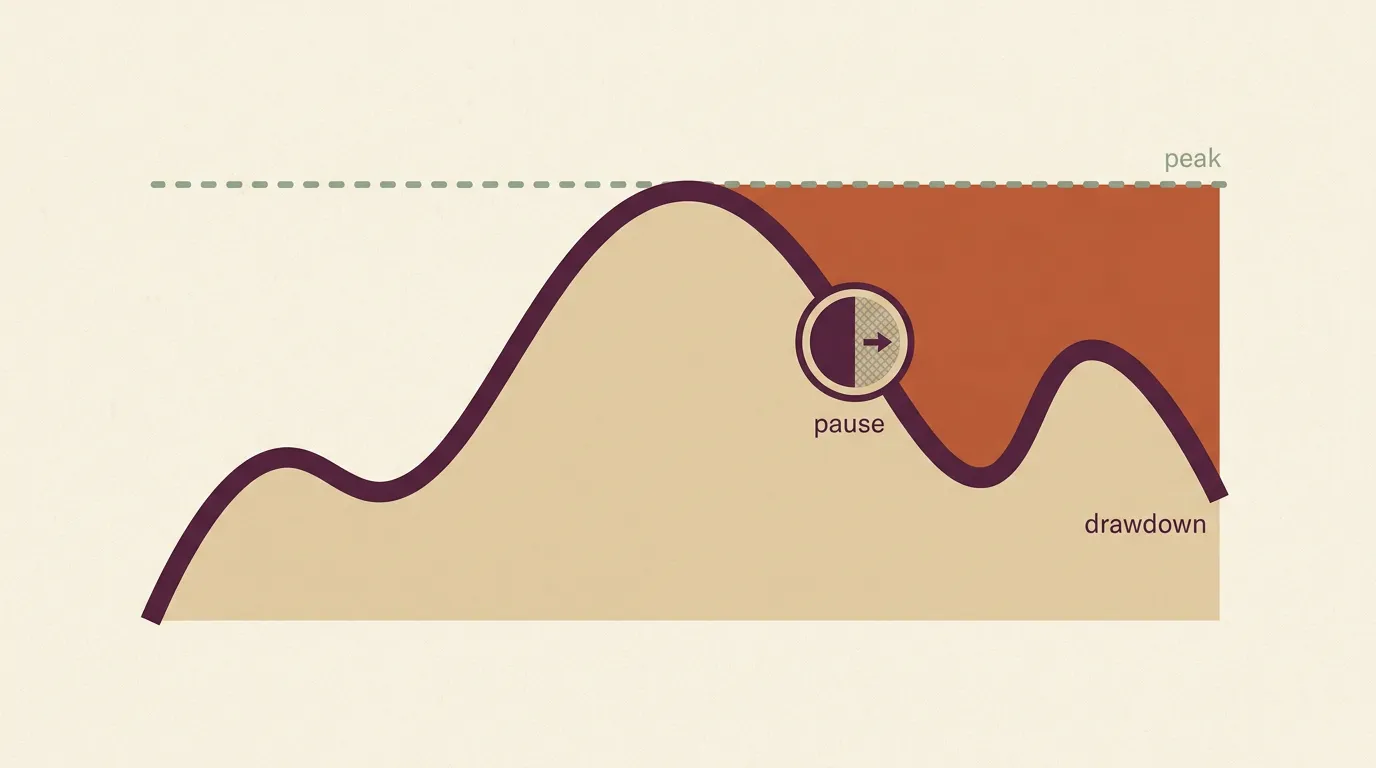
What an equity curve stop actually is
An equity curve stop is a rule that pauses or shrinks a bot when its own account curve falls below a reference level, usually a moving average of equity or a fixed percentage off the peak. It treats your P&L like a price chart: when the curve breaks down, you step aside.
The appeal is obvious. Strategies have regimes. A mean reversion bot that printed steady gains in a range can bleed for weeks when trend takes over, and a drawdown rule gets you out before the loss becomes structural.
The catch is equally real: your equity curve is a lagging, noisy signal built from very few data points. Thirty trades is a tiny sample. Turning a bot off after a bad run often means turning it off right before the recovery.
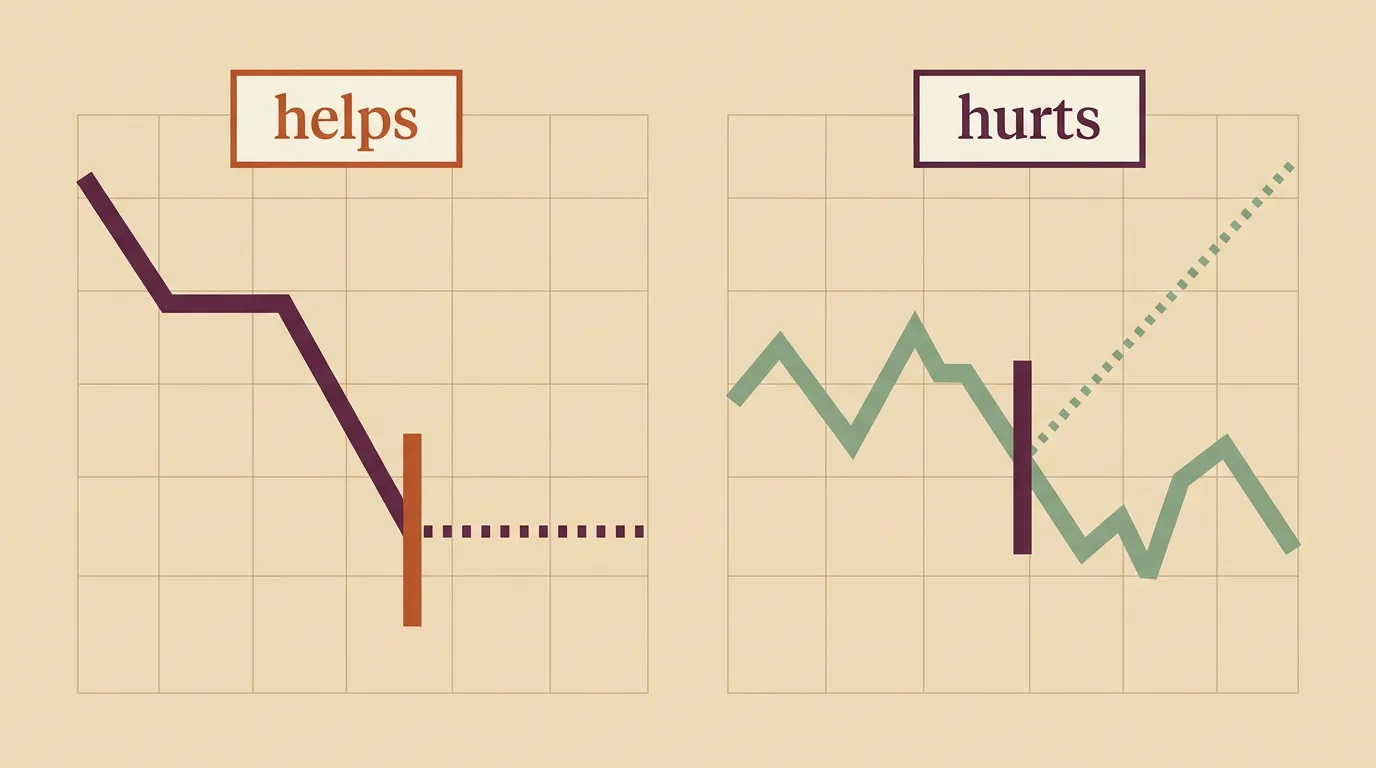
When the rule helps
Equity curve rules earn their place when the downside is open-ended or the regime change is genuine.
- Leveraged bots. On Binance futures or OANDA margin, a losing streak compounds against you. Cutting size at a defined drawdown level buys survival time.
- Strategies with a known failure mode. Grid and mean reversion bots lose in sustained one-way moves. A drawdown trigger is a crude but effective proxy for "the regime I was built for ended."
- Multiple bots on correlated markets. When everything sinks together, a portfolio-level drawdown stop is cleaner than arguing with each bot individually. See for why this stacks faster than expected.
- Detecting broken assumptions. A drawdown far beyond anything your backtest produced is a signal that the live environment (spreads, fees, liquidity) differs from the test.
If live drawdown exceeds the worst drawdown in your out-of-sample test by a meaningful margin, that is information, not noise.
When it hurts
The failure case is subtler. A drawdown stop adds a second strategy on top of your first one, and that second strategy is a momentum filter on a noisy series.
- Trend following bots live in drawdown. They are below their equity peak most of the time by design. A 15 percent rule will shut them off during the normal chop that precedes the few trades that carry the year.
- Restarting is harder than stopping. Most traders have a clear pause rule and no re-entry rule, so the bot stays off indefinitely while the strategy recovers without them.
- It can mask a sizing problem. If a normal losing streak threatens your account, the real fix is smaller positions, not an off switch. Start with .
Backtesting an equity curve rule on the same data you used to build the strategy will almost always look brilliant. You are fitting the filter to known losing stretches. Test it out of sample or treat the result as decoration.
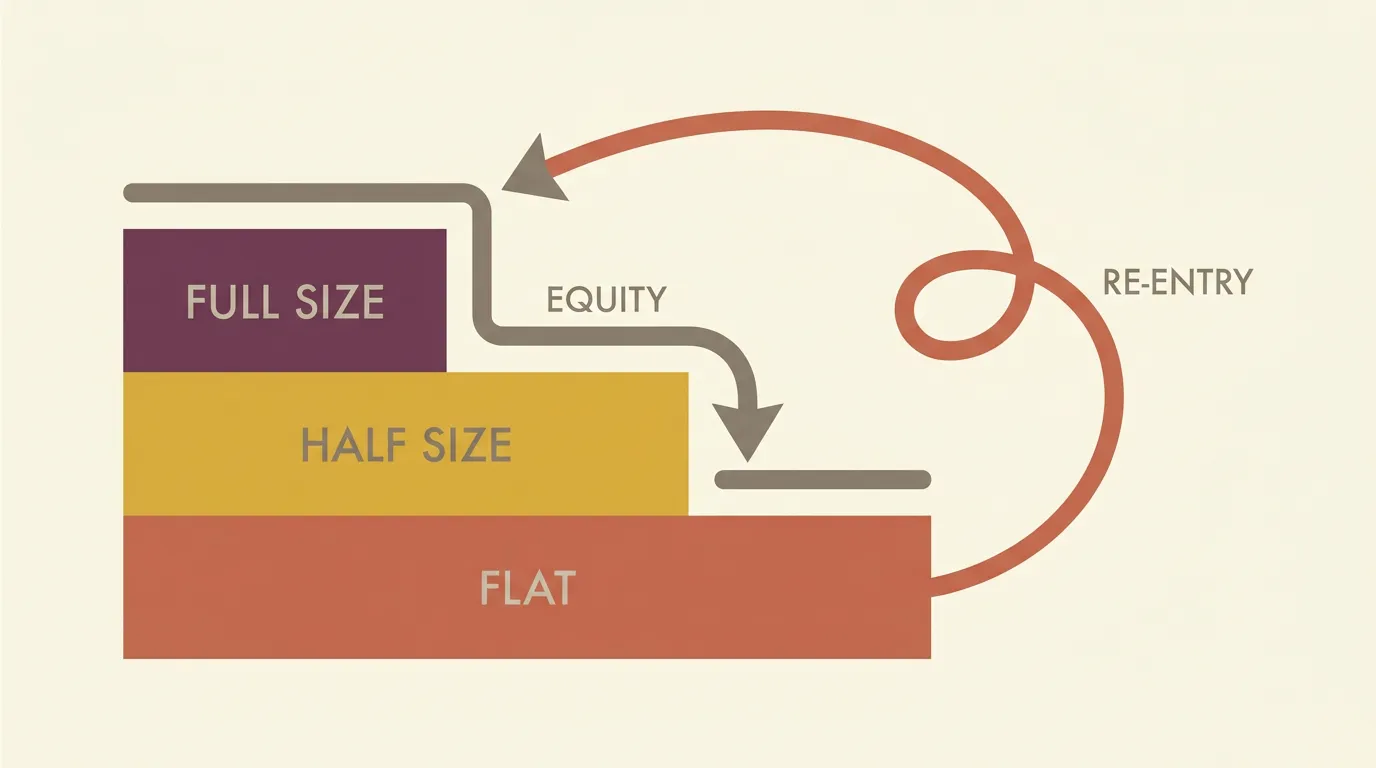
Designing a rule you will actually follow
Pick thresholds from your backtest, not from your comfort level.
Two design choices matter most. First, prefer de-risking over switching off. Cutting position size in half keeps you exposed to the recovery while limiting further damage, and it avoids the restart paralysis. Second, write the re-entry condition at the same moment you write the stop. A rule without a way back is a retirement plan.
Daily limits and equity curve stops solve different problems. A catches a single bad session or a malfunction. A drawdown stop catches a slow regime decay over weeks. Most serious setups run both.
Because algomax strategies are described in plain language, the drawdown behaviour is part of the same conversation as the entry logic: you say how much decline should trigger a smaller size or a pause, and the assistant builds it into the bot. No formulas, no separate monitoring job. Then with and without the rule and compare honestly.
Key takeaways
- Equity curve stops help most with leverage, regime-dependent strategies, and portfolio-level correlated risk.
- They hurt trend following bots, which normally spend long stretches below their peak.
- De-risking by halving size usually beats a full shutdown, and the re-entry rule must be written up front.
- Validate the rule out of sample, or you are just curve fitting a filter onto losses you already know about.
Frequently asked questions
What is an equity curve stop?
It is a rule that pauses a trading bot or cuts its position size when the account equity falls a set percentage below its peak, or below a moving average of equity. The idea is to step aside when the strategy stops working in the current market regime.
What drawdown level should trigger the rule?
A common starting point is roughly 1.5 times the worst drawdown your strategy produced in out-of-sample testing, so normal losing streaks do not trip it. There is no universally correct number, and any threshold involves a trade-off between protection and missed recoveries.
Why are equity curve stops bad for trend following?
Trend following strategies spend most of their time below their equity peak, grinding through small losses while waiting for a few large winners. A drawdown stop tends to switch them off during exactly those quiet stretches.
Should I turn the bot off or just reduce size?
Reducing size is usually the better first step because it limits further damage while keeping you exposed if the strategy recovers. Full shutdown makes sense as a second, deeper threshold or when you suspect the strategy itself is broken.
How is this different from a daily loss limit?
A daily loss limit is a short-term circuit breaker for one bad session or a malfunction, while an equity curve stop reacts to slow decay over weeks. They address different risks and many traders use both together.