DCA Bot Exit Plan: When to Stop Accumulating and Sell
How to plan the exit for a DCA bot: when to stop buying, reverse DCA vs tiered targets vs trend exits, and how to backtest the full accumulation cycle.
The question nobody asks until it matters
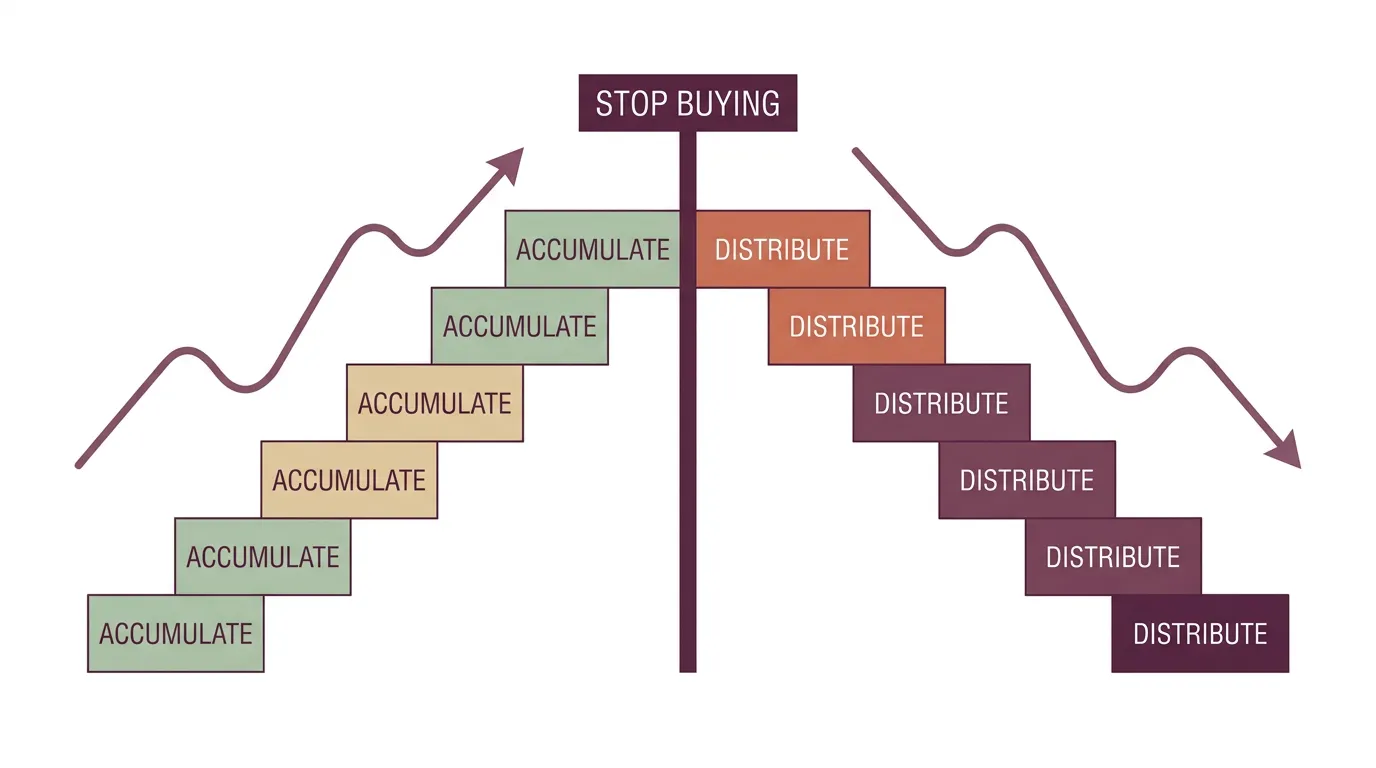
Most DCA bots are built with one instruction: buy every week, forever. That is an entry plan, not a strategy. Without a defined finish line, an accumulation bot quietly turns into an open-ended bet that you will know when to stop by feel. You will not.
An exit plan for a DCA bot answers three things in advance: when buying stops, what triggers selling, and how much gets sold at a time. Decide them before the first order, while you are calm and nothing is at stake.
Stop buying before you start selling
Accumulation and distribution are separate decisions. Most traders conflate them and end up doing neither on purpose.
Common ways to end the buying phase, pick one:
- Budget cap. Buy weekly until a fixed total amount has been deployed. Simple, auditable, immune to mood.
- Time horizon. Accumulate for a fixed window (say 12 or 24 months), then stop regardless of price.
- Position target. Accumulate until you hold a target quantity of the asset.
- Valuation ceiling. Pause buys when price sits far above its long-term average, resume when it comes back. This is closer to value averaging, and it risks buying nothing at all in a strong uptrend.
A DCA bot with no budget cap is a bot with unlimited downside exposure. If you would not wire the full amount in one transfer, do not authorise it in weekly slices.
Three exit shapes that actually work
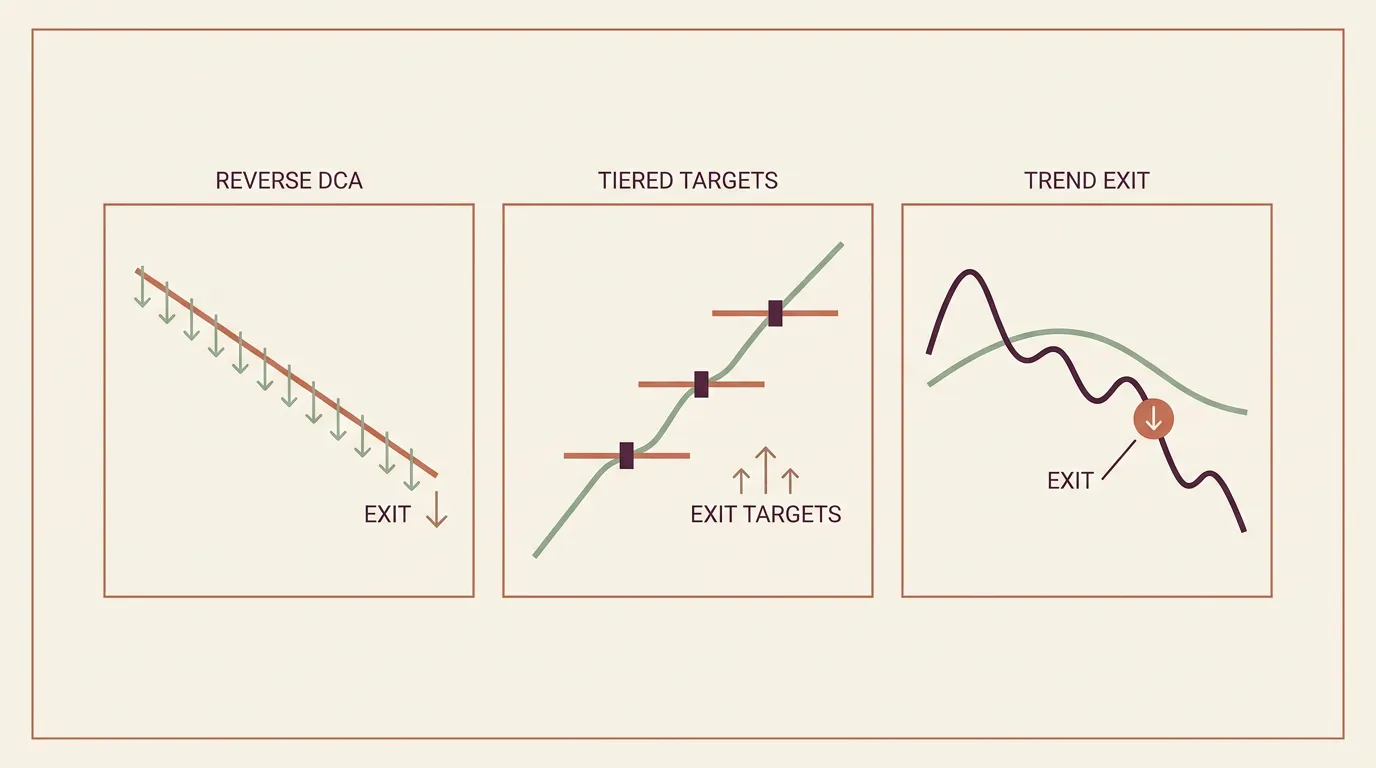
Once buying stops, the holding becomes a normal position and ordinary exit logic applies. Three patterns suit accumulation portfolios well.
Reverse DCA is the mirror image of the accumulation phase and the easiest to automate honestly: it never asks you to guess a top. Tiered targets are a form of and keep some upside alive while locking in progress. Trend exits give up the top but usually avoid the worst of a drawdown.
The point of a predefined exit is not to sell at the best price. It is to make sure selling happens at all.
Write the rules the bot will follow
On algomax you describe this in plain language rather than building it. Something like: buy a fixed amount of BTC every Monday until a total budget is reached, then sell an equal slice every two weeks, and halt selling if price falls below a defined floor. The assistant turns that description into a ready-to-run bot on your own Binance, Alpaca, or OANDA keys. Clear wording matters more than clever wording, so it is worth reading first.
Details worth specifying explicitly:
- Partial vs full exit. Many accumulators sell only a portion and keep a permanent core. Say which.
- Minimum hold. Prevent a sell rule from firing on units bought days earlier.
- Fee and spread awareness. Lots of small sells add up, and exactly as they do on the buy side.
- Tax reality. Frequent partial sells can create a messy reporting trail depending on your jurisdiction. Fewer, larger slices are often simpler.
Test the full cycle, not just the buys
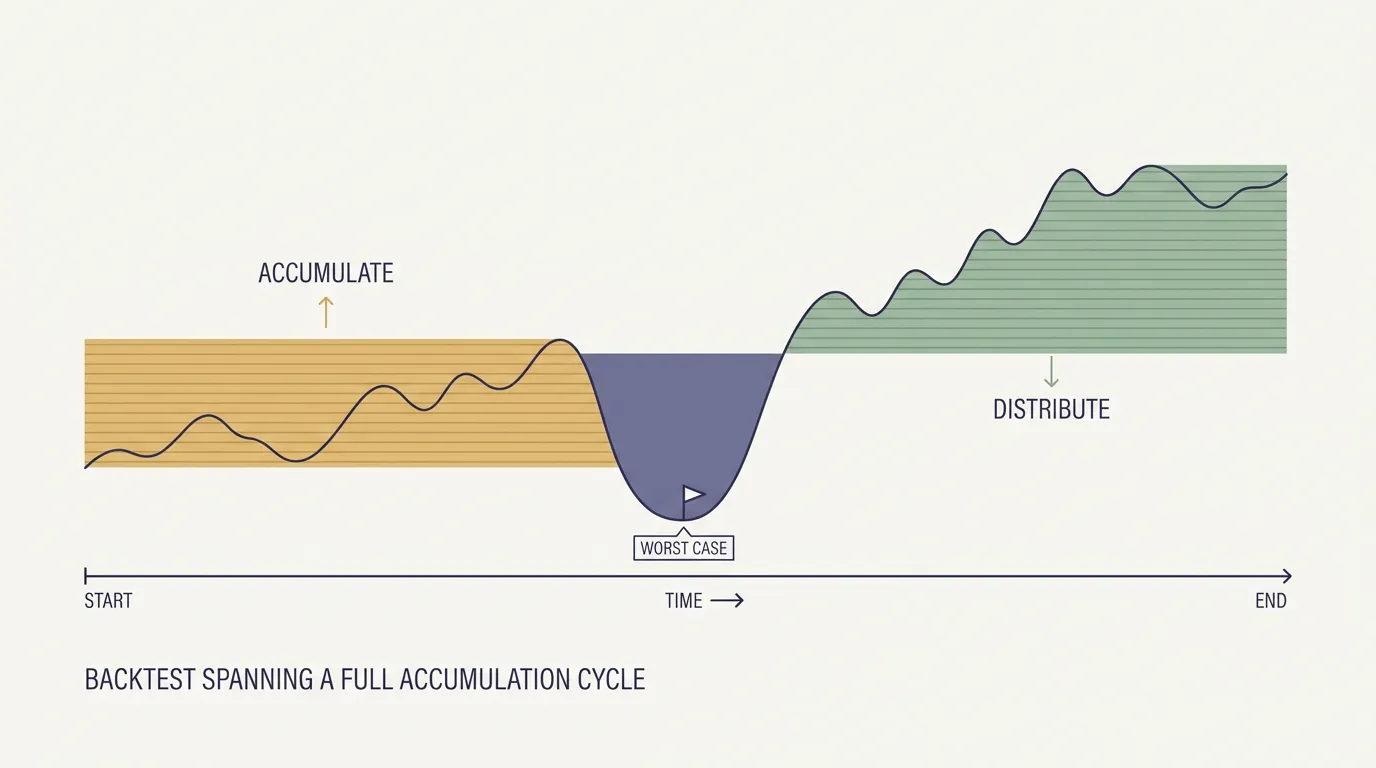
Backtesting a DCA bot is easy to fake: over a period where the asset rose, almost any buying schedule looks good. The honest test includes the exit.
- Run the full accumulate-then-distribute cycle across at least one brutal drawdown and one flat multi-year stretch.
- Compare against the obvious benchmark: buying once at the start and holding.
- Check the worst case, which is the paper loss at the deepest point of the accumulation phase, not just the final number.
- Validate on a period you did not use while tuning, as keeps you honest.
No exit plan guarantees a good outcome, and accumulation strategies can lose money in long declines. But a written plan replaces a decision you would otherwise make in panic.
Key takeaways
- Set the end of the buying phase (budget, time, or quantity) before the first order.
- Choose one exit shape: reverse DCA, tiered targets, or a trend exit.
- Decide in advance whether you keep a permanent core position.
- Backtest the entire cycle through a bad market, not just the accumulation leg.
Frequently asked questions
Should a DCA bot ever stop buying?
Yes. Without a budget cap, time horizon, or position target, the bot keeps increasing your exposure indefinitely. Pick one stopping rule and write it into the strategy before you deploy.
What is reverse DCA?
Reverse DCA means selling a fixed amount on a regular schedule, the mirror image of scheduled buying. It avoids any attempt to time a top and spreads your exit price across many points.
Is it better to sell everything at once or in slices?
Slices reduce the regret of picking one bad day but also cap the benefit of picking a good one. Many accumulators sell in slices and keep a permanent core position, which is a personal choice rather than an optimisation.
How do I backtest a DCA strategy honestly?
Test the whole cycle including the exit, over a period that contains a deep drawdown and a long flat stretch, and compare it to simply buying once and holding. Also check the worst paper loss during accumulation, not just the end result.
Can I build an accumulation bot with an exit plan without coding?
Yes. On algomax you describe the buying schedule, the stopping condition, and the exit rules in plain conversational language, and the assistant turns that into a ready-to-run bot that trades through your own broker keys.