No-Code Trading Bots: What You Can Actually Build
A practical tour of what a no-code trading bot can realistically do — the strategy types, controls, and limits — when you describe it in plain language to an AI.
What "no-code" actually covers
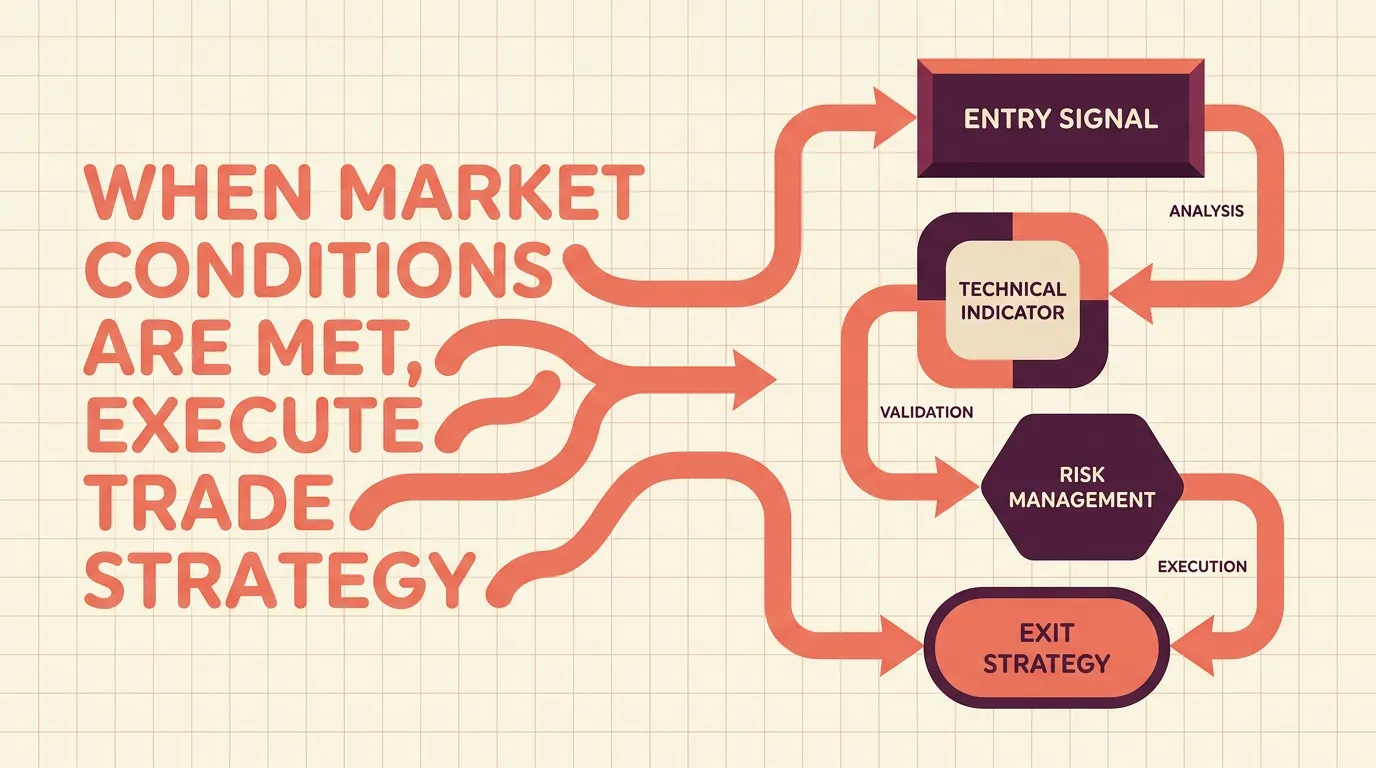
A no-code trading bot means you describe your rules in plain, conversational language — in your own native language — and an AI turns that description into a ready-to-run automated strategy. You never touch code, scripts, or formulas. But the real question is what you can build inside that flow. The answer is broader than most people expect, with a few honest limits worth knowing up front.
The strategy types you can build
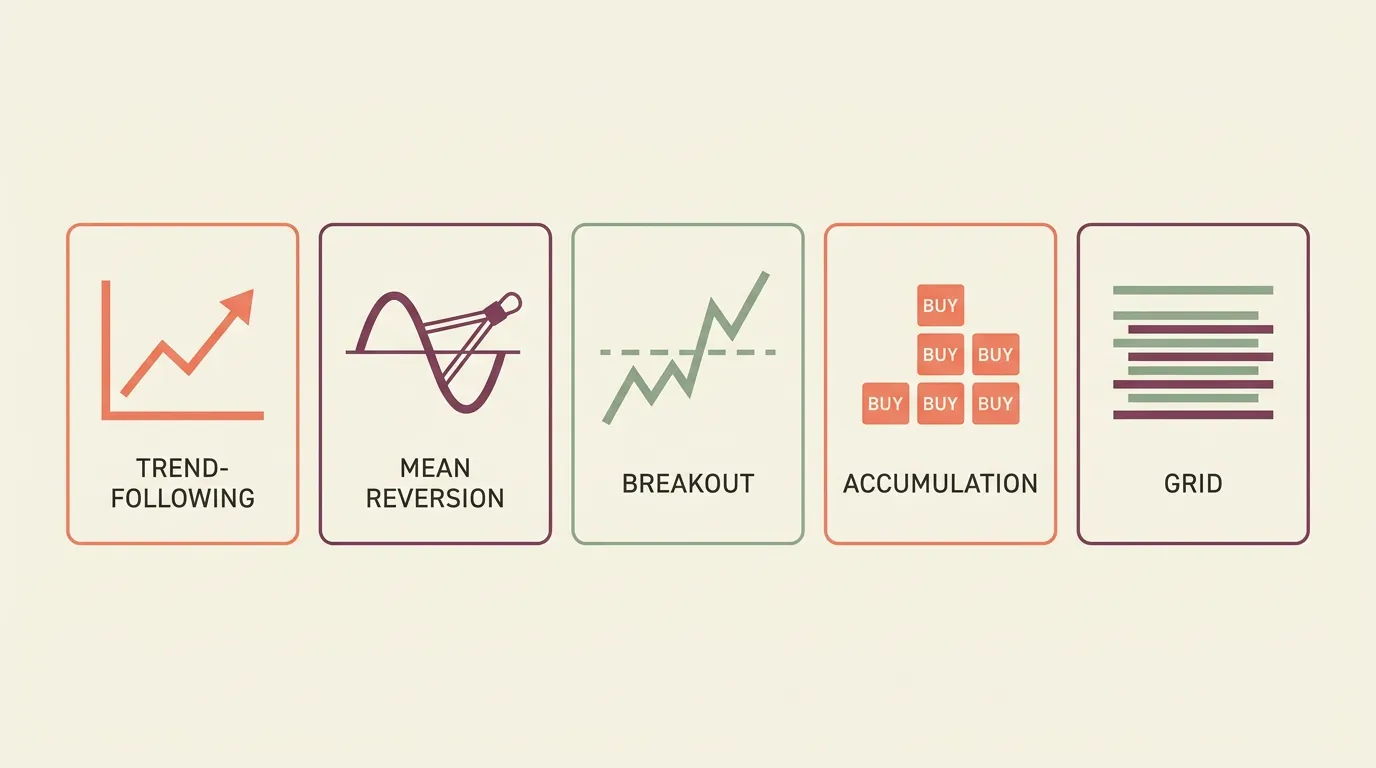
Most rule-based strategies translate cleanly into plain language. If you can state the entry condition, the exit condition, and the sizing in words, it can usually become a bot. Common patterns:
- Trend-following: enter when a fast moving average crosses a slow one, ride it, exit on the reverse cross. The is a richer version of this.
- Mean reversion: buy when price stretches too far from its average and fade the move — think or oversold readings.
- Breakout and retest: enter on a break of a level, or wait for the to filter false signals.
- Accumulation: recurring buys via DCA or value averaging for slow position building.
- Grid: layered orders across a range to harvest chop.
You combine conditions too — "only go long when the trend filter is up and RSI dips below 40." Multi-condition logic is where plain language shines, because you describe intent instead of wiring it together.
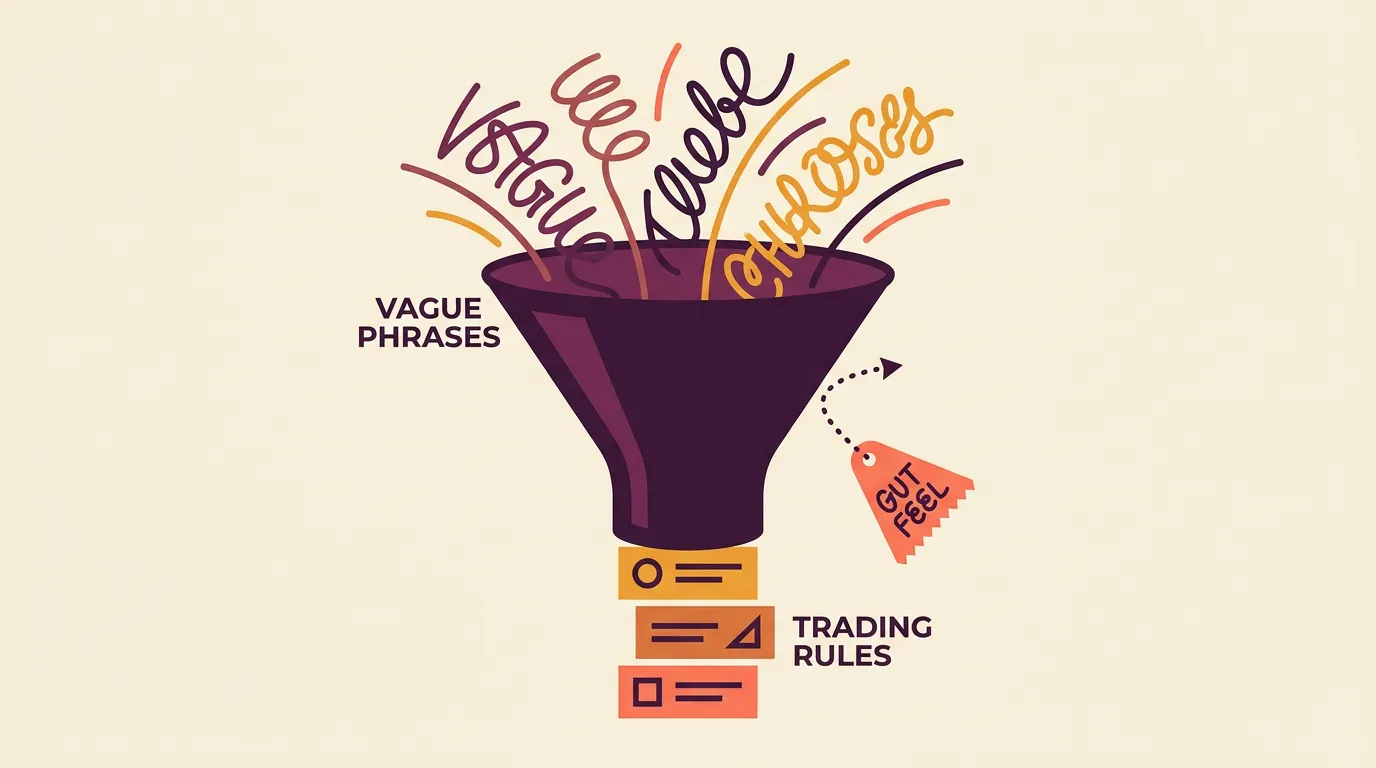
The clearer your rules, the better the bot. Vague inputs like "buy when it looks strong" force guesswork; specific triggers produce a strategy you can actually test.
The controls and plumbing you don't build by hand
A bot is more than entries. The parts that usually take the most engineering are built in:
You can build long-only strategies or two-sided ones that also short, and the market type is derived per venue at deploy — crypto spot and futures on Binance, US stocks on Alpaca, forex on OANDA.
Describe your risk rules in the same breath as your entry. "Risk 1% per trade, cap the day at 3% loss" is just as easy to state as the entry — and far more important to your survival.
The honest limits
No-code is powerful, not magic. Keep expectations grounded:
- Rules must be definable. Discretionary "gut feel" can't be automated — you have to commit to concrete conditions.
- Garbage in, garbage out. The AI builds what you describe; it won't invent an edge you didn't specify.
- A backtest is not a promise. Historical performance can flatter an overfit idea. Always run and before real money.
- Fees and slippage are real. A strategy that looks great gross can bleed out on costs — model them honestly.
The workflow is the same regardless of complexity: describe it, backtest it on historical candles, then promote it to live trading where it runs continuously without you managing any infrastructure.
Key takeaways
- If you can state entry, exit, and sizing in words, you can likely build it as a no-code bot.
- Trend, mean-reversion, breakout, accumulation, and grid strategies all translate well — including multi-condition logic.
- Built-in indicators, risk controls, exits, and alerts save you the hardest engineering.
- No-code can't automate gut feel or manufacture an edge — clarity and honest testing still decide the outcome.
Frequently asked questions
Do I need any coding experience to build a bot?
No. You describe the strategy in plain, conversational language — even in your native language — and an AI turns it into a ready-to-run bot. You never write or see code, scripts, or formulas.
What kinds of strategies can I automate?
Any rule-based approach where you can define the entry, exit, and sizing in words — trend-following, mean reversion, breakouts, accumulation like DCA, and grid strategies. You can also combine multiple conditions. Purely discretionary 'gut feel' trading can't be automated.
Can a no-code bot short the market?
Yes. A strategy declares whether it is long-only or two-sided (able to short), and the market type is derived per venue when you deploy — for example crypto futures on Binance or margin on Alpaca.
Are indicators and risk controls included, or do I build them?
They are built in. You can reference indicators like EMA, RSI, ATR and VWAP by name, and add risk controls such as stops, position sizing, and a max daily loss limit — no engineering required.
Will a good backtest guarantee live results?
No. A backtest can flatter an overfit idea, and fees and slippage eat into real returns. Always run out-of-sample testing and paper trade before committing real money, since all trading involves risk.