Pattern Day Trader Rule: What Stock Trading Bots Must Know
The pattern day trader rule limits margin accounts under $25k to three day trades per five days. How to design stock trading bots that stay under it.
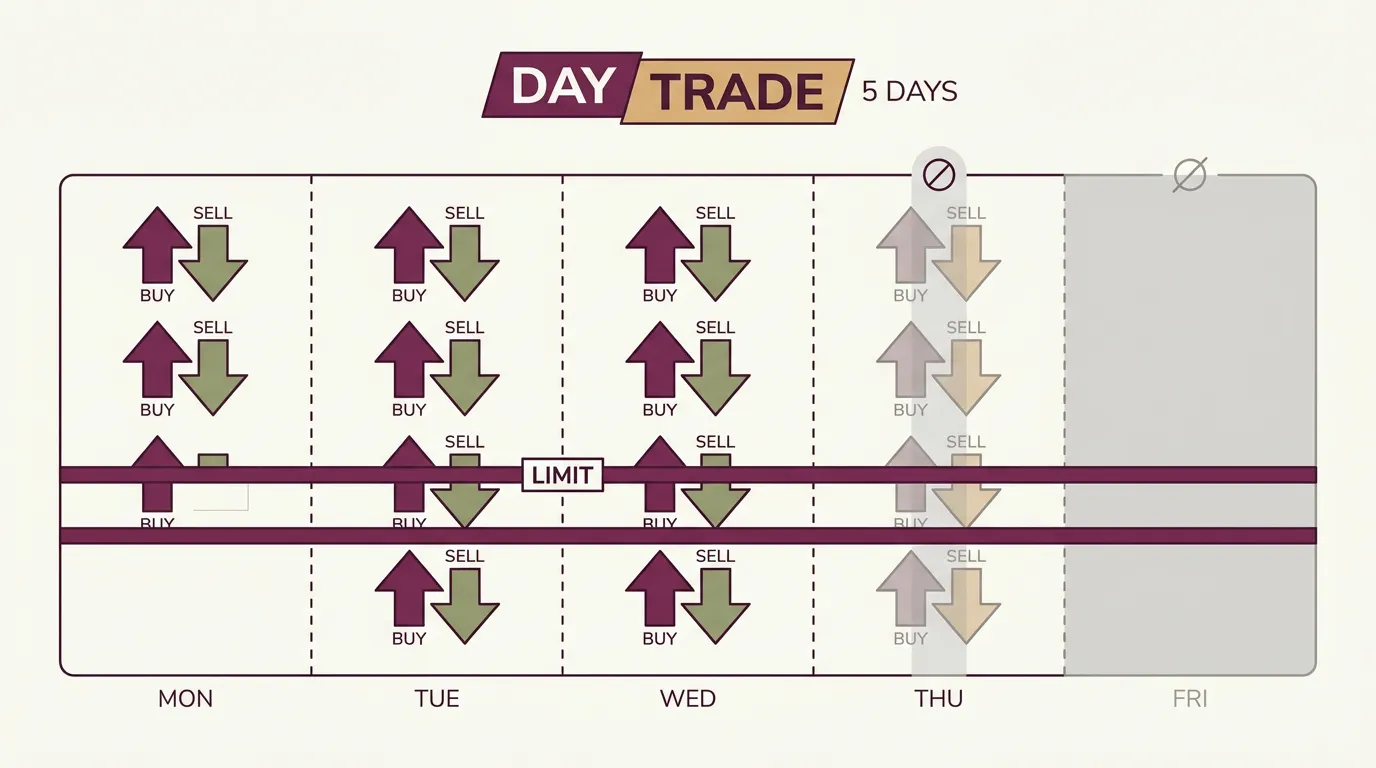
The short answer
PDT is a US regulatory rule: if your margin account has less than $25,000 in equity and you make 4 or more day trades within 5 business days, your broker flags you as a pattern day trader and restricts you to closing-only orders until you fix the equity or the flag clears. A day trade is opening and closing the same stock on the same session.
Bots hit this faster than humans because they never get bored, never skip a signal, and happily fire the same setup three times before lunch.
PDT applies to margin accounts. A cash account avoids the flag but replaces it with settlement timing: proceeds from a sale are not immediately reusable, so a bot can run out of buying power mid-week instead of getting blocked outright.
Why automated stock strategies trip it
An intraday bot on a 5 minute chart can generate a dozen round trips a week on a single ticker. Add a second ticker and you are past the limit by Tuesday. Common triggers:
- Fast timeframes. Anything under 1 hour tends to open and close inside the same session.
- Tight stops. A stop-out plus a re-entry on the same name is two day trades, not one.
- Multi-symbol universes. Each symbol contributes its own round trips to the same 5-day count.
- Scaling out. Partial exits on the same day as entry can still count as a day trade.
If your equity is above $25k the rule stops mattering, but the risk of overtrading does not. Frequency has a cost even without regulation, and quietly eat high-turnover edges.
Five ways to design around it
- Hold overnight on purpose. If entries and exits land on different sessions, they are not day trades. Swing logic on daily or 4 hour candles sidesteps PDT almost entirely, at the cost of gap risk.
- Cap trades per week in the strategy itself. Describe the limit in plain language ("at most 3 same-day round trips per week") and let the bot enforce it rather than hoping the market cooperates.
- Prefer one high-quality setup over many. A or a trend condition cuts marginal signals, which is exactly what a PDT-constrained account needs.
- Trade one symbol at a time. Concentrating the budget of day trades on your best-tested market beats spreading it thin.
- Use a cash account deliberately. No PDT flag, but plan around settlement so the bot is not sending orders with no buying power behind them.
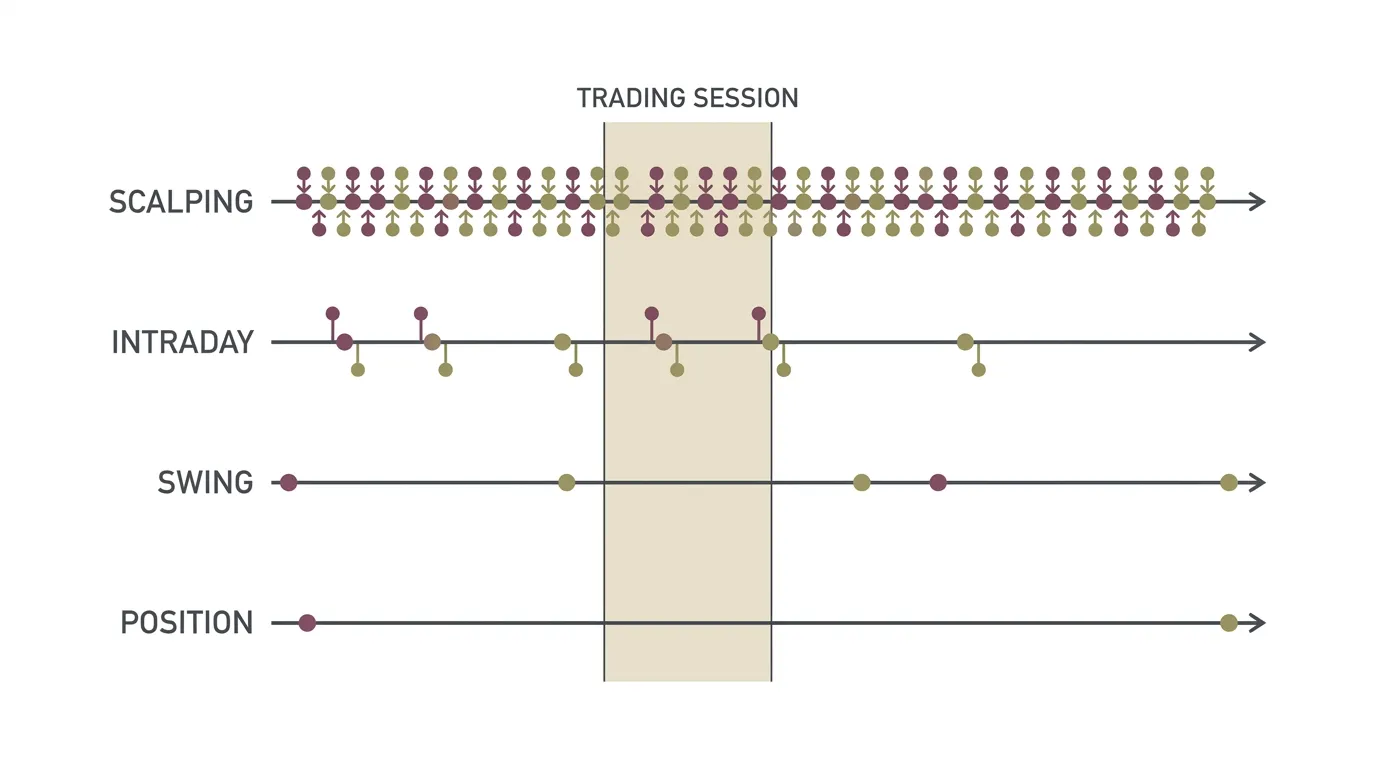
Frequency vs the rule: a rough guide
The cheapest fix is usually a slower timeframe, not a cleverer workaround. Most retail strategies that survive costs are not scalping anyway.
Test the constraint before you go live
PDT is a rule about behaviour, so measure the behaviour first. When you , count how many entries and exits share a date. If the number regularly exceeds three per rolling week, the strategy needs a structural change, not a patch.
Then run it in for a few weeks and check the real trade log. Paper accounts show you the true cadence of a live market, including the re-entries a backtest may smooth over.
A practical setup on Alpaca: connect your broker keys, deploy a swing-oriented bot on daily candles, and keep a weekly trade counter in your notifications so you see the count climbing before the broker does.
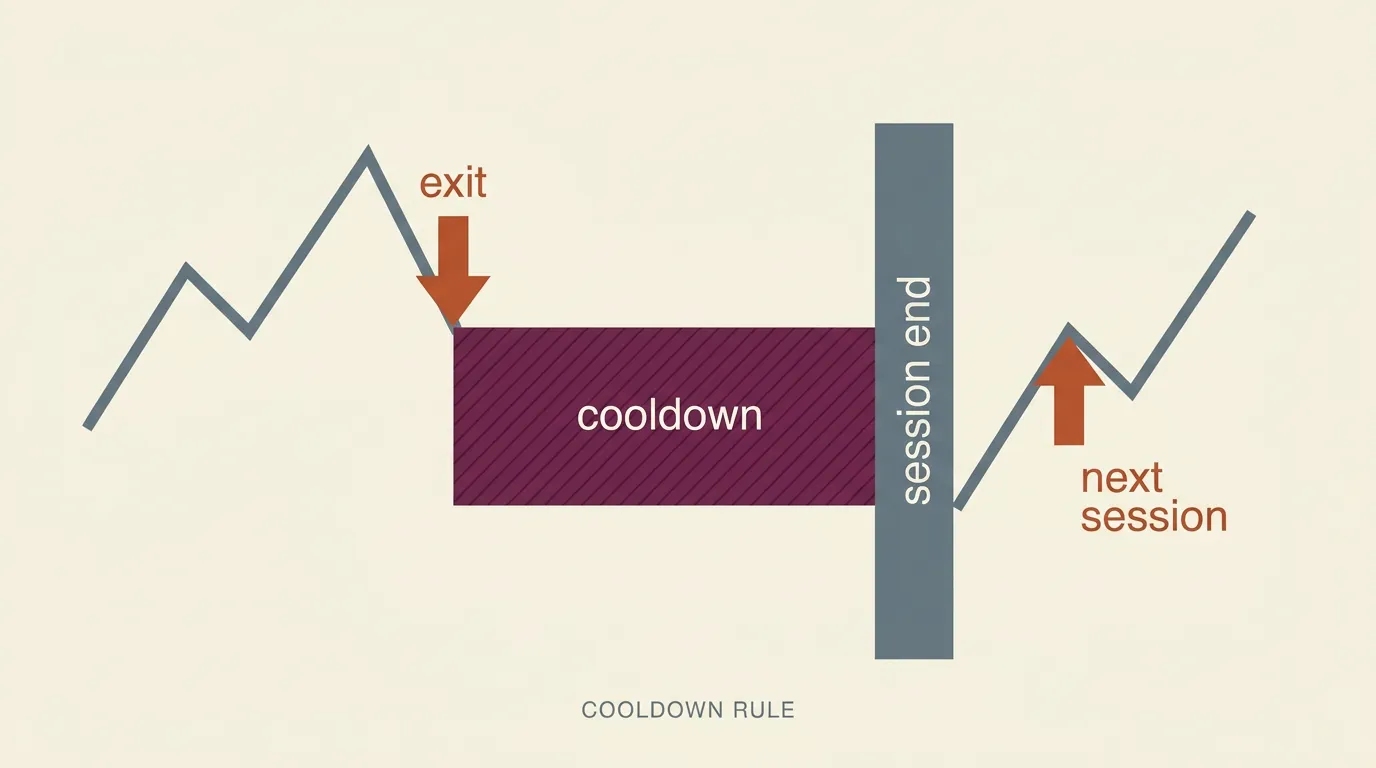
If your bot exits and wants back into the same name the same day, add a plain-language cooldown ("no re-entry on the same symbol until the next session"). It kills both PDT risk and revenge-style churn.
Key takeaways
- PDT restricts margin accounts under $25k to fewer than 4 day trades in 5 business days.
- Bots hit the limit through fast timeframes, tight stops with re-entries, and multi-symbol universes.
- Slower candles, weekly trade caps, and same-day re-entry cooldowns are the practical fixes.
- Count same-day round trips in your backtest and paper run before you deploy real money.
Frequently asked questions
What exactly counts as a day trade?
Opening and closing a position in the same stock during the same trading session counts as one day trade. A stop-out followed by a re-entry in the same name on the same day counts as two.
Does the PDT rule apply to crypto or forex bots?
No. Pattern day trader rules apply to US stock margin accounts, so bots running on crypto or forex venues are not affected. This is one of the practical differences between automating stocks and automating 24/7 markets.
Can I avoid PDT by using a cash account?
A cash account is not subject to the pattern day trader flag, but sale proceeds take time to settle, so your bot may find itself without buying power. You trade one constraint for another.
How do I know if my strategy will trip the limit?
Backtest it and count how many entries and exits share the same date, then confirm with a few weeks of paper trading. If same-day round trips regularly exceed three per rolling week, the strategy needs a slower timeframe or a hard trade cap.
Can a no-code bot enforce a weekly trade cap?
Yes. You can describe the rule in plain language, such as limiting same-day round trips per week or blocking re-entry into a symbol until the next session, and the assistant builds it into the bot logic.