Trading Bot Myths vs Reality: What Beginners Get Wrong
Trading bots aren't money machines. Here's what automated trading really does, where beginners go wrong, and how to set honest expectations before you start.
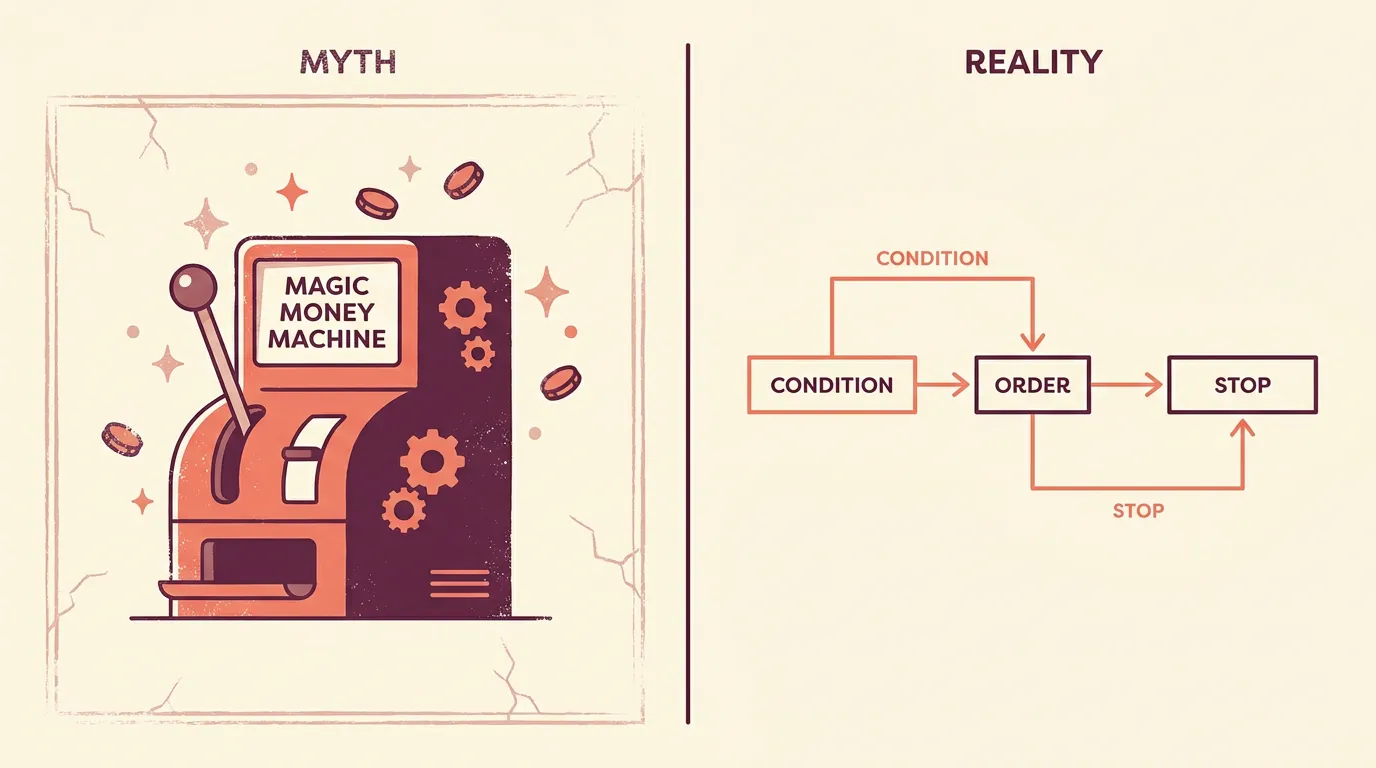
The honest version of what a bot does
A trading bot is a set of rules that watches the market and places orders when your conditions are met — nothing more. It executes faster and more consistently than you can by hand, but it has no opinion, no intuition, and no guarantee of profit. Most beginner disappointment comes from believing myths the hype sells. Let's clear the big ones up.
Myth 1: "A bot prints money while you sleep"
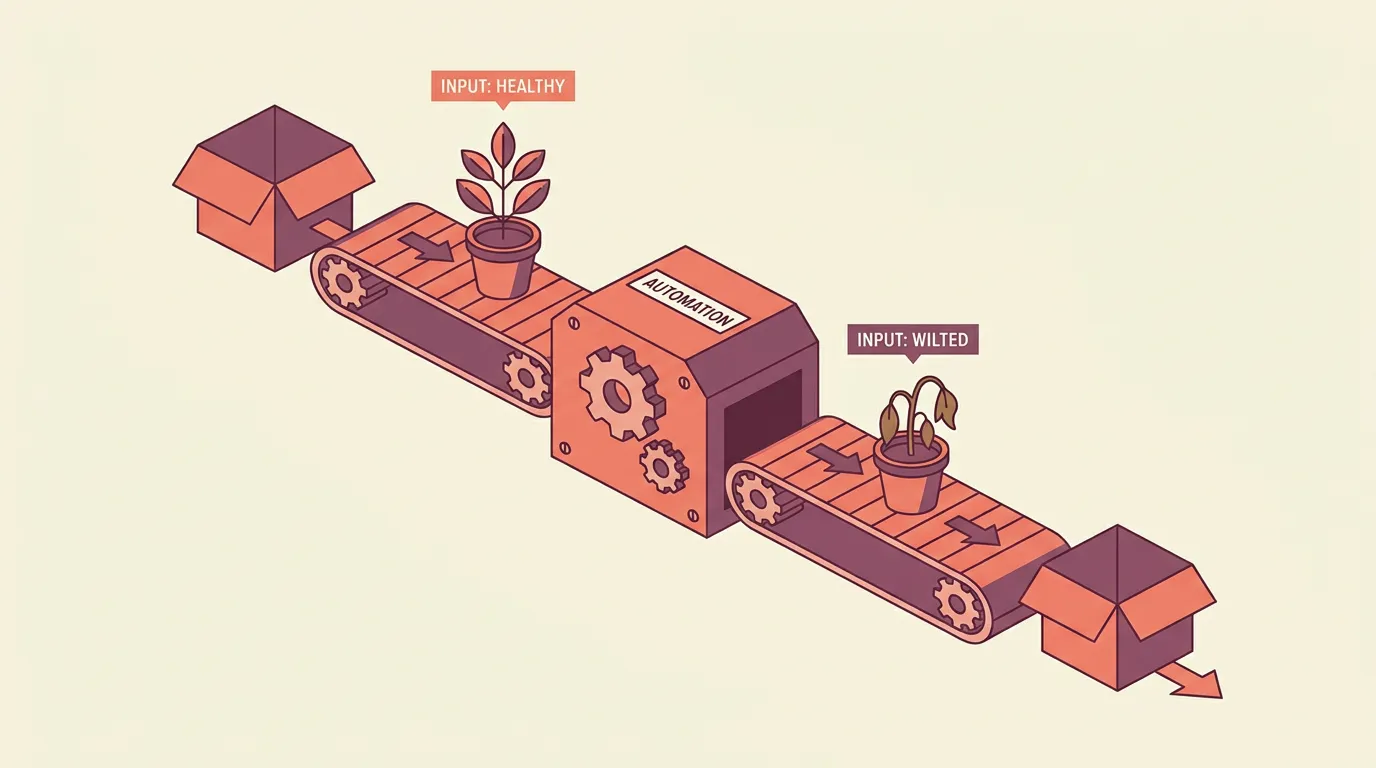
The appeal is real — a bot trades 24/7 without emotion. But a bot only does what its rules tell it to. If the strategy has no edge, running it around the clock just loses money faster and more efficiently.
Automation removes execution problems (hesitation, fat-finger entries, missed exits). It does not create an edge — that has to come from the strategy logic itself. A profitable idea automated is powerful; a bad idea automated is still a bad idea.
Any tool promising guaranteed returns or a "set-and-forget money machine" is selling hype, not software. Trading always carries the risk of loss.
Myth 2: "You need to be a programmer"
For a long time this was true — bots meant writing code, hosting servers, and babysitting infrastructure. That barrier is mostly gone. On a no-code platform you describe your strategy in plain language and an AI assistant turns it into a ready-to-run bot.
You still need to think clearly about your rules: what triggers an entry, where the stop goes, how big each position is. But you express those in words, not syntax. If you can explain your idea to a friend, you can and get a working bot from it.
Myth 3: "A good backtest means it'll work live"
A backtest shows how a strategy would have behaved on past data. That's useful — but it's the beginning of validation, not proof. Two traps catch newcomers constantly:
- Overfitting — tuning the rules until they fit historical noise perfectly. The result looks brilliant on old data and falls apart on new data. is the antidote.
- Ignoring costs — spreads, slippage, and quietly erode returns that looked great in a frictionless test.
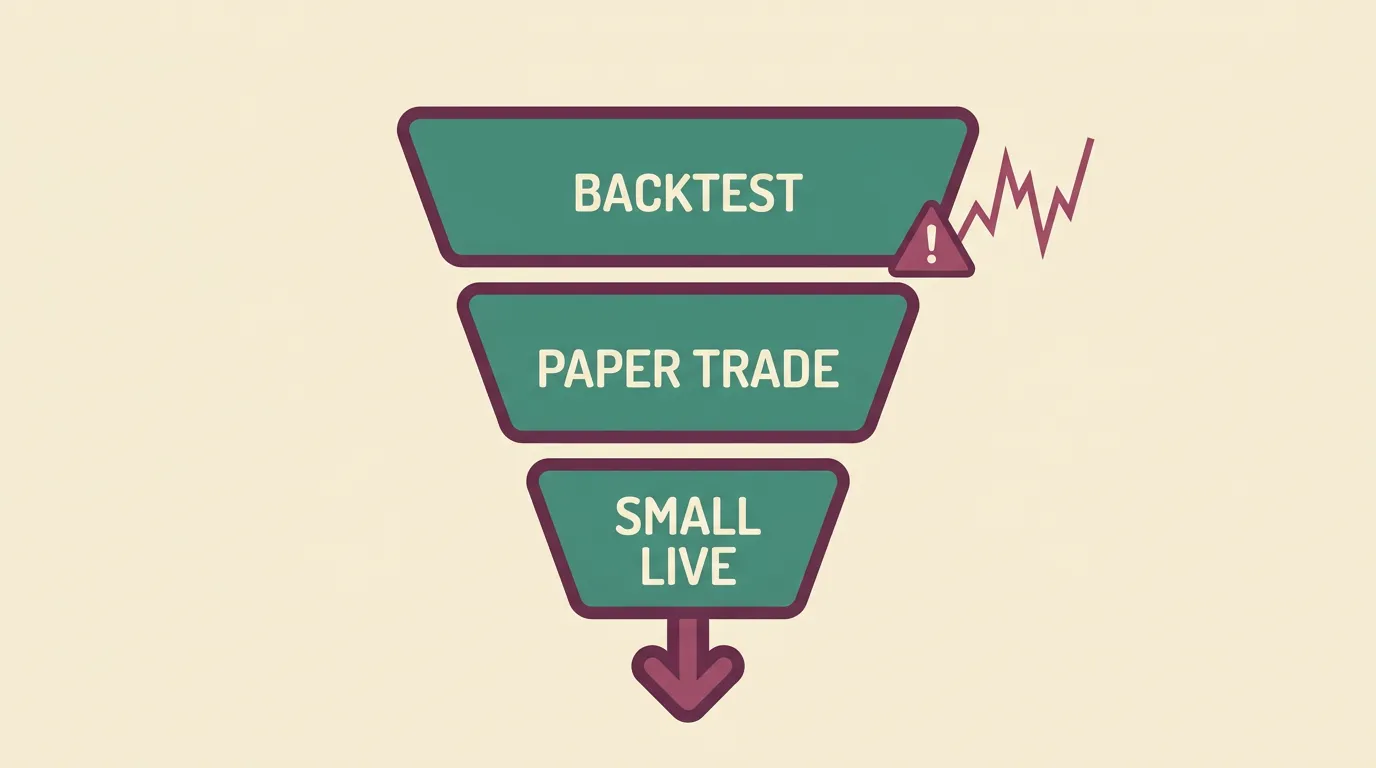
The reliable path is: backtest → paper trade → small live size. Skipping straight to real money is where most first bots die.
Myth 4: "You can set it and walk away forever"
Bots are lower-maintenance than manual trading, not zero-maintenance. Markets change regime — a trend-following bot can bleed in a choppy range, and a mean-reversion bot can get run over by a strong trend. You should still:
A safety net like a matters because you're not staring at the screen — it stops a bad day from becoming a disaster.
Reality: what bots are genuinely good for
Stripped of the myths, automation earns its keep by doing three things well:
- Consistency — the same rules every time, without emotion or fatigue.
- Speed — reacting to conditions in seconds, across markets you can't watch at once.
- Testability — you can measure an idea on history before risking a cent.
That's a real advantage — just not a magic one. Treat a bot as a disciplined executor of your thinking, and it becomes a genuinely useful tool.
Key takeaways
- A bot executes rules faster and calmer than you can — but it can't invent an edge you don't have.
- No-code platforms remove the programming barrier; clear strategy thinking still matters.
- A great backtest isn't proof: watch for overfitting and real trading costs.
- "Set and forget" is a myth — use risk limits and check in as markets shift.
Frequently asked questions
Do trading bots guarantee profits?
No. A bot only executes the rules you give it. If the underlying strategy has no edge, automating it simply produces losses more consistently. Trading always carries the risk of loss.
Do I need coding skills to run a trading bot?
Not on a no-code platform. You describe your strategy in plain, conversational language and an AI assistant turns it into a ready-to-run bot, so you never write or see code. You still need to think clearly about your entry, exit, and risk rules.
Why did my bot lose money even though the backtest looked great?
Common reasons are overfitting the rules to past data and ignoring real costs like spreads, slippage, and fees. A backtest is the start of validation, not proof — follow it with out-of-sample testing and paper trading before going live.
Can I set a bot up and never touch it again?
No. Bots are lower-maintenance than manual trading but markets change regime, so a strategy that thrives in a trend can bleed in a range. Use risk controls like a max daily loss limit and check performance periodically.