Manual vs Automated Trading: The Discipline Gap
Manual vs automated trading compared through emotion and discipline: where human judgment helps, where bots win, and how to automate without code.
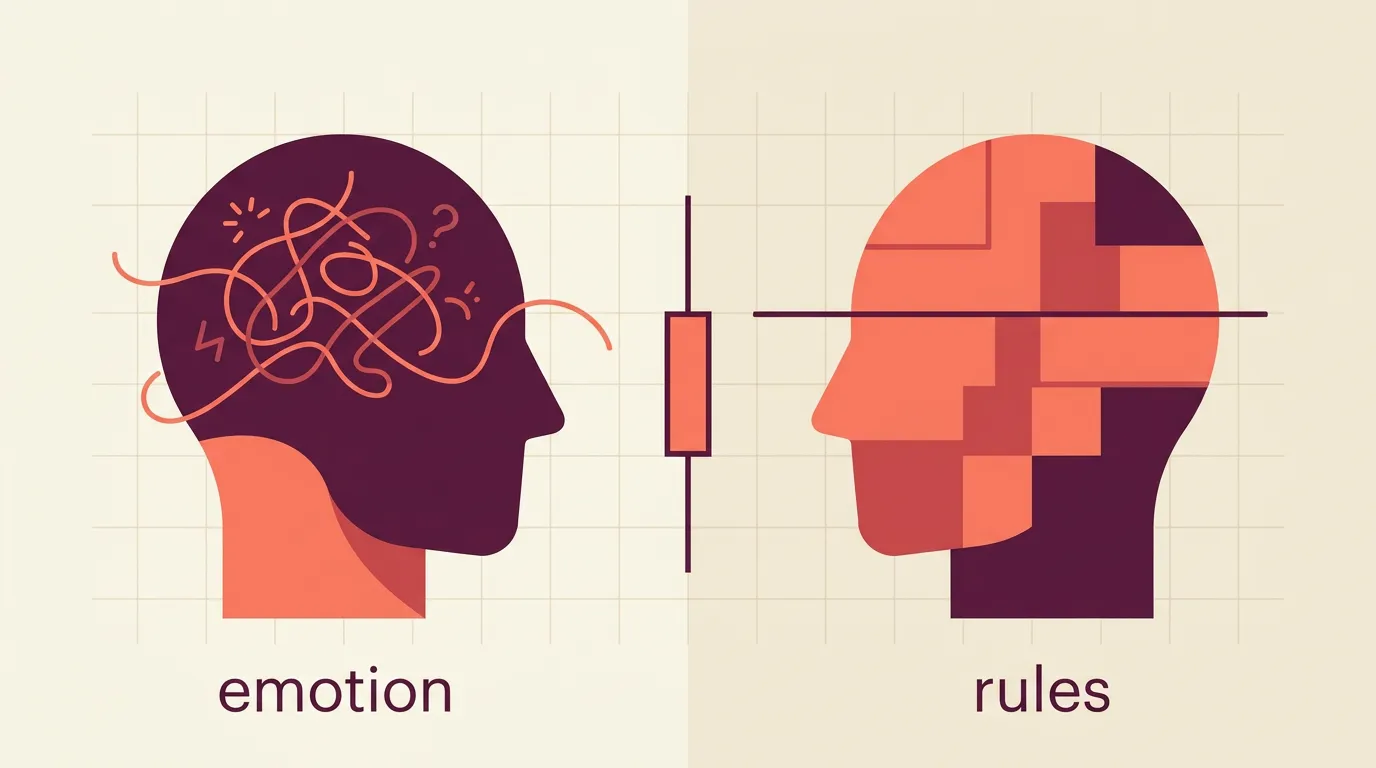
The discipline gap is the real difference
Manual and automated trading can use the same strategy — the difference is who pulls the trigger. A human decides in the moment; a bot follows rules it was given. That single shift is where most of the emotional pros and cons live.
When you trade discretionarily, every entry passes through a brain that's tired, excited, or scared. That flexibility is sometimes an edge — and often a leak. Automation removes the in-the-moment human, for better and worse.
The question isn't "is the bot smarter than me?" It's "will I follow my own rules at 2 a.m. after two losing trades?" Usually, no.
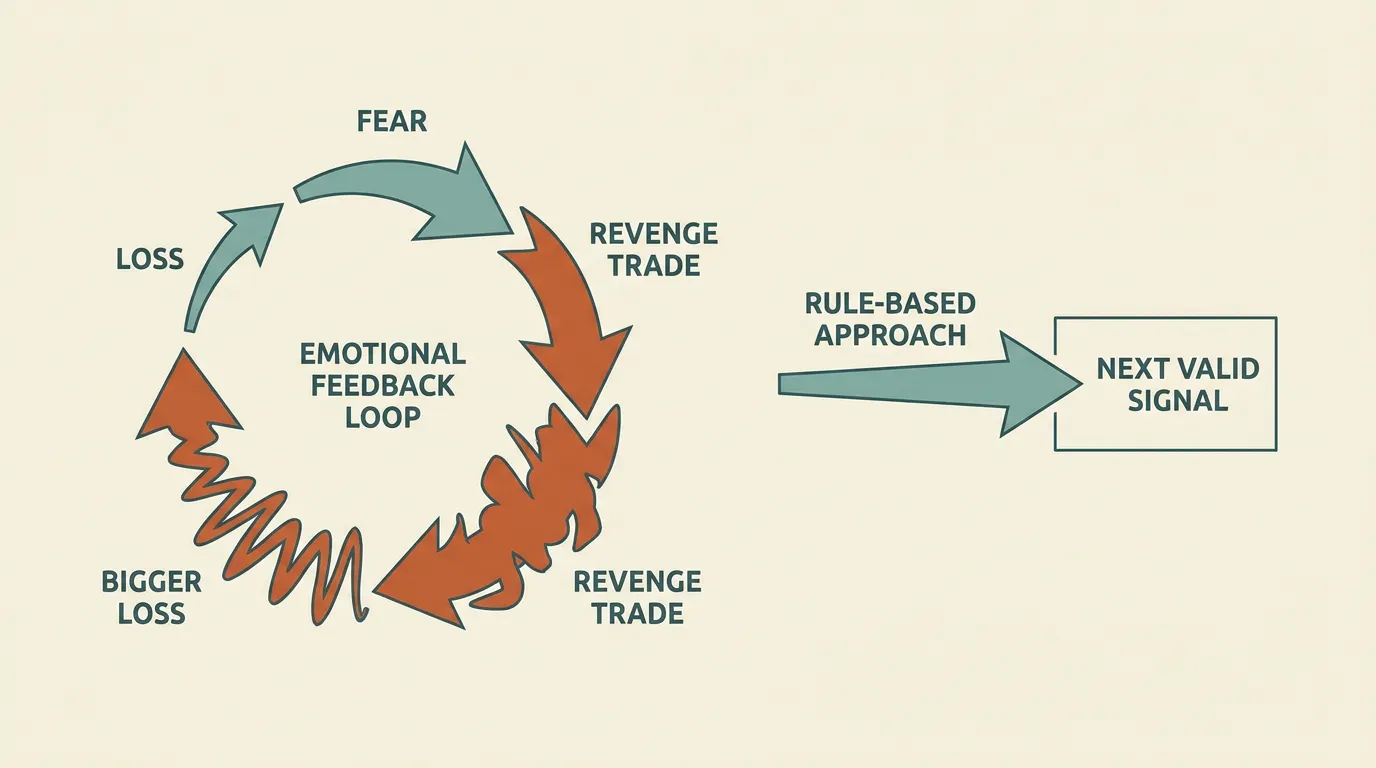
Where emotion helps — and where it wrecks you
Human judgment shines when context matters: a surprise news event, a broken market, an obviously mispriced spread. A discretionary trader can step aside instantly. No rule set anticipates everything.
But the same flexibility invites predictable mistakes:
- Revenge trading after a loss, sizing up to "get it back"
- Cutting winners early out of fear, letting losers run out of hope
- Skipping valid signals because the last one lost
- Moving stops to avoid taking the planned loss
These aren't knowledge gaps — they're emotional overrides of a plan you already knew was correct. Automation is valuable precisely because it can't rationalize. A bot takes the next valid signal whether the last one won or lost, and it respects a without negotiating.
Automation only removes emotion at execution time. You can still sabotage a bot by pausing it during drawdowns, tweaking it after every loss, or over-tuning it to past data. The discipline just moves upstream.
What each approach is actually good at
Neither is universally better. They optimize for different things.
The consistency point matters most. A bot executes the same logic on trade #500 as on trade #1 — no fatigue, no drift. That makes results measurable: if you can't tell whether a losing week was the strategy or your mood, you can't improve. A rules-based approach removes that ambiguity, which is also why you can meaningfully .
Automating without learning to code
The old barrier was building the thing. On algomax you describe the strategy in plain language — in your own words — and the AI turns it into a ready-to-run bot that trades through your own connected broker. No scripts, no formulas.
That collapses the classic trade-off. Historically, discretionary traders avoided automation because coding was a real project. Now the path looks like:
- Write down your rules the way you'd explain them to a friend — .
- Backtest on historical candles to see how the logic behaved.
- Paper trade or start small, then promote to live.
If you can't write your strategy as clear rules, that's a signal — not a limitation of automation. Vague "I just feel it" entries are exactly the ones that leak money manually too.
You don't have to choose all-or-nothing. Many traders keep discretionary control over when to deploy and let the bot handle execution — a that keeps human context while removing trigger-pulling emotion.
Automation isn't a profit switch. It's a discipline tool. It won't fix a bad strategy — it'll just run it consistently. But if your losses come from behavior rather than logic, that consistency is the whole point.
Key takeaways
- The core difference is discipline at execution, not intelligence.
- Human judgment helps in novel situations but leaks money through emotional overrides.
- Bots win on speed, consistency, and measurability — and can't revenge-trade.
- No-code tools remove the old coding barrier; discipline simply moves to design and testing.
Frequently asked questions
Is automated trading better than manual trading?
Neither is universally better. Automation wins on consistency, speed, and emotional discipline at execution, while manual trading is more flexible in novel or unexpected situations. The right choice depends on whether your losses come from behavior or from a flawed strategy.
Does automating a strategy remove all emotion?
Only at the moment of execution. You can still let emotion in by pausing a bot during drawdowns, over-tweaking it after losses, or over-fitting it to past data. The discipline requirement moves from clicking buttons to designing and testing rules honestly.
Do I need to know how to code to automate my trading?
Not on algomax. You describe your strategy in plain, conversational language and the AI turns it into a ready-to-run bot that trades through your own connected broker. You never write or see code.
Will a trading bot make my strategy profitable?
No. A bot runs your logic consistently, but it can't turn a losing strategy into a winning one. Automation is a discipline and consistency tool, not a profit switch, and all trading carries risk of loss.
Can I combine manual and automated trading?
Yes. Many traders keep discretionary control over when to deploy or pause a bot while letting it handle execution. This hybrid approach preserves human context while removing the emotional part of pulling the trigger.