Look-Ahead Bias: The Backtest Trap That Fakes Wins
Look-ahead bias makes a backtest use data it couldn't have known yet, faking great results. Learn how it sneaks in and how to catch it before you go live.
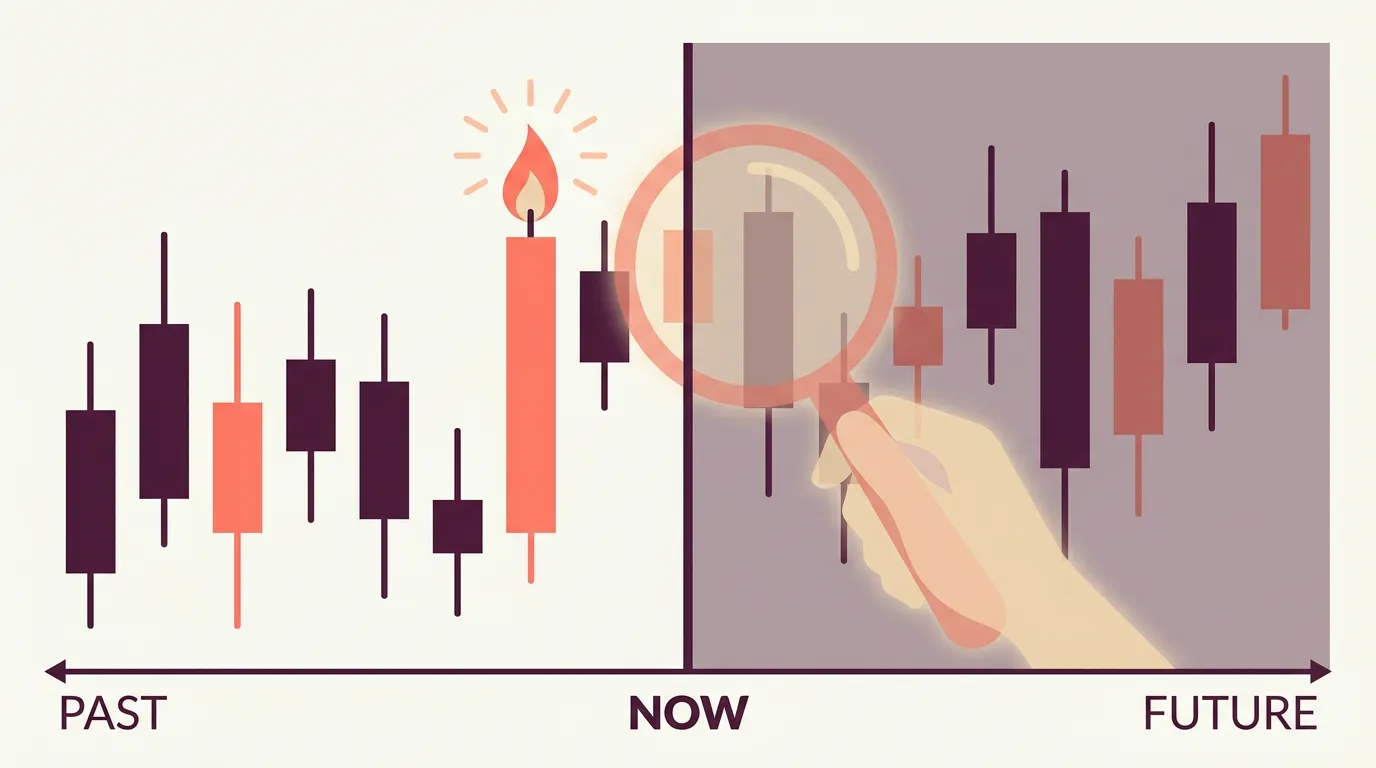
What look-ahead bias actually is
Look-ahead bias is when a backtest makes a decision using information that wasn't available at that moment in real time. The strategy "sees the future" — even by a few seconds — and the results look far better than anything you could achieve live.
It's the most dangerous backtest flaw precisely because it's invisible. The equity curve looks smooth, the win rate looks high, and nothing warns you that the numbers are fiction.
A backtest with look-ahead bias isn't optimistic — it's impossible. You're testing a strategy that could never have traded that way.
How it sneaks in
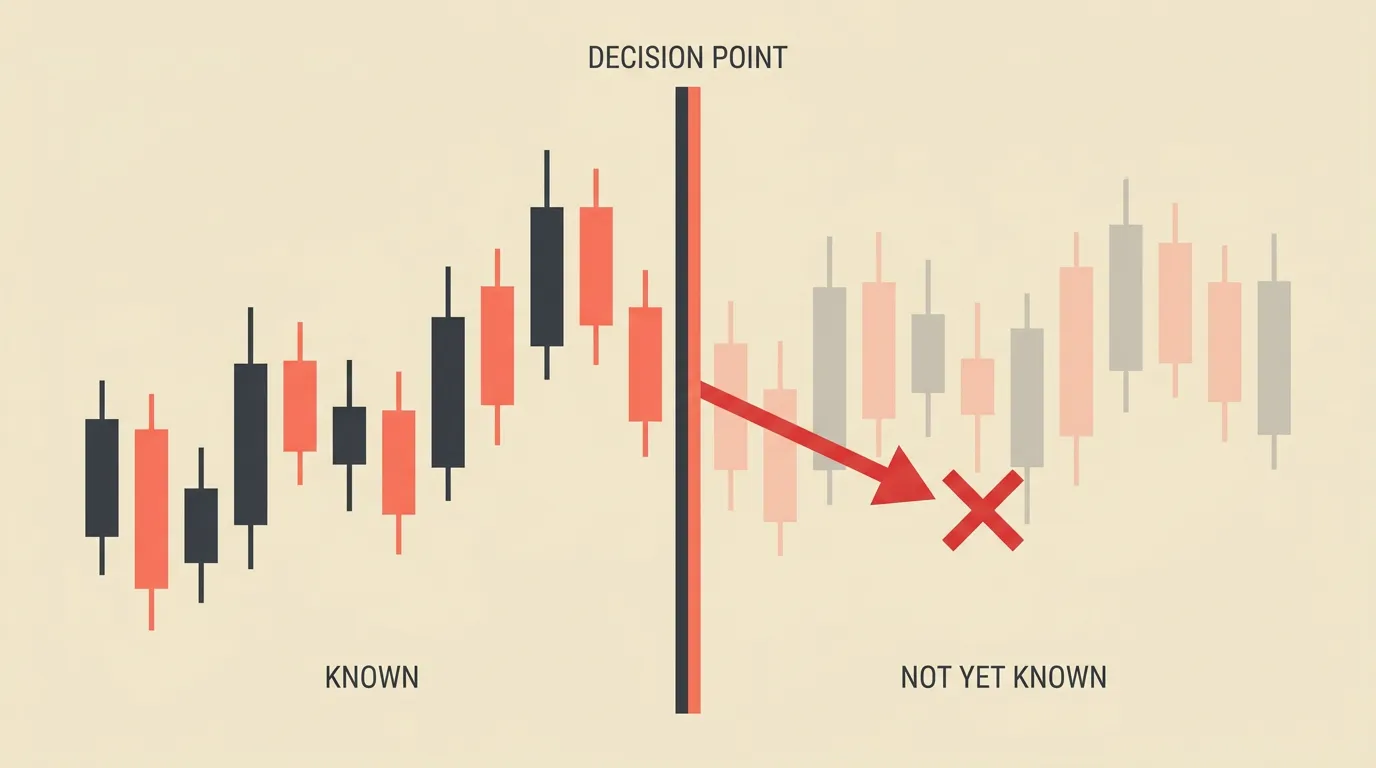
Look-ahead bias hides in the gap between when data exists and when you'd actually have it. The usual culprits:
- Acting on the current candle's close before it closes. If a rule says "buy when this hour closes above the moving average," you can only act after the hour ends. A naive test that enters at that same candle's open is peeking.
- Using the full candle's high or low intrabar. Knowing a candle's low before the candle finishes lets a stop or entry trigger at a price you couldn't have known was coming.
- Revised or restated data. Some historical prices, fundamentals, or index values get corrected after the fact. Testing on the corrected version assumes knowledge you didn't have live.
- Indicators computed over the whole dataset. Normalizing, ranking, or scaling using stats from the entire history leaks future information into early decisions.
- Signals that reference a later bar. Comparing today's entry to a confirmation that only forms tomorrow.
The common thread: the test collapses the sequence of information. Live trading is strictly one candle at a time, in order, with no rewind.
How to catch it before going live
You can't always see look-ahead bias in the results — you have to reason about timing. A few practical checks:
- Trade on confirmed candles only. Decisions should use data that has fully closed. If a rule depends on the current bar, act on the next bar's open.
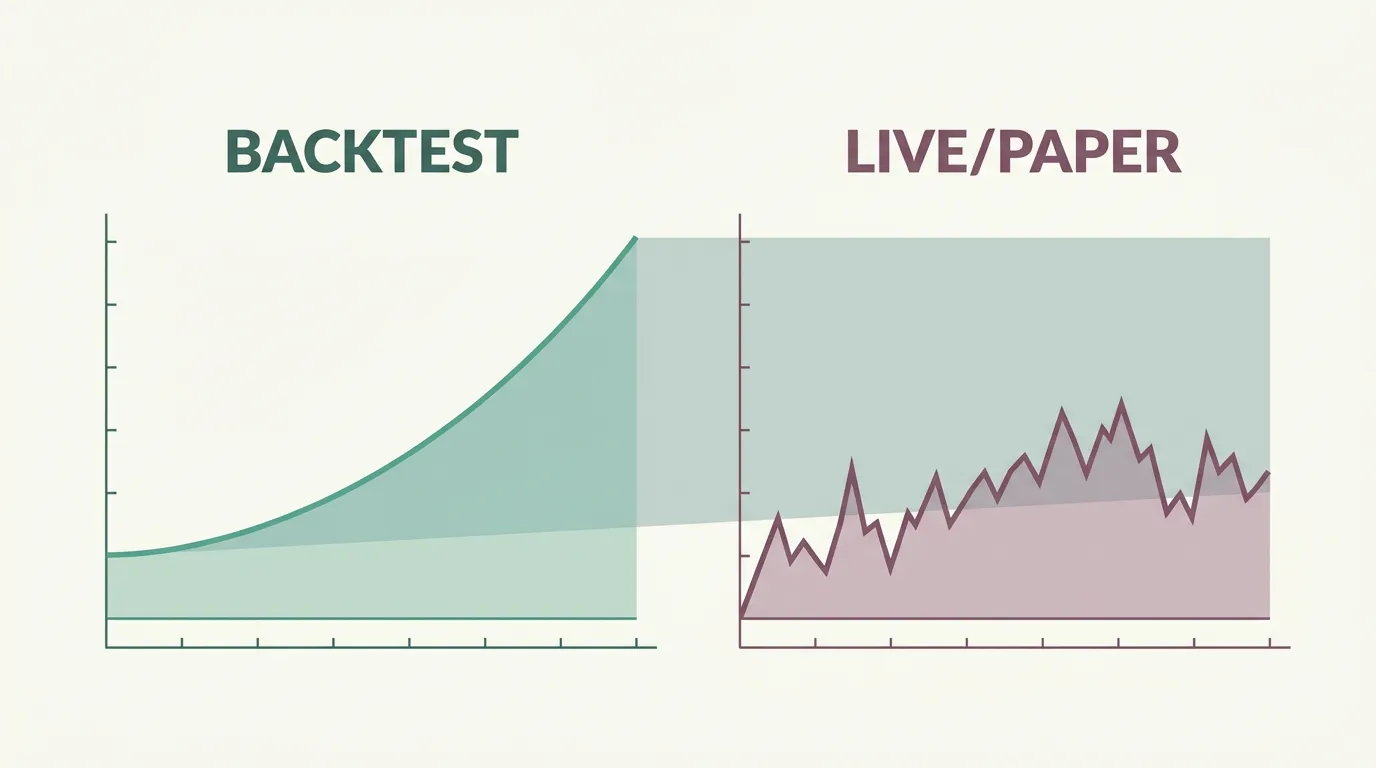
- Compare backtest to paper trading. Run the same strategy forward on live data with no money at stake. If forward results are dramatically worse than the backtest, suspect a peek. is your reality check.
- Distrust suspiciously clean equity curves. Near-perfect entries and tiny drawdowns are a red flag, not a triumph.
- Check out-of-sample too. Look-ahead often travels with overfitting. helps expose both.
A strategy that only works when it can act on the same candle it's still reading is not a strategy — it's a data error. It will not survive contact with a live market.
Why the no-code flow helps
On algomax you describe a strategy in plain language and the AI turns it into a ready-to-run bot that steps through history candle by candle, the same way it will trade live. That ordering matters: the share the same logic, so a signal can't quietly reference a bar that hasn't happened yet.
That doesn't make you immune. If your description implies acting on an unclosed candle, be explicit about timing — say "when the candle closes" rather than "when price crosses." Realistic fees and slippage matter too; look-ahead bias and are the two flaws most likely to turn a great backtest into a losing bot.
Key takeaways
- Look-ahead bias uses data the strategy couldn't have had in real time — it fakes wins.
- It hides in current-candle actions, intrabar highs/lows, revised data, and whole-history stats.
- Trade on confirmed candles and compare backtests to forward paper trading.
- Suspiciously perfect results are a warning sign, not a green light.