Long vs Short Explained for Automated Traders
Long vs short explained in plain language: how each side makes or loses money, when shorting is possible, and what it means for your automated bots.
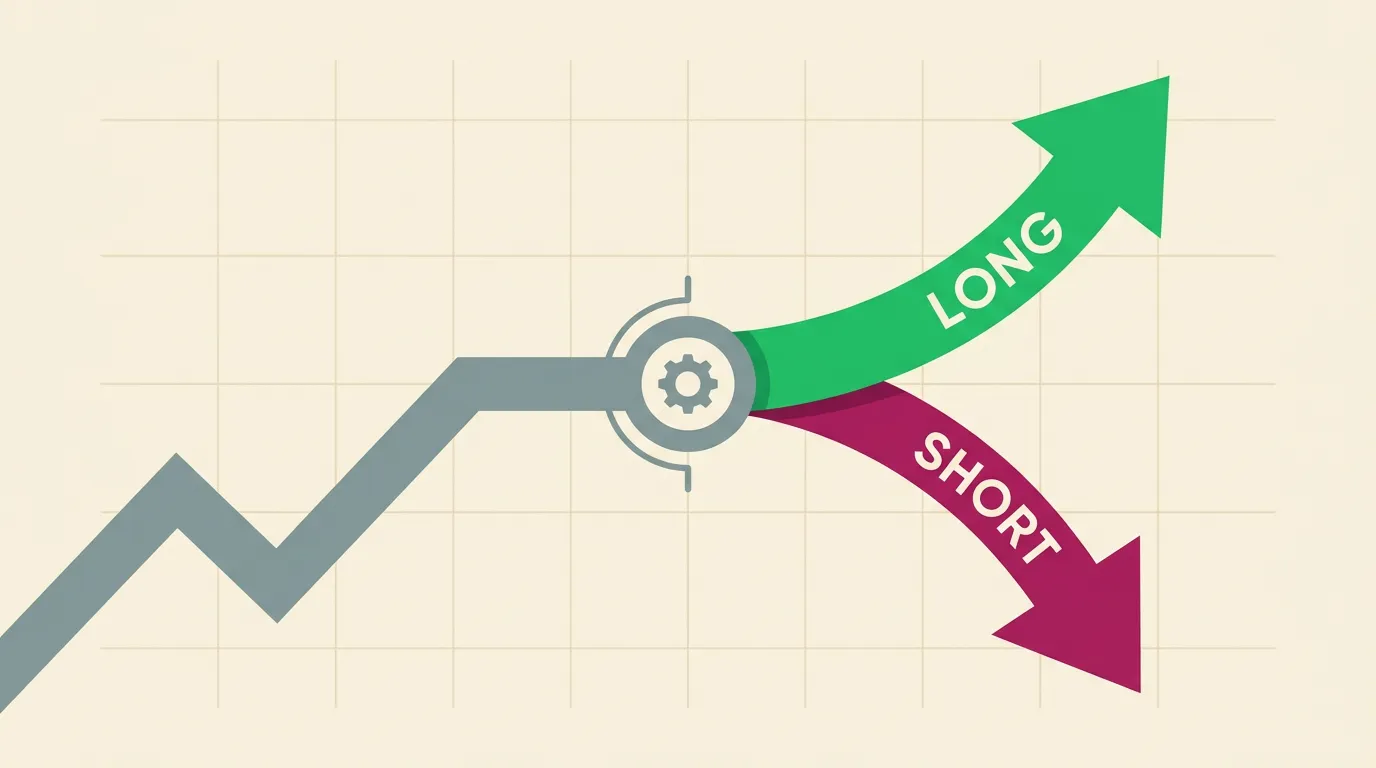
Two of the first words every trader meets are long and short. They simply describe which direction you're betting on. Get them straight before you build a bot, because the choice changes what your strategy can do and where it can run.
What long and short actually mean
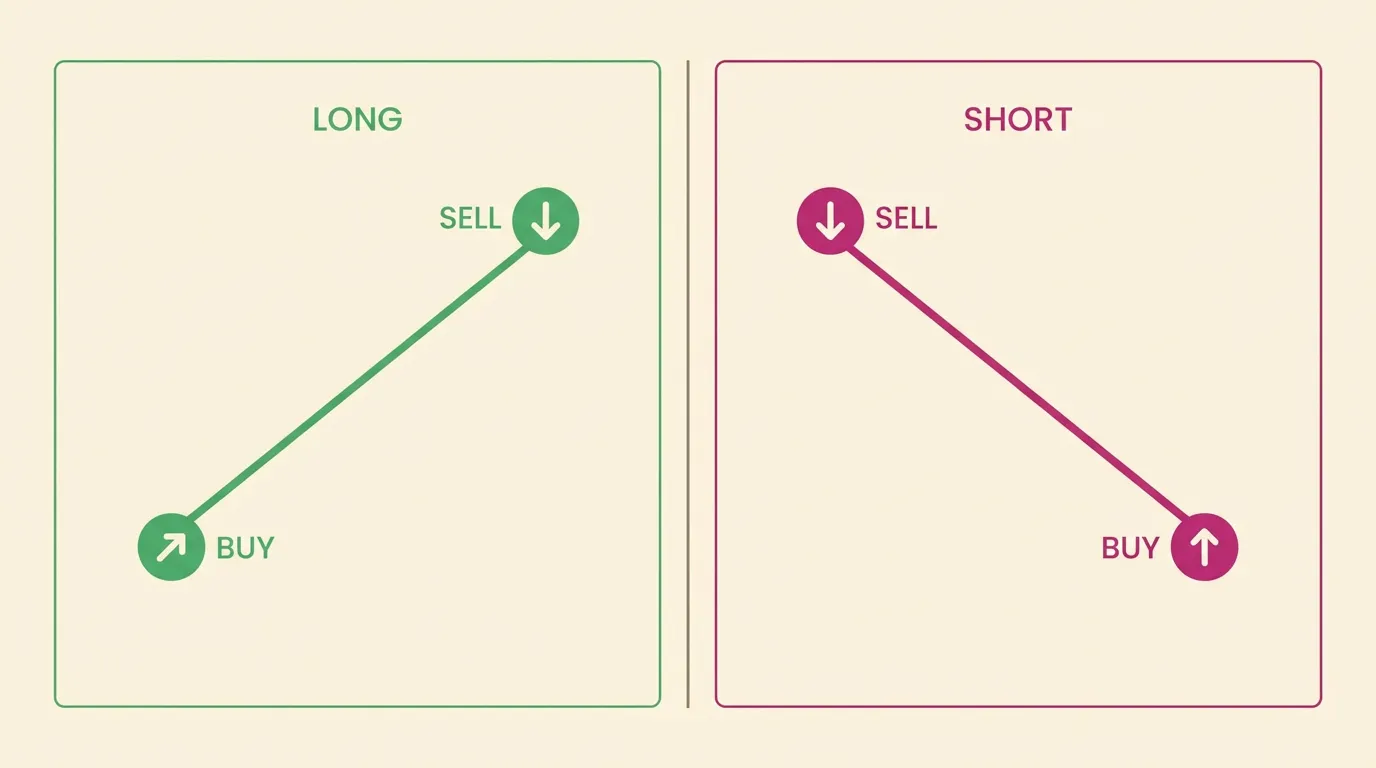
- Long means you buy first, hoping to sell later at a higher price. You profit when price rises. This is the familiar "buy low, sell high" everyone starts with.
- Short means you sell first — borrowing the asset — and buy it back later, hoping to do so at a lower price. You profit when price falls.
Going long is intuitive: you own something and want it worth more. Shorting flips the order of operations. You open by selling, then close by buying, and your gain is the gap between the two.
A long position can only fall to zero, capping your loss. A short's loss is theoretically unlimited, because price can keep rising with no ceiling.
That asymmetry is the single most important thing to respect about shorting.
When you can actually go short
You can't short everywhere. It depends on the market and account type behind your connected broker:
On a plain crypto spot account you can only be long — you own the coin or you don't. To profit from a falling market there, you need futures, where you trade a contract rather than the asset itself. In forex, every trade is naturally two-sided: buying one currency is selling another, so shorting is built in.
Shorting usually involves borrowing, which carries costs — margin interest on stocks, or funding payments on perpetual futures. Those recurring fees quietly eat returns on positions held for days.
Long-only vs two-sided bots
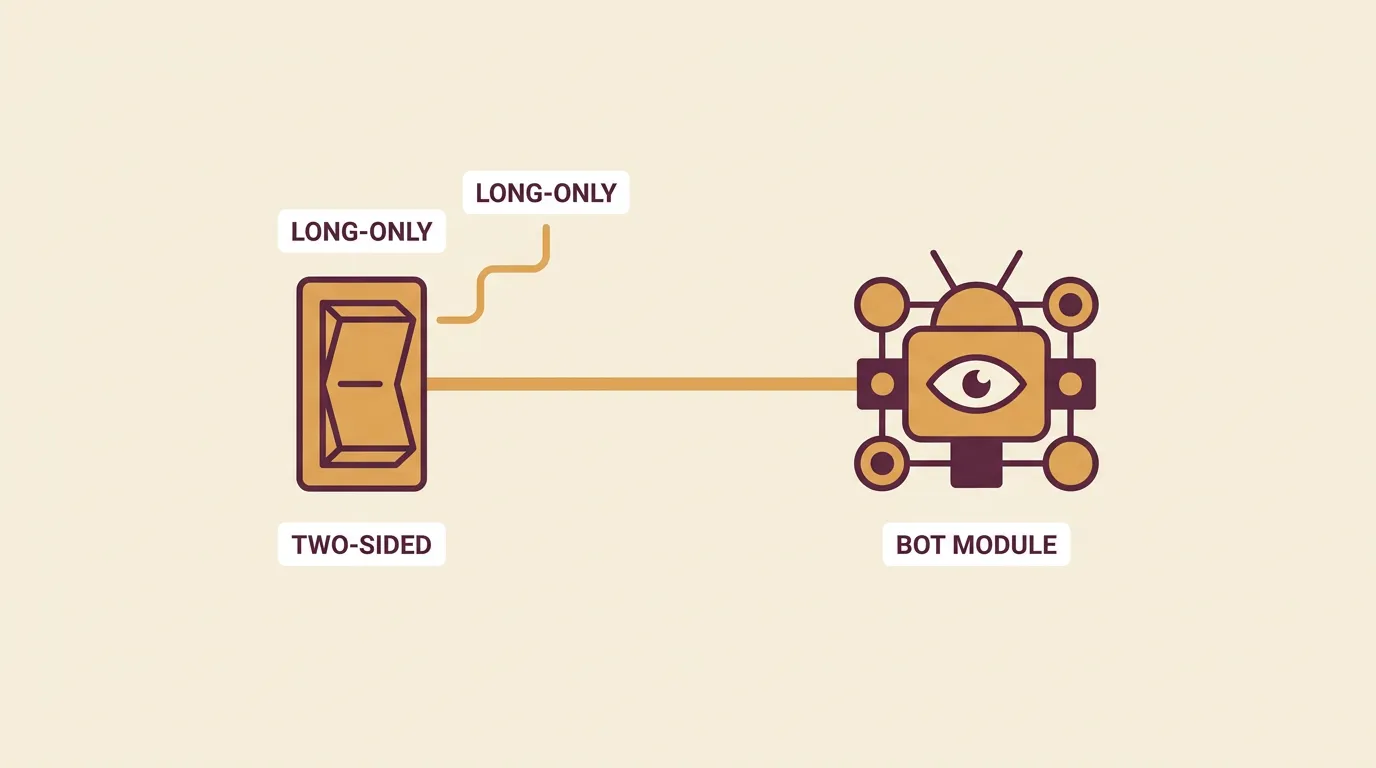
When you describe a strategy to algomax, you declare whether it is long-only or two-sided (able to short). The AI turns that plain-language description into a ready-to-run bot, and the market type is derived from your broker at deploy.
This declaration matters:
- A long-only bot ignores sell signals as entries — it either holds or sits in cash. Simpler, and safe on spot accounts.
- A two-sided bot can open shorts when your rules point down, aiming to profit in both directions. More flexible, but it needs a venue that supports shorting and careful risk controls.
A trend-following idea, for example, might go long above a moving average and short below it — but only if deployed somewhere shorts are allowed. If you point the same two-sided strategy at Binance spot, the short leg simply can't execute.
If you're new to shorting, backtest the two-sided version alongside a long-only one. Seeing how the short trades behaved in a downtrend — and what the borrowing costs did to results — is the fastest way to learn.
Because shorting adds unlimited-loss risk and holding costs, pair it with hard limits. A acts as a circuit breaker, and you should backtest before going live so short entries are proven on history, not guessed. Fee-aware testing matters too, since — including funding — flatters short results.
Key takeaways
- Long profits when price rises; short profits when it falls by selling borrowed assets first.
- Short losses are theoretically unlimited, so shorting demands tighter risk controls than going long.
- You can only short on the right venue: futures, margin stock accounts, or forex — not plain spot.
- Declare a bot long-only or two-sided to match your broker and your comfort with risk.
Frequently asked questions
What is the difference between going long and going short?
Going long means buying first to sell higher later, so you profit when price rises. Going short means selling borrowed assets first to buy them back cheaper, so you profit when price falls.
Why is shorting considered riskier than buying?
A long position can only fall to zero, which caps your loss. A short position loses money as price rises, and since there is no ceiling on price, the loss is theoretically unlimited — which is why tight risk controls matter.
Can I short on any market?
No. On a plain spot crypto account you can only go long. Shorting requires the right venue — crypto futures, a margin stock account, or forex, where every trade is naturally two-sided.
What does declaring a bot long-only or two-sided mean?
When you describe a strategy on algomax, you state whether it can only buy (long-only) or can also sell short (two-sided). A two-sided bot needs a venue that supports shorting, or the short trades simply won't execute at deploy.
Are there extra costs to holding a short?
Usually yes. Shorting involves borrowing, so you may pay margin interest on stocks or funding payments on perpetual futures. These recurring costs can quietly reduce returns on positions held over several days.