Drawdown Recovery Math: Why Losses Cost More to Undo
Drawdown recovery math explains why a 50% loss needs a 100% gain to break even — and why capping max drawdown matters more than chasing bigger wins.
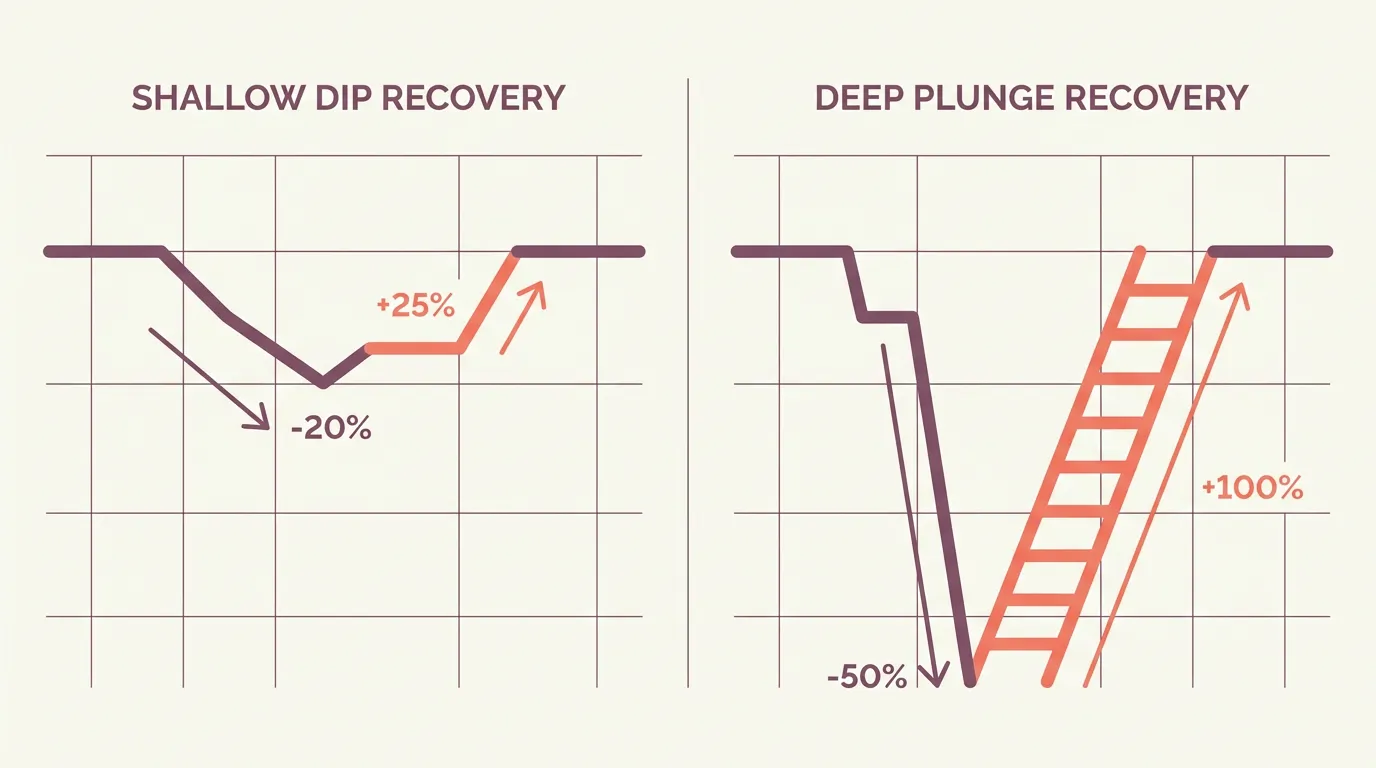
The asymmetry that traps accounts
Here's the uncomfortable truth: a loss and the gain that reverses it are not equal. Lose 20% and you need a 25% gain to get back to even. Lose 50% and you need a full 100% gain. The deeper the hole, the steeper the climb — and it gets non-linear fast.
This is drawdown recovery math, and it's the single strongest reason to focus on capital preservation before you focus on returns. A bot that avoids deep drawdowns has a structural edge over one that swings for bigger wins and occasionally craters.
The recovery table every trader should memorize
The gain required to recover grows much faster than the loss that caused it:
Below roughly 20%, the penalty is mild. Past 30–40%, it turns punishing — you now need a return most strategies rarely produce just to stand still.
A 25% drawdown erases a year of steady gains and demands a 33% rally to undo. Depth, not frequency, is what kills accounts.
Why capping max drawdown beats chasing upside
Because recovery is asymmetric, limiting how deep you can fall is worth more than adding a few percent to your winners. Two practical levers:
- Position sizing. Smaller positions mean each losing trade — and each losing streak — carves a shallower notch. Volatility-based sizing using the scales exposure to how wild the market currently is.
- A hard floor. A acts as a circuit breaker so one bad session can't spiral into a 30% hole. Think of it as a stop-loss for the whole account, not a single trade.
Decide your maximum tolerable drawdown before deploying, not during a losing streak. In the heat of a decline, most people either freeze or double down — both make the math worse.
The goal isn't to avoid drawdowns entirely; that's impossible. It's to keep them in the shallow, recoverable zone where a normal run of gains can heal them.
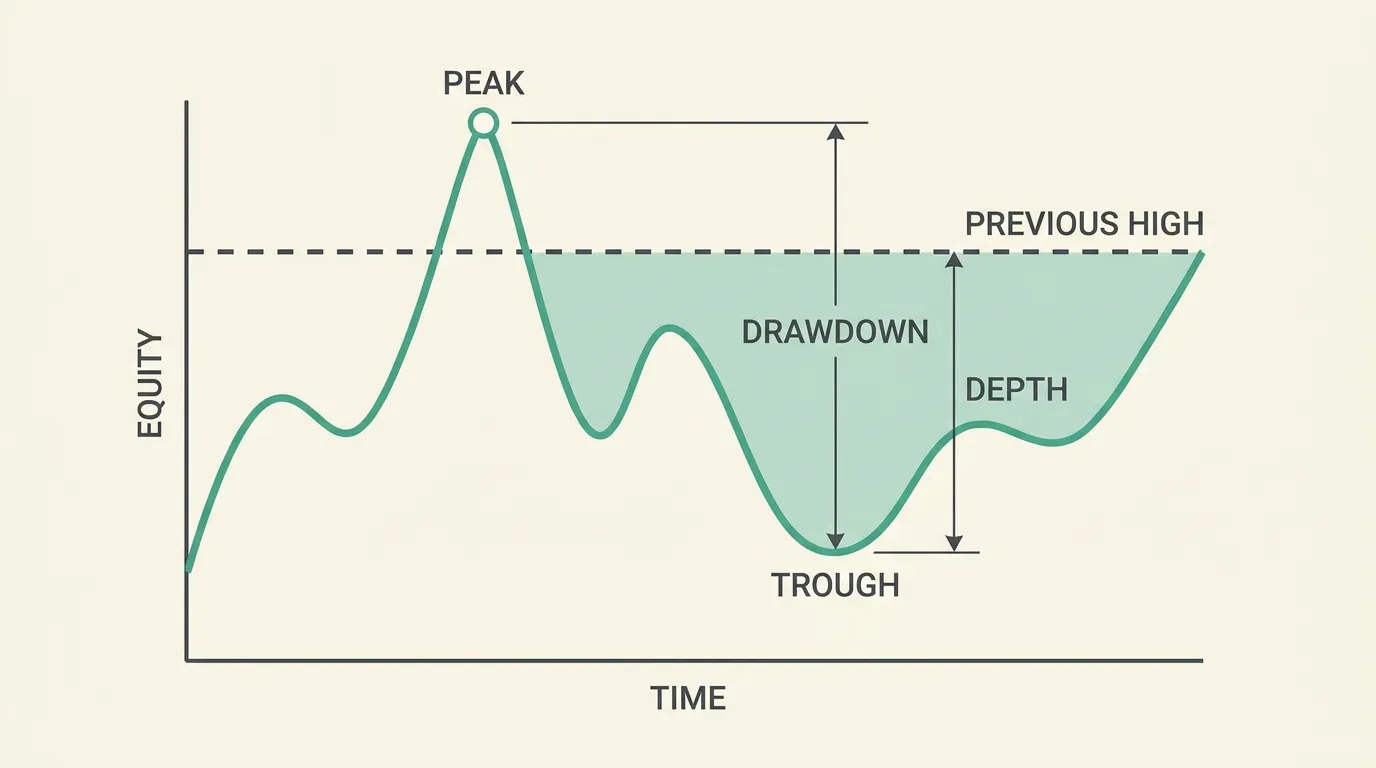
Reading it on your equity curve
Your equity curve tells you where you are relative to your last peak. Drawdown is simply the distance from the highest point your balance has reached to where it sits now. Two habits help:
- Watch peak-to-trough depth in your backtest. A strategy with a smooth curve and 15% max drawdown is often more survivable than one with a higher return and a 45% plunge — even if the second looks better on paper. Confirm it holds up with so the number isn't just curve-fit.
- Set an equity-curve rule. When drawdown crosses a threshold you chose, de-risk: cut size, pause the bot, or switch to observation. Recovering from 15% is routine; recovering from 50% may take years.
On algomax you don't code any of this. You describe the rules in plain language — a daily loss cap, a max position size, a pause-when-down condition — and the assistant turns that description into a ready-to-run bot you can backtest and deploy through your own broker keys.
Key takeaways
- Recovery is asymmetric: a 50% loss needs a 100% gain, and the penalty accelerates past 30%.
- Cap depth first. Limiting max drawdown protects compounding more than squeezing extra return from winners.
- Size and floors are your levers — volatility-based sizing plus a hard daily loss limit keep declines shallow.
- Watch the equity curve and pre-commit to a de-risk threshold before emotion takes over.