Value Averaging vs DCA: Smarter Accumulation Bots
Value averaging vs dollar-cost averaging for accumulation bots: how each sizes buys, the key trade-offs, and how to automate value averaging without code.
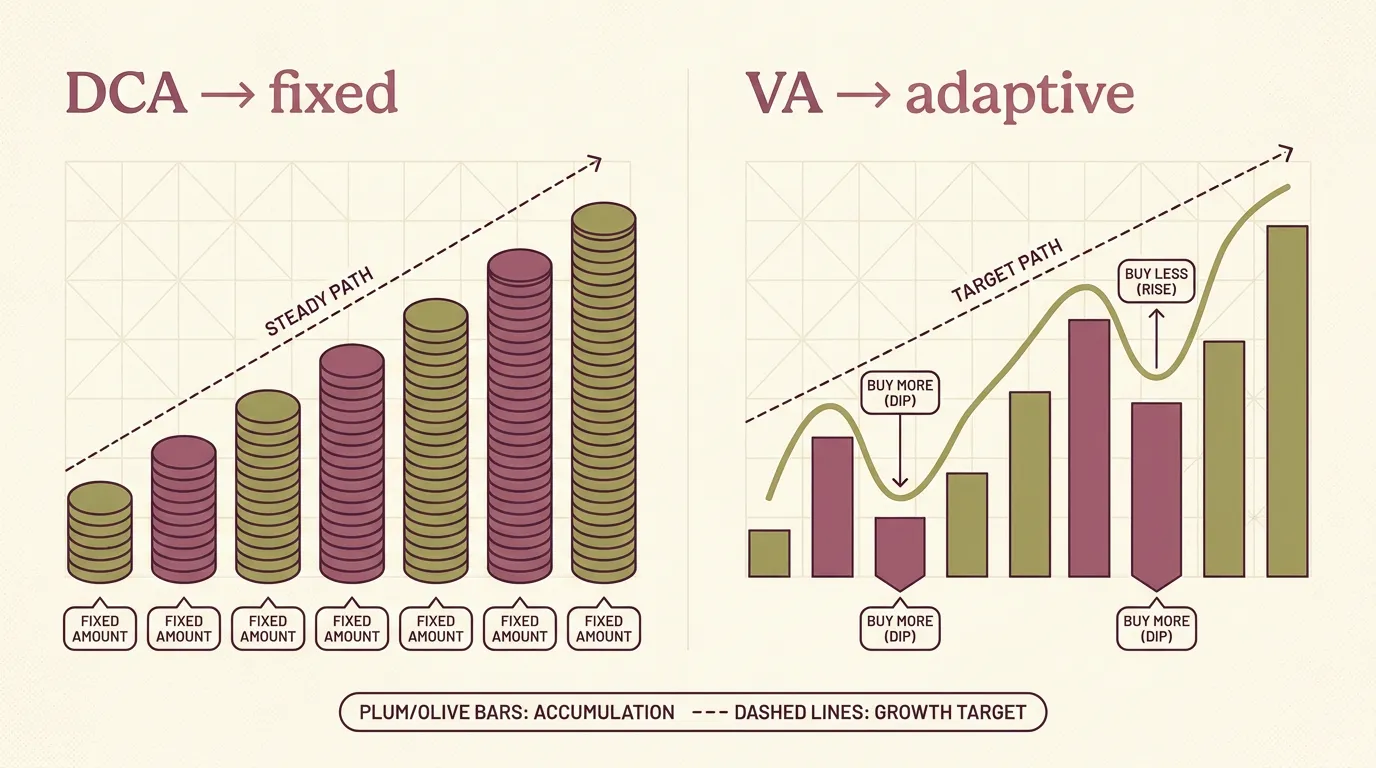
Two ways to accumulate on autopilot
Both dollar-cost averaging (DCA) and value averaging (VA) are recurring-buy strategies that spread purchases over time. The difference is how they size each buy.
- DCA: invest a fixed cash amount every interval — say $100 weekly — regardless of price.
- VA: invest whatever amount is needed to grow your portfolio value by a fixed target each interval — say "+$100 of value per week."
That one change makes VA counter-cyclical: it automatically buys more after a dip and less after a rally. DCA just keeps buying the same dollar amount.
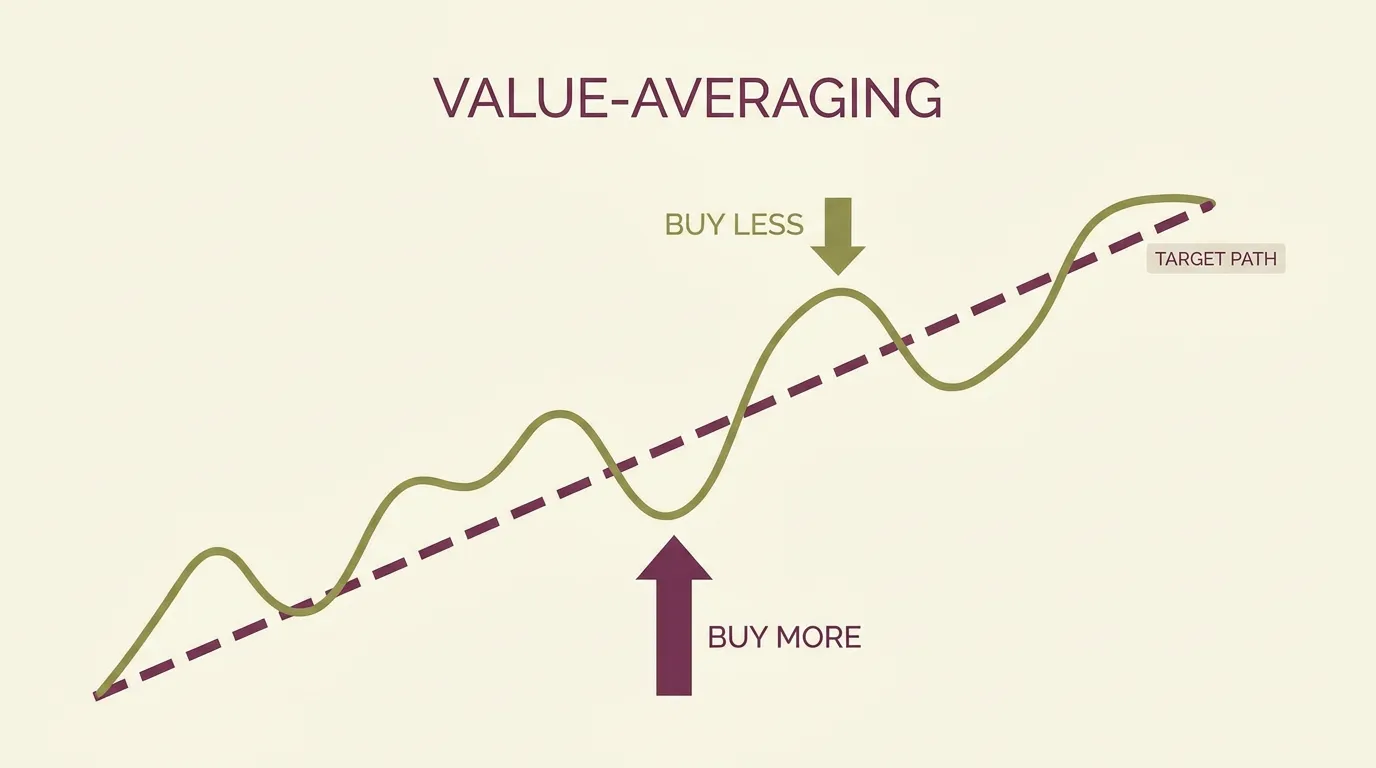
How value averaging actually sizes a buy
VA works against a rising value path. If your target is +$100 per week, after four weeks your position should be worth $400. The bot compares your actual holdings to that target and buys (or sells) the gap.
Because it buys more when you're behind and less when you're ahead, VA mechanically lowers your average cost versus DCA in choppy, sideways markets. The catch: your cash outlay is unpredictable, and a long drawdown can demand progressively larger buys.
Value averaging can call for a big buy during a deep, extended decline — exactly when your conviction is lowest. Cap the maximum single purchase so one bad week can't drain your reserve.
Trade-offs: which to automate
Neither strategy predicts direction — both are about removing emotion and timing from accumulation. Pick based on your cash flow and the market's character.
- Choose DCA for simplicity and steady, predictable spending. It's ideal if you're funding buys from a paycheck and want a fixed number leaving your account.
- Choose VA if you can tolerate variable buy sizes and want to lean into weakness. It tends to shine when price oscillates around a range rather than trending straight up.
DCA optimizes your cash schedule; value averaging optimizes your average entry price. They answer different questions.
One more nuance: VA occasionally signals a sell when you're ahead of target. Decide up front whether you want a pure accumulation bot (ignore sells, only buy the shortfall) or a true value-averaging bot that trims into strength. Pairing accumulation with light signals — buying only when is oversold, for example — is another way to bias entries without abandoning the schedule.

Automating it without code
On algomax you don't build a spreadsheet or write a script. You describe the plan in plain language to an AI assistant — for instance, "each week, top up my Bitcoin position so its value grows by $100, but never buy more than $250 in one week" — and it becomes a ready-to-run bot on your own connected broker.
A few practical steps:
- Set the interval and target — weekly or monthly usually beats daily for accumulation (fewer fees, less noise).
- Cap the max single buy so a drawdown can't overspend your reserve.
- on historical candles to see how buy sizes would have swung through past dips and rallies.
- Use limit orders where possible to control fills — see .
Because bots trade through your own broker keys, keep those keys for safety.
Key takeaways
- DCA buys a fixed cash amount on schedule; VA buys to hit a growing value target.
- Value averaging is counter-cyclical — bigger buys on dips, smaller on rallies — which can lower average cost in ranging markets.
- VA's downside is unpredictable cash needs; always cap the maximum single buy.
- Describe either plan in plain language, backtest it, then run it live — no code required.