Correlation Risk: When Your Bots Bet on the Same Thing
Correlation risk lets several trading bots secretly place one big bet. Learn how to spot hidden overlap and cap total exposure across your automated strategies.
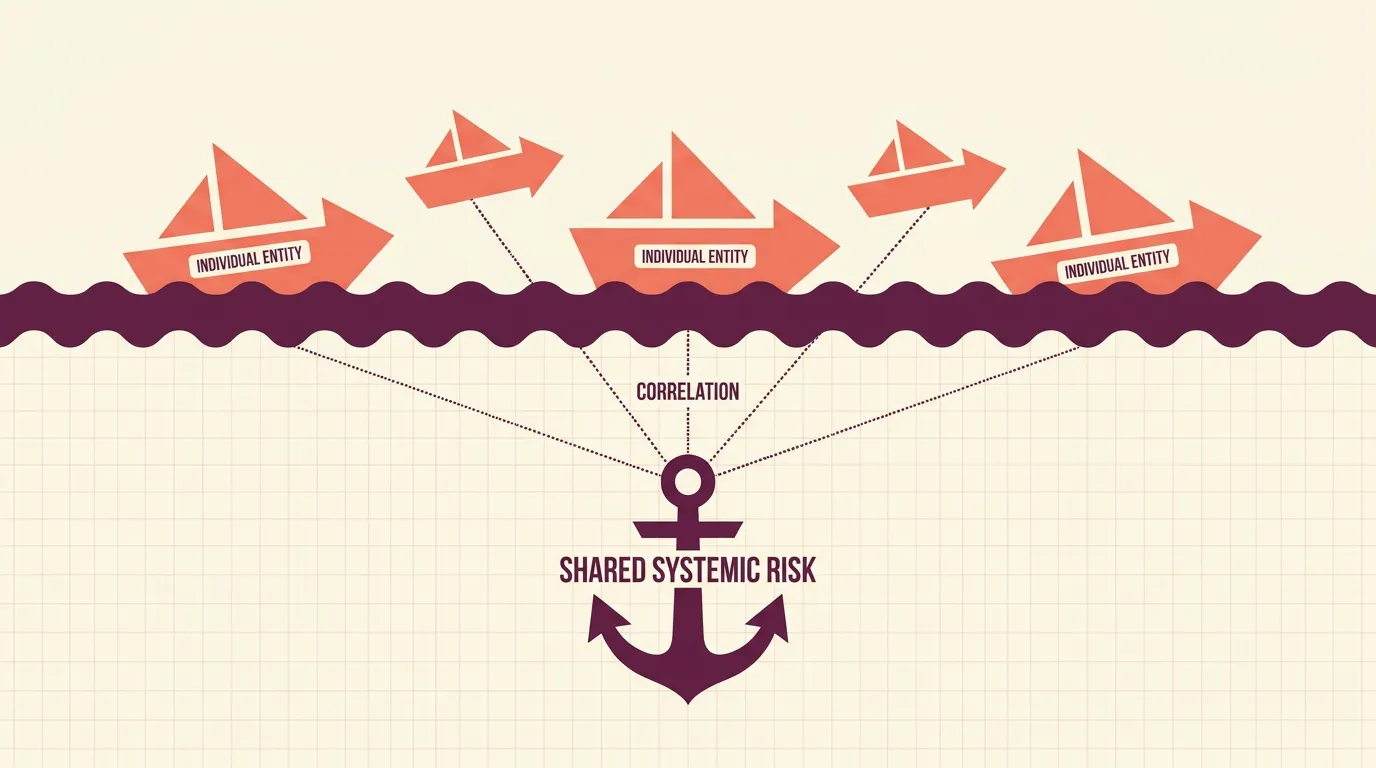
The illusion of running many bots
Running five bots feels safer than running one. But if those bots trade correlated assets in the same direction, you don't have five bets — you have one big bet wearing five costumes. When the market turns, they all lose together, and your drawdown is far worse than any single bot's risk settings suggested.
Correlation risk is the gap between how diversified you think you are and how concentrated you actually are.
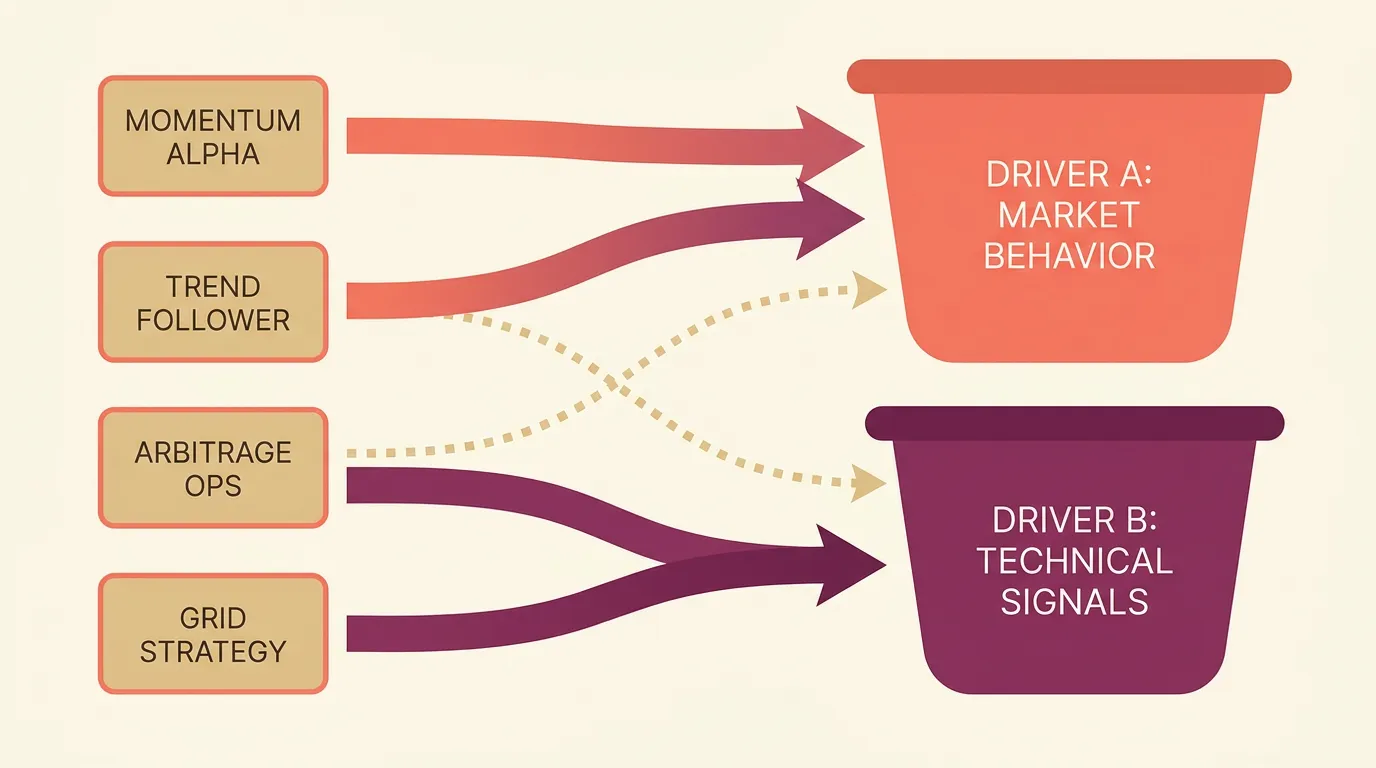
Where hidden overlap creeps in
Correlation sneaks into a bot portfolio in ways that aren't obvious from a strategy list:
- Same asset, different strategies. An RSI bot and a breakout bot both long BTC at once. Two bots, one exposure.
- Correlated assets. BTC and ETH, or a basket of large-cap US tech stocks, tend to move together. Separate tickers, shared fate.
- Same factor. Several trend-following bots across different markets all get long in a risk-on rally — and all reverse together when it ends.
- Same direction bias. If every bot is , you're really running one directional wager on the whole market.
Correlation isn't fixed. In calm markets assets drift apart; in a crash, correlations spike toward 1 — exactly when diversification matters most and delivers least.
Measuring your true exposure
Instead of counting bots, count net exposure per driver. Group positions by what actually moves them, then add up the risk.
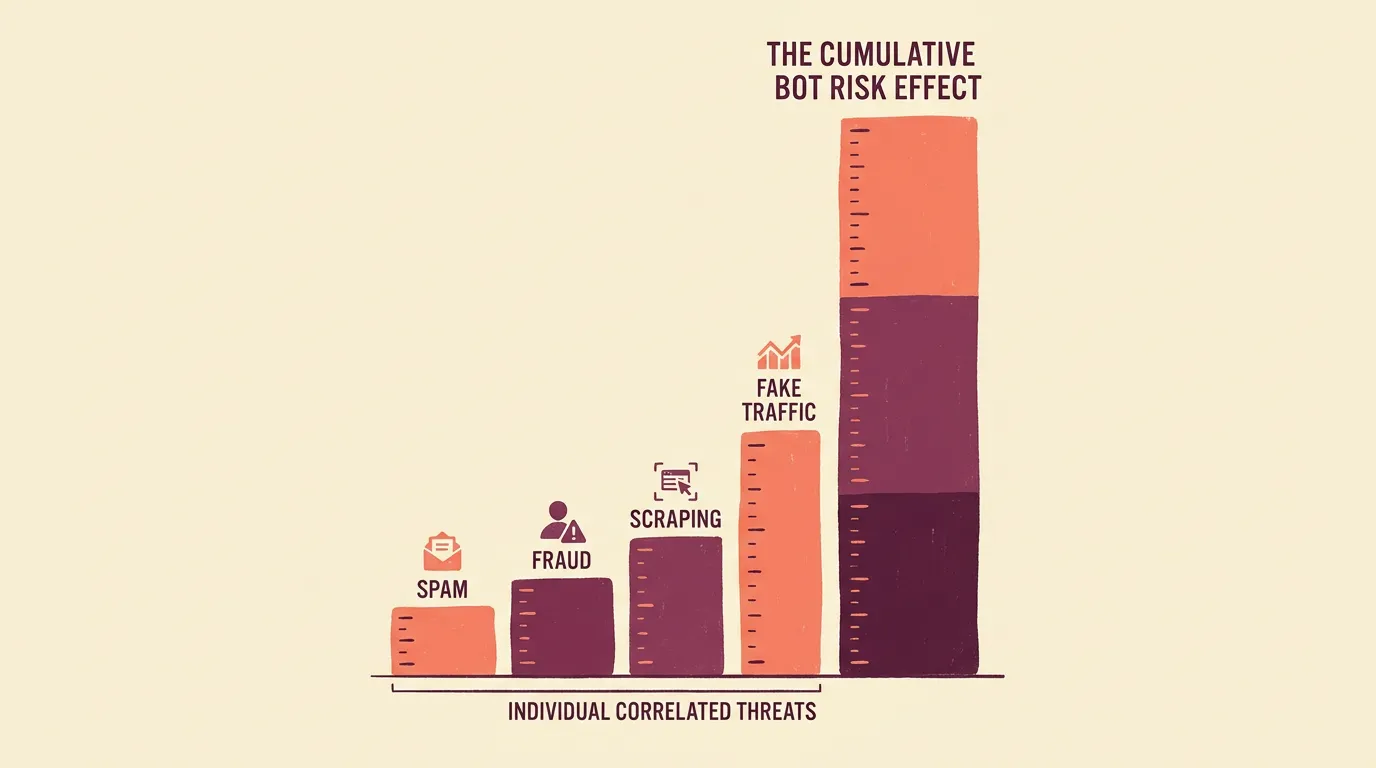
A simple habit: assume your correlated positions could all hit their stops on the same candle. If that combined loss is more than you'd accept in a single day, you're over-concentrated — no matter how many separate bots you're running. This is the same logic behind a , applied across the whole account rather than one bot.
Capping correlation in practice
You don't need a covariance matrix to control this. A few plain rules go a long way:
- Set a per-asset cap. Decide the maximum total position any single asset can hold, then split it across bots — not one full allocation each.
- Group correlated assets. Treat BTC and ETH (or a cluster of tech stocks) as one bucket with a shared exposure ceiling.
- Limit same-direction stacking. Cap how much of the account can be long — or short — at once across all bots.
- Watch the recovery math. Correlated losses compound into deep drawdowns, and .
Because algomax bots trade through your own connected broker keys, they share one account balance — so a per-asset or per-group exposure limit described in plain language becomes a real, enforced ceiling. You describe the rule conversationally; the assistant turns it into part of the ready-to-run bot, no code involved.
Before deploying a new bot, list what it's really betting on — asset, direction, and driver — and check it against what your existing bots already hold. Overlap you can name is overlap you can cap.
Key takeaways
- More bots isn't more diversification if they trade correlated assets in the same direction.
- Measure net exposure per asset and per correlated group, not the number of bots.
- Stress-test the worst case: assume correlated positions all hit stops together.
- Enforce per-asset and same-direction caps so your real bet stays the size you intended.