Binance Spot vs Futures: Which Suits Your Bot?
Binance spot vs futures for trading bots: what changes in shorting, leverage, fees and funding, and which automated strategies actually belong on each.
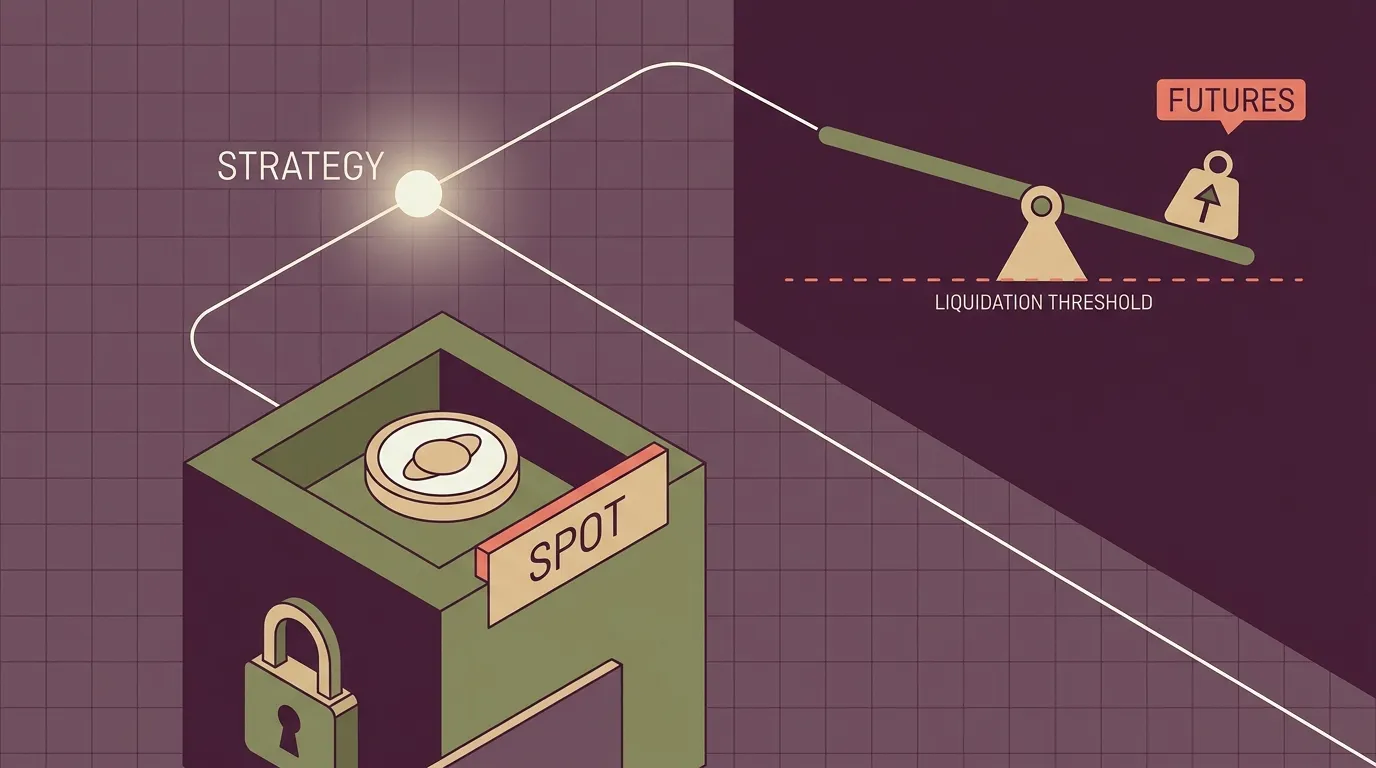
Spot or futures? Start with what the strategy needs
On Binance, the same plain-language idea can run in two very different places. Spot means you buy and own the coin — no leverage, no liquidation, no funding costs. Futures (perpetuals) means you trade a contract on the price, with leverage available and the ability to go short.
The deciding question isn't "which is better" — it's does my strategy need to short or use leverage? If not, spot is the simpler, more forgiving home for it.
A strategy that only makes sense with 10x leverage isn't a better strategy. It's the same strategy with a shorter runway before a liquidation ends it.
On algomax you describe the idea in your own words and declare whether it is long-only or two-sided (can short). The market type is derived per venue when you deploy — so the decision is really about the strategy's logic, not about plumbing.
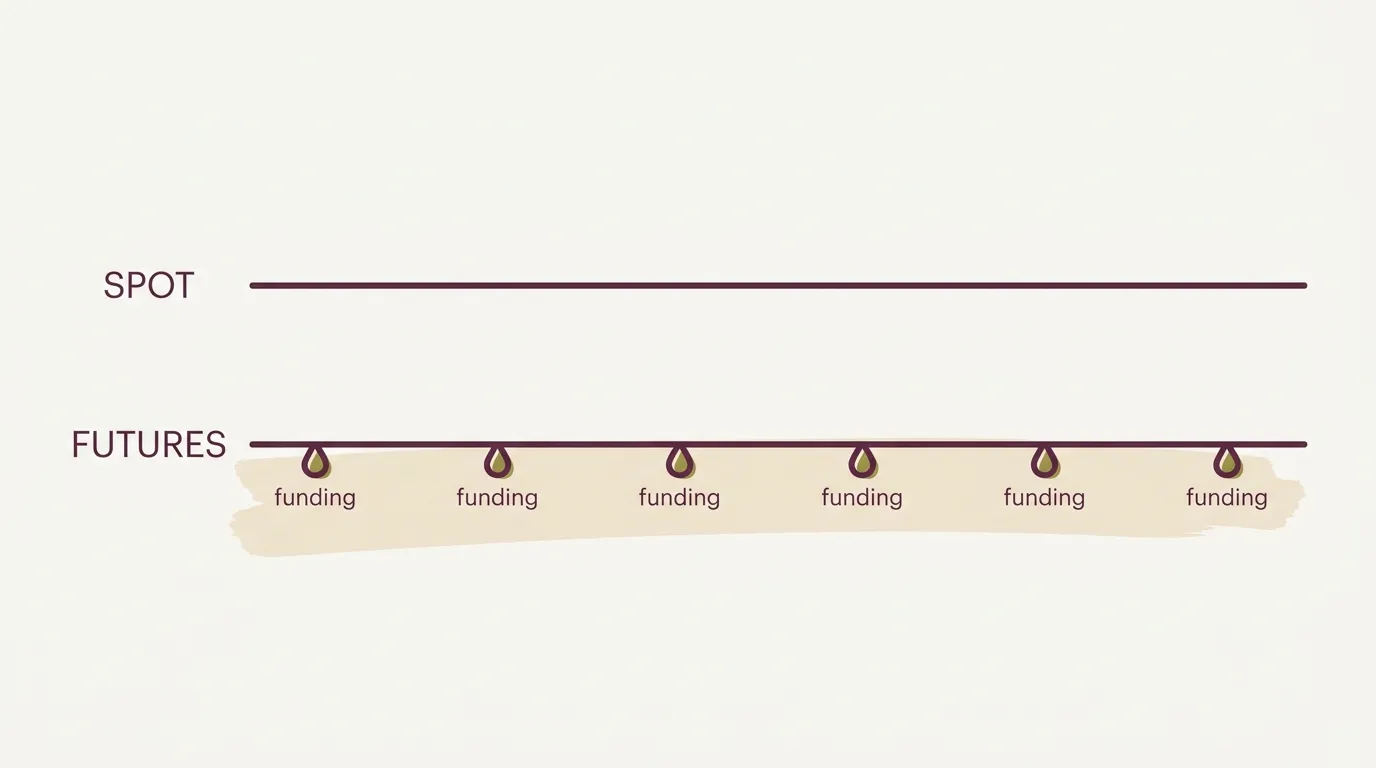
What actually changes between the two
Two consequences bots feel most:
- Fees scale with leverage. A 5x position pays fees on 5x the notional. A strategy that trades often can be fee-viable on spot and quietly .
- Futures adds a time cost. Holding a perp through funding periods drains or credits your position regardless of whether price moved. Spot has no equivalent.
Which strategies fit where
Lean spot when:
- You're accumulating — DCA, value averaging, buy-the-dip ladders.
- You run grids in a range and are happy holding inventory.
- The idea is long-only trend following on majors like BTC or ETH.
- You want the mistake surface as small as possible while you learn.
Consider futures when:
- The edge requires shorting — bearish trend signals, pairs/relative-value ideas, hedging spot inventory.
- You need capital efficiency: keeping margin free rather than tying up full notional.
- You're trading short-horizon mean reversion where being two-sided doubles the opportunity set.
Leverage does not increase your edge — it multiplies the outcome of whatever edge you already have, including the losing streaks. Size positions from your account equity and volatility, not from the maximum leverage the venue allows.
Deploying the same idea on both — carefully
Running one concept in both venues is a legitimate way to compare execution, but treat them as separate bots with separate risk budgets. Two things to keep straight:
- Backtest with the right cost model. A spot backtest that ignores funding will flatter a futures deployment. Test each venue's version on its own assumptions — see before you trust either.
- Watch overlap. A long spot BTC bot plus a long futures BTC bot is one big directional bet wearing two costumes. That's classic .
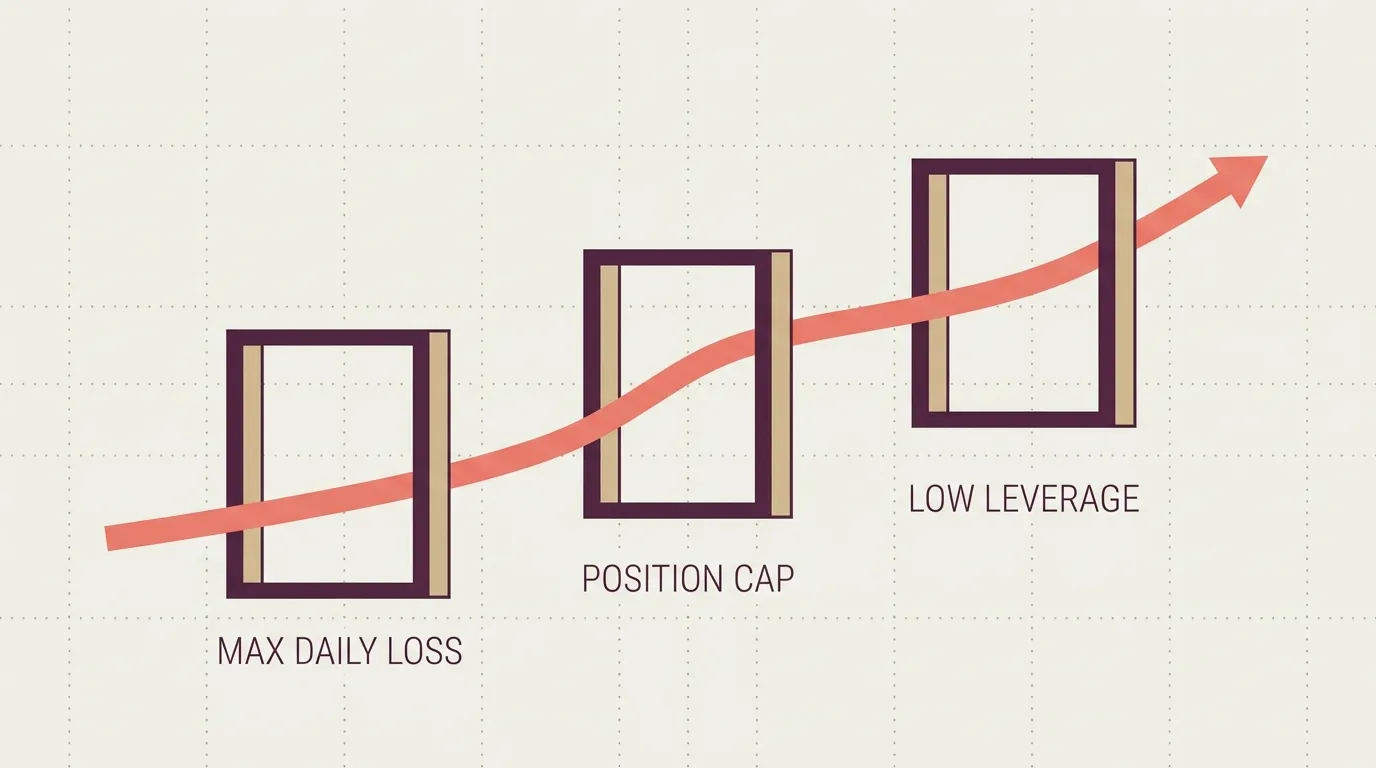
Practical guardrails that matter more on futures than spot: a hard max daily loss limit, a max position size cap, and conservative leverage (many bot operators stay at 1–3x). Crypto runs 24/7, so your bot will be awake for weekend gaps and thin-liquidity hours whether you are or not.
If you're new to Binance automation, deploy your first bot long-only on spot with small size. You remove liquidation from the equation entirely and still learn everything about signal quality, fills, and slippage.
Key takeaways
- Spot = ownership, no leverage, no liquidation, no funding — the default for accumulation, grids, and long-only trend bots.
- Futures = shorting and capital efficiency, at the cost of liquidation risk, funding, and fees on leveraged notional.
- Choose based on whether your strategy genuinely needs to short or use leverage — not on the bigger numbers.
- If you run both, treat them as separate bots with separate risk limits, and check you haven't doubled the same directional bet.
Neither venue makes a weak strategy work. Both amplify how carefully you sized it.
Frequently asked questions
Is spot or futures better for a first crypto bot?
Spot is usually the gentler starting point because there is no leverage, no liquidation risk and no funding cost to model. You still learn everything that matters about signal quality, fills and slippage, just with a smaller mistake surface.
Can the same strategy run on both Binance spot and futures?
Often yes, if the logic is long-only or you adapt it to be two-sided, but you should treat them as separate bots with separate backtests and risk limits. Futures adds funding costs and leveraged fees that a spot backtest will not capture.
Do I need futures in order to short crypto?
On Binance, shorting is a futures feature — spot only lets you buy and sell what you own. If your strategy needs to profit from falling prices, it needs a two-sided setup on futures.
How much leverage should an automated bot use?
Many bot operators stay at low multiples such as 1–3x, because leverage multiplies losing streaks as much as winning ones. Size from your account equity and the market's volatility rather than from the maximum the venue allows.
Does algomax hold my crypto when a bot trades?
No. Bots place orders through your own connected Binance API keys, so funds stay in your exchange account and algomax never custodies or pools money.