AI Trading Bot Iteration: Refine a Strategy by Conversation
AI trading bot iteration done right: refine a no-code strategy through conversation, one change at a time, without overfitting your backtest.
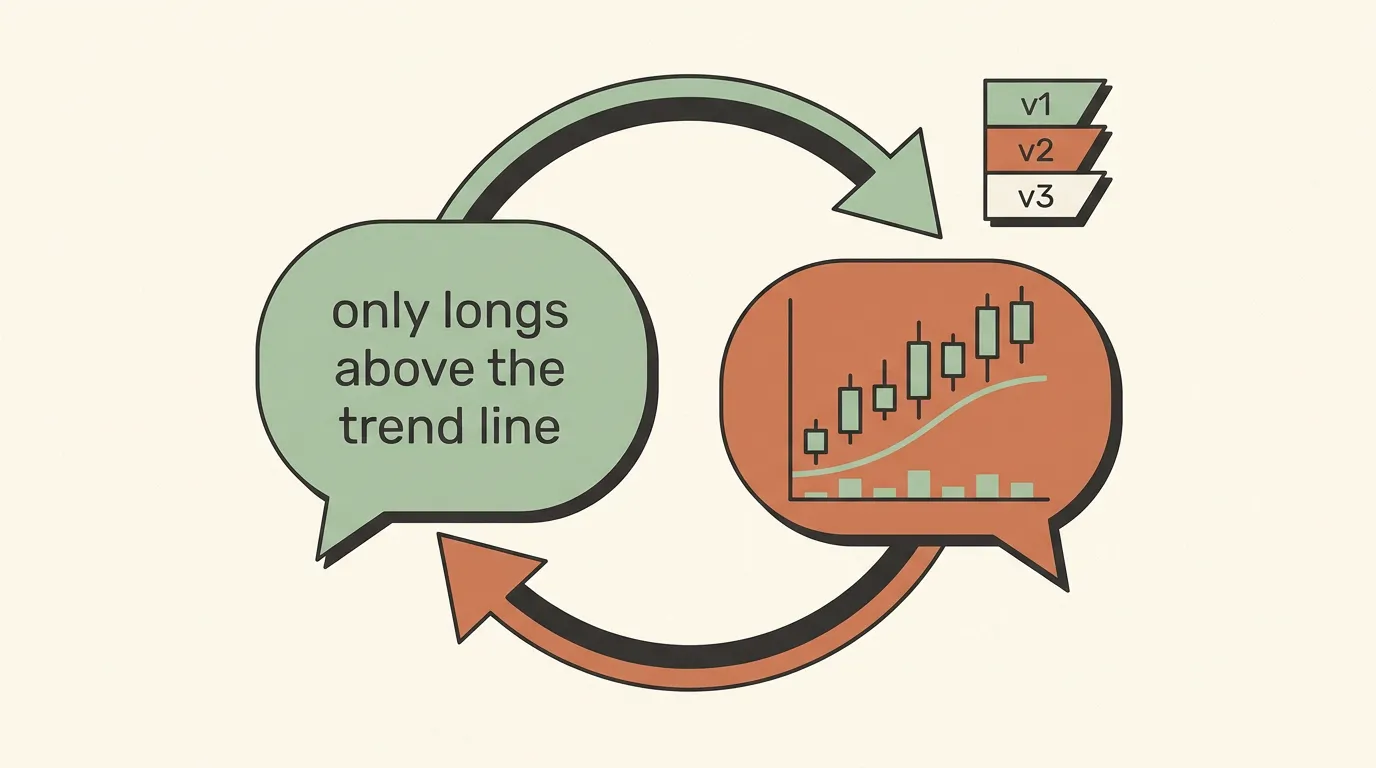
Your first description almost never produces the bot you end up keeping. What a conversational builder really gives you is the follow-up: you say "only take longs above the 200 EMA" and the AI hands back a revised bot. Here is how to make those rounds of changes without fooling yourself.
Read back what the AI built first
Before you change anything, ask the assistant to summarize the current rules in plain words. A good summary covers:
- Entry: the exact condition that opens a trade
- Exit: take profit, stop loss, or signal reversal
- Direction: long-only or two-sided (can short)
- Size: how much each trade risks
- Timeframe: which candles the rules read
Check that summary against what you meant. Most surprises come from vague words like "dip," "strong trend," or "oversold," which the AI had to turn into a specific number. If you wrote your first prompt following our guide to , there will be fewer gaps, but you should still check.
Fix misunderstandings before you optimize anything. If the bot is trading the wrong idea, a better backtest only makes the wrong idea look good.
Change one thing per round
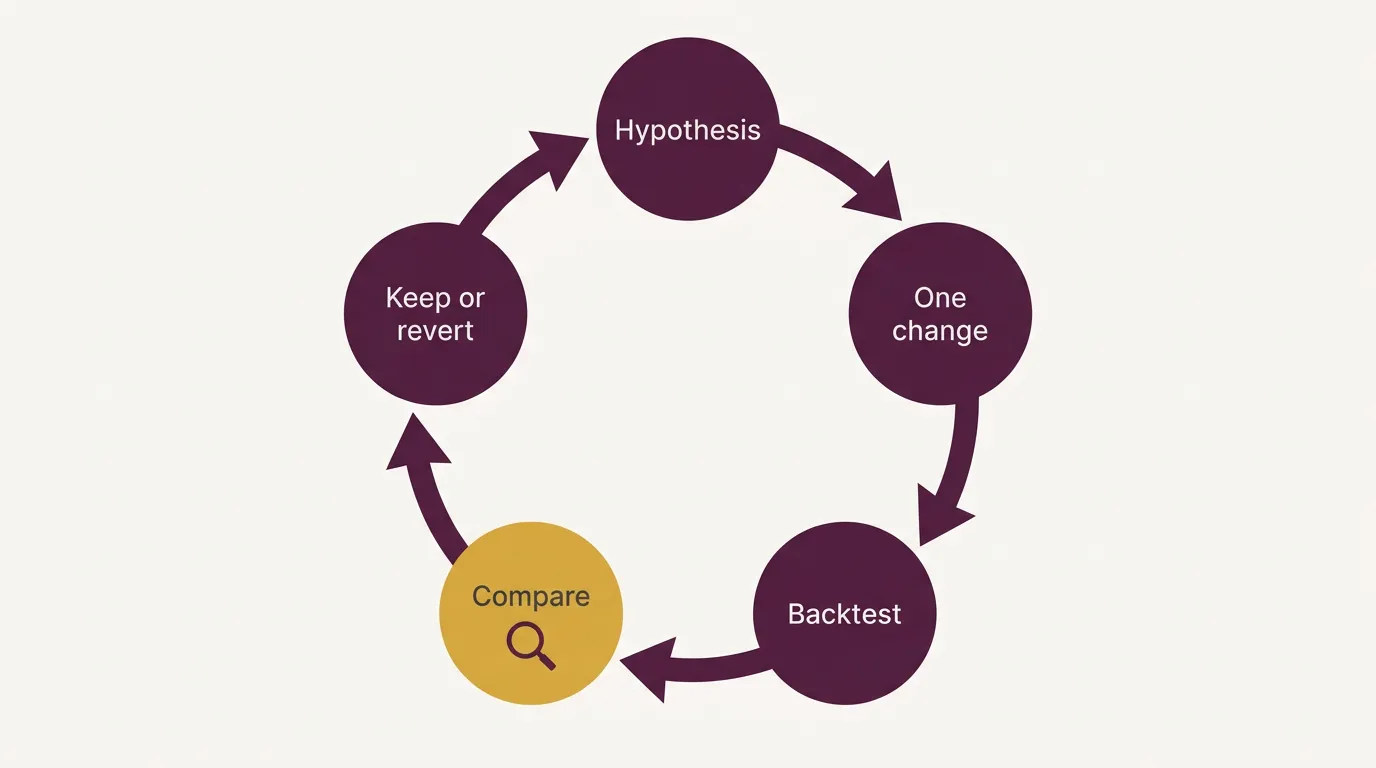
Every round of changes should test a single idea you can name. A simple loop:
- State the hypothesis: "Losses cluster in downtrends."
- Request one change: "Skip new longs when price is below the 200-period EMA."
- Rerun the backtest on the same period and market.
- Compare trade count, drawdown, and net result after fees.
- Keep or revert, then move to the next idea.
If you change three things at once, you can't tell which one helped. Specific requests also get more predictable results than vague ones:
Know when to stop tweaking
Any tweak that improves the backtest might just be fitting the noise in that particular stretch of history.
Conversation makes changes easy, and that is the trap. Twenty quick rounds can tune a strategy to the past until it stops describing anything real. Some guardrails:
- Set a round budget before you start, for example five changes, then stop and review.
- Prefer changes with a reason. "Avoid trading against the trend" is logic. "RSI 27 worked better than 30" is often just noise.
- Watch the trade count. A filter that removes most trades leaves you with very little evidence.
- Hold back recent data and test the final version on it once. Our piece on explains why.
If a change only helps on one coin, one stock, or one quarter, treat it as a coincidence until you see it work somewhere else too.
Keep a plain change log
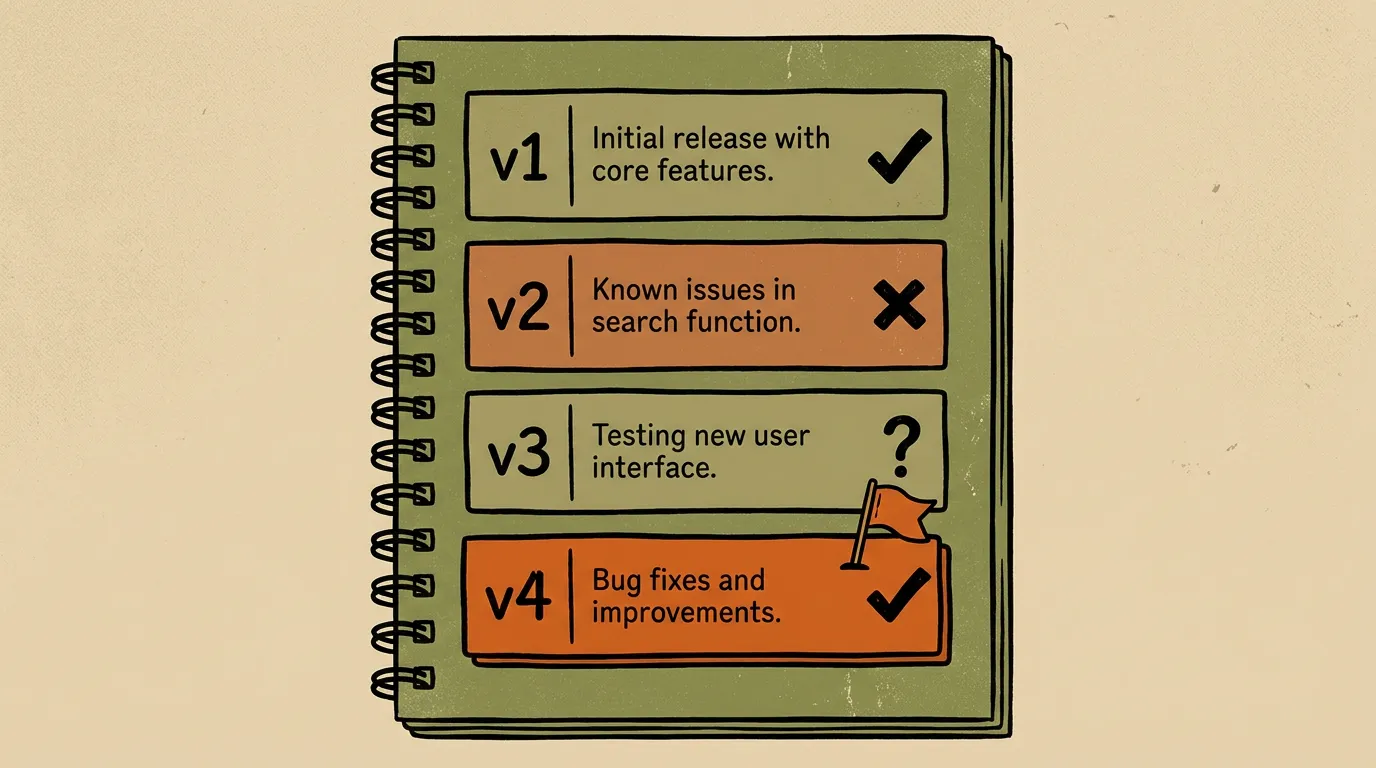
You don't need tools for this, just short notes per version:
- Version and date
- What changed (one line)
- Why (the hypothesis)
- Result (better, worse, or inconclusive)
The log lets you roll back cleanly when a promising idea fails. It also means you know exactly what is running once the bot goes live. When a version holds up, run through the and start small. If you're new to the testing side, covers the basics.
Conclusion
Building a bot by conversation turns strategy design into a dialogue, but the discipline is still yours. Read back the rules, change one thing at a time, stop before you overfit, and write down what you did. No version is guaranteed to profit live. Trading carries real risk, so treat every improvement as a hypothesis, not a promise.
Key takeaways
- Ask the AI to summarize its rules in plain words before you request changes.
- Make one specific, reasoned change per round and rerun the same backtest.
- Limit how many rounds you run and confirm the final version on held-out data.
- Keep a simple change log so you can roll back and always know what's running live.
Frequently asked questions
Can I change an AI-built trading bot after it is created?
Yes. With a conversational no-code builder you describe the change in plain language, such as adding a trend filter or a stop loss, and the assistant produces a revised version you can backtest again.
How many changes should I make before testing?
One. Changing a single rule per round and rerunning the same backtest is the only way to know which change actually made a difference.
How do I know if I am overfitting through too many tweaks?
Warning signs include changes justified only by better numbers, a shrinking trade count, and improvements that appear on one market or period but nowhere else. Setting a round budget and confirming the final version on held-out data helps.
Do I need to understand code to refine the strategy?
No. You never see or edit code. Ask the assistant to restate the rules in plain words, check them against your intent, and request changes the same way.
Does a better backtest mean the bot will profit live?
No. A backtest shows how the rules behaved on past data, and live results can differ because of changing market conditions, fees, and slippage. Trading always involves risk.