Forex Session Timing: When Automated Bots Should Trade
Forex trades 24/5, but liquidity and volatility swing by session. Learn how to time your automated OANDA bot around the Tokyo, London, and New York hours.
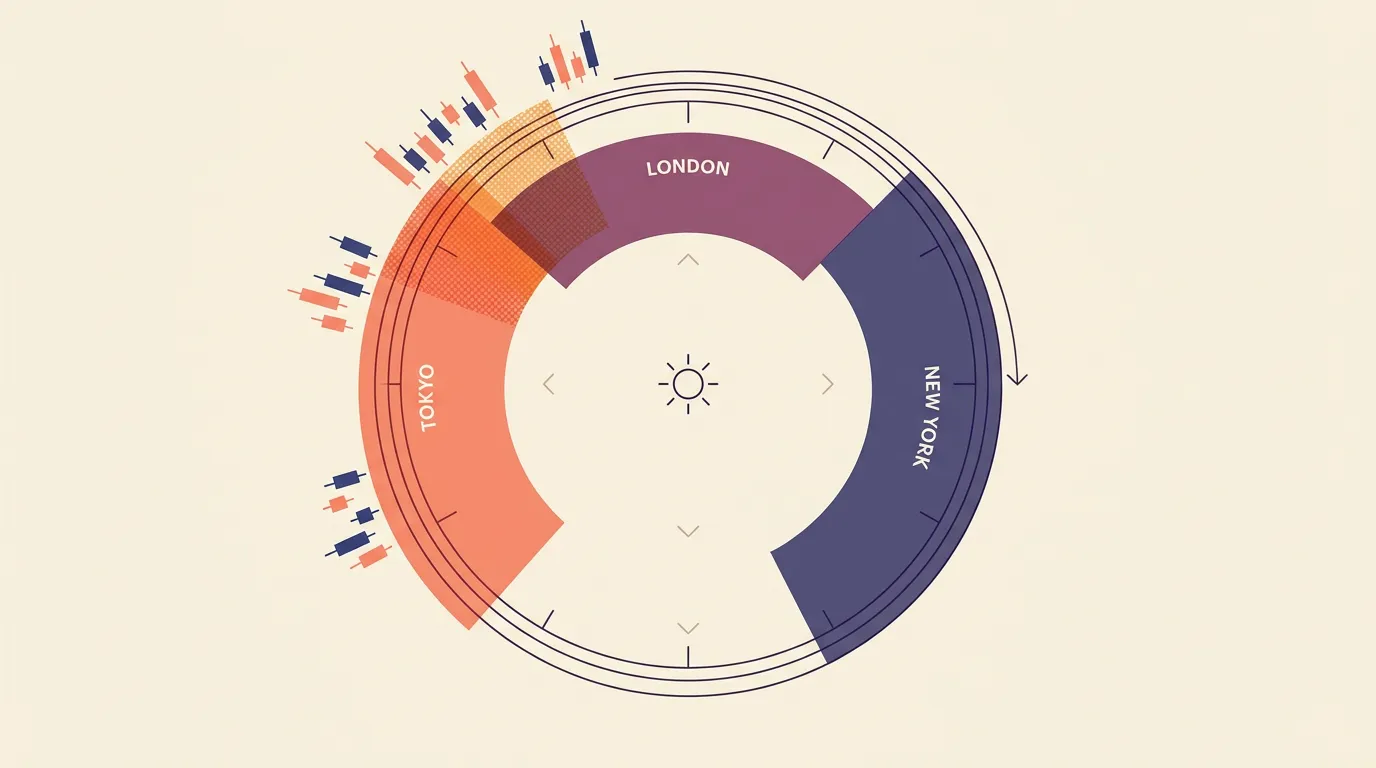
The forex clock isn't flat
Forex runs 24 hours a day, five days a week — but volume and volatility are far from evenly spread. Trade the wrong hours and your bot pays wider spreads, gets whipsawed by thin liquidity, or sits through a dead range. Session timing is one of the cheapest edges you can add to an automated OANDA strategy, because it costs nothing to skip the hours that don't suit your system.
The trading day is built around three major hubs: Tokyo, London, and New York. Each has its own character, and the overlaps between them are where most of the action lives.
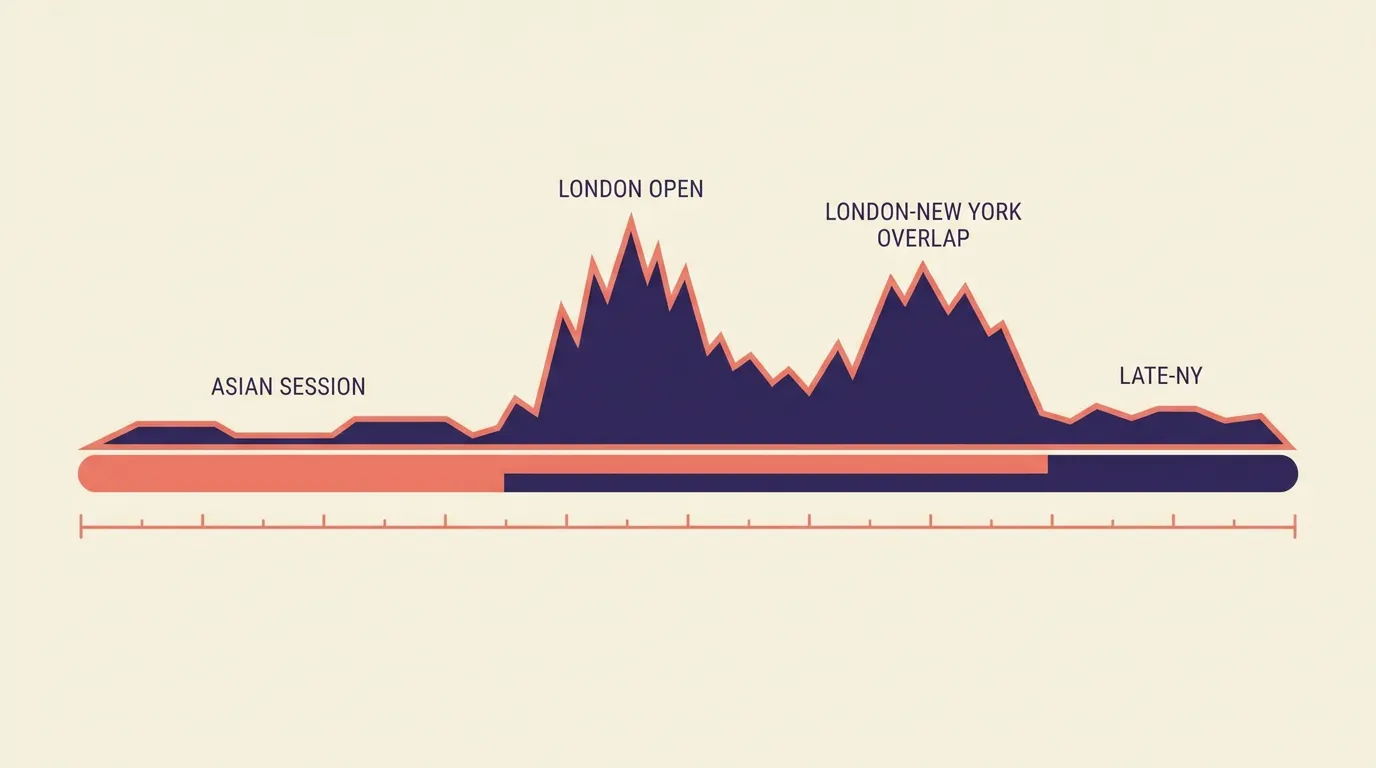
The three sessions and their character
Roughly, in UTC:
The two windows that matter most:
- London open (07:00–09:00 UTC) — volatility spikes as Europe comes online. Great for breakout and momentum systems, punishing for mean-reversion.
- London–New York overlap (12:00–16:00 UTC) — the deepest liquidity of the day, tightest spreads, and the largest directional moves on majors like EUR/USD and GBP/USD.
By contrast, the late New York hours and the early Asian session are often thin and choppy. A range or system can do well in quiet Tokyo hours; a breakout system usually shouldn't fire there.
Match the session to the strategy type — don't run a breakout bot through the flattest hours of the day and expect clean signals.
Spreads and volatility move together
Spreads widen when liquidity dries up. The Friday close, Sunday reopen, and the daily rollover (around 21:00–22:00 UTC) are notorious for gappy prices and blown-out spreads. An automated strategy that ignores these windows can get filled at ugly prices or stopped out on noise that has nothing to do with your signal.
Avoid placing fresh entries in the minutes around the daily rollover and near the weekend close. Spreads can balloon and stops can trigger on quotes that snap back seconds later.
This is also where order type matters. In fast, wide-spread conditions, a can slip badly — a limit order gives you price control at the cost of maybe missing the fill.
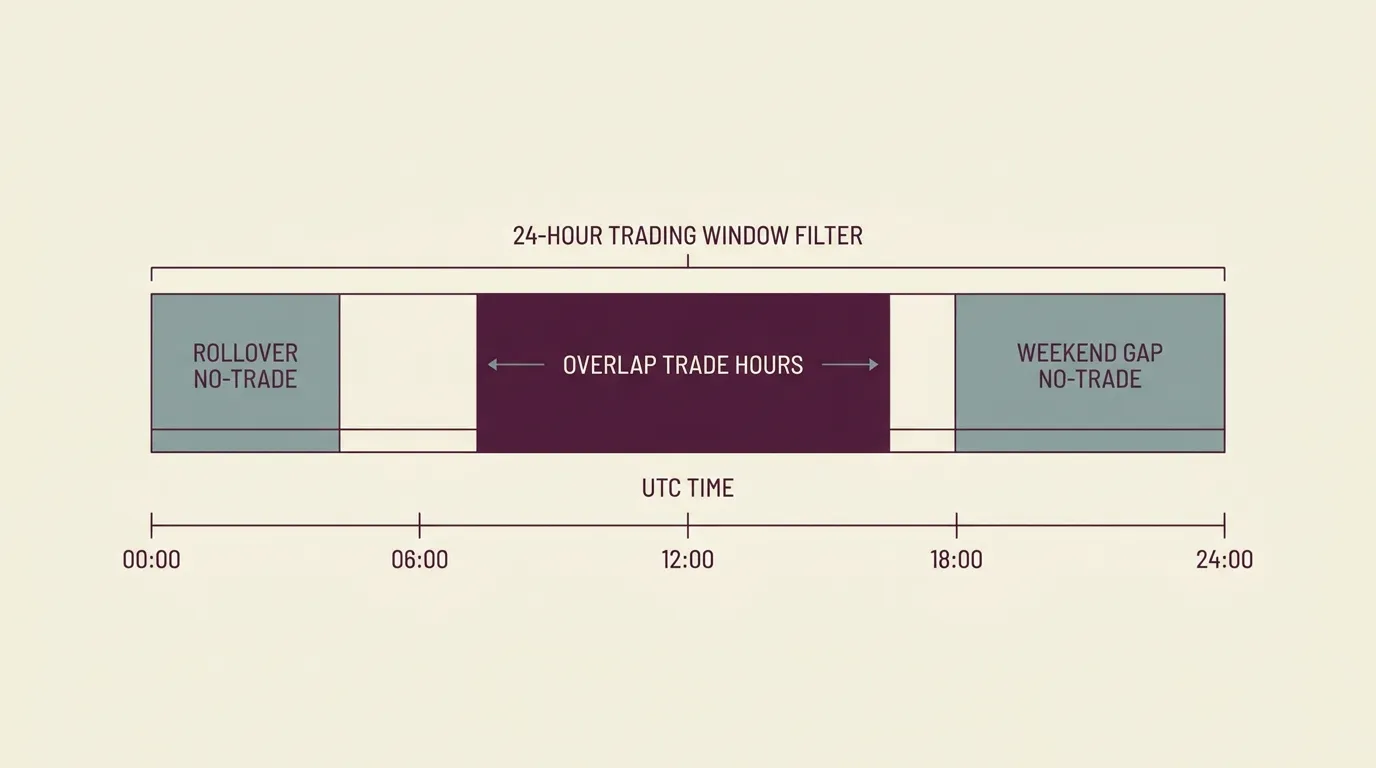
Building session rules into a bot
You don't need code to enforce trading hours. On algomax you — including when it's allowed to trade — and the AI turns it into a ready-to-run bot. You might say something like "only take entries during the London and New York overlap, and flatten before the daily rollover."
A practical way to add session timing:
- Pick your window to match the strategy — overlap hours for momentum, quieter hours for ranging.
- Define a no-trade zone around rollover and the weekend gap.
- Backtest with the rule on and off so you can see whether the filter actually helps rather than just assuming it does.
- Mind the time zone — OANDA data is timestamped; decide in UTC and stick to it so daylight-saving shifts don't quietly move your window.
Always confirm the effect on historical data before going live. the same strategy with and without a session filter is the only honest way to know if the hours you chose are helping.
Key takeaways
- Forex is 24/5, but liquidity and volatility cluster around the London open and the London–New York overlap.
- Match session to strategy: momentum and breakouts in busy hours, mean-reversion in quiet ones.
- Avoid entries near the daily rollover and weekend gap, where spreads blow out.
- Set trading windows in UTC, describe them in plain language, and backtest the filter before trusting it live.
Frequently asked questions
What are the best hours to run an automated forex bot?
For momentum and breakout strategies, the London open (roughly 07:00–09:00 UTC) and the London–New York overlap (roughly 12:00–16:00 UTC) offer the deepest liquidity and largest moves. Range or mean-reversion systems can suit the quieter Asian session instead. Always confirm on your own backtests.
Why should a bot avoid trading around the daily rollover?
Liquidity thins out near the daily rollover (around 21:00–22:00 UTC) and around the weekend close and reopen, so spreads widen and prices can gap. Fresh entries in those windows risk poor fills and stops triggering on noise.
How do I add session timing to a bot on algomax without coding?
You describe the rule in plain language to the AI assistant — for example, only trade during the London and New York overlap and flatten before rollover — and it builds a ready-to-run bot. You never write or see code.
Which time zone should I use for session rules?
Set your windows in UTC and stick to it. Anchoring to UTC avoids confusion when daylight-saving changes shift local session times and keeps your backtests consistent with live behavior.
Does session timing actually improve results?
It can reduce trading in low-quality conditions, but it is not guaranteed to help every strategy. Backtest the same system with the session filter on and off to see the real effect before going live, and remember trading always carries risk.