Strategy Hopping: Why Chasing the Hottest Bot Backfires
Strategy hopping, switching trading bots after a losing streak to chase recent winners, is a common automated trading mistake. Here is how to stop doing it.

Why strategy hopping hurts
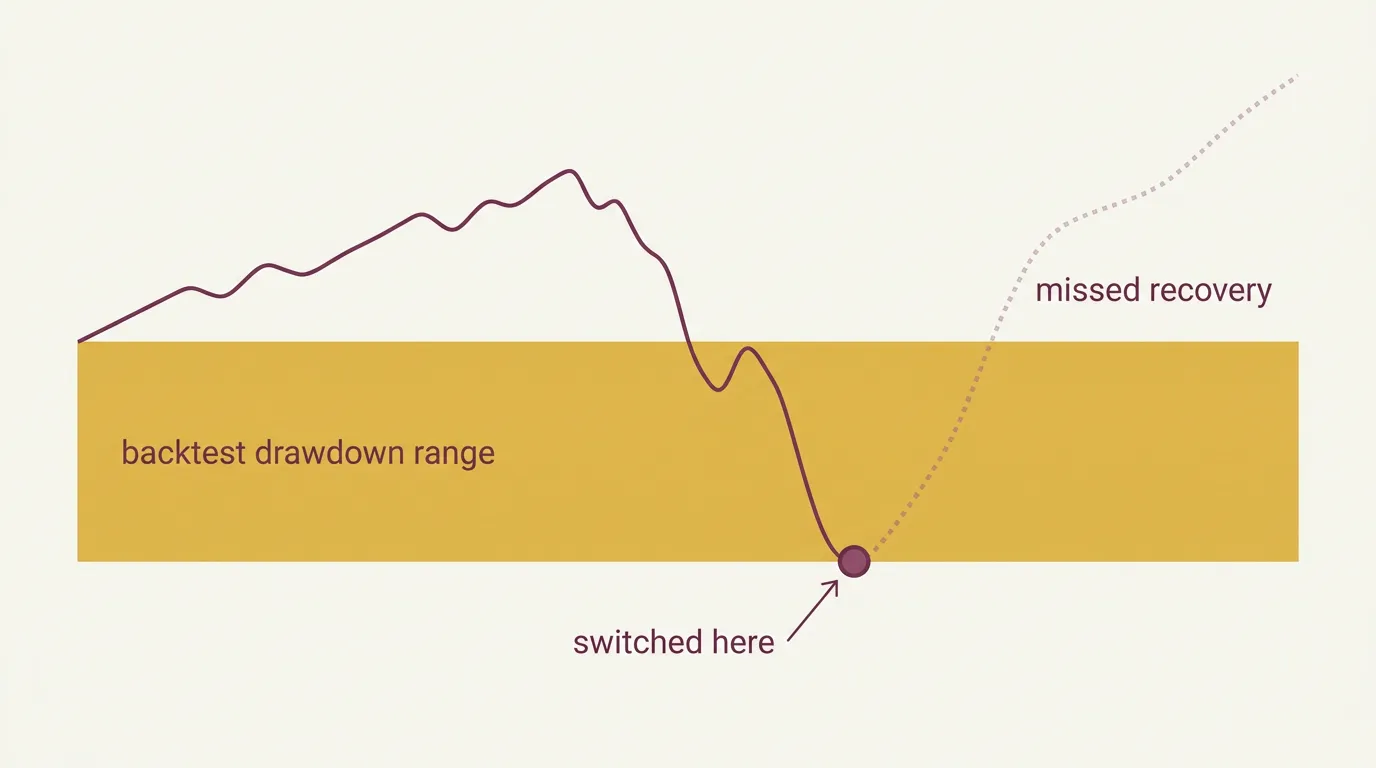
Strategy hopping means you drop a bot during a rough patch and switch to whatever has done best lately. It feels like active management. In practice you often lock in each strategy's worst stretch and then miss the recovery.
What strategy hopping looks like
You might be doing it without calling it that. Common signs:
- You stop a bot after a few losing trades without checking whether a streak like that is normal for it.
- You pick the next strategy because it had the best last month, in a backtest or in someone else's screenshot.
- You've run several bots in a few months and none of them long enough to judge.
- Every switch also changes the market or timeframe, so nothing can be compared.
Why chasing recent winners backfires
Every strategy has conditions it handles well and conditions it struggles in. Trend followers lose money slowly in choppy ranges. Mean reversion gets hurt in strong trends. When you hop, you tend to get this timing wrong twice:
- You exit near the low. Quitting during a drawdown locks in the loss and gives up any rebound.
- You enter near the high. A strategy fresh off a great month may be close to its own cooling period. A few weeks of results is a tiny sample.
- Recency bias takes over. The last few weeks end up counting for more than years of history.
- The clock resets. A new bot needs many trades before its results mean anything. If you keep hopping, no bot ever gets there.
A drawdown that stays inside the range your backtest showed means the strategy is working as designed. It hasn't broken.
Decide your exit rules before going live
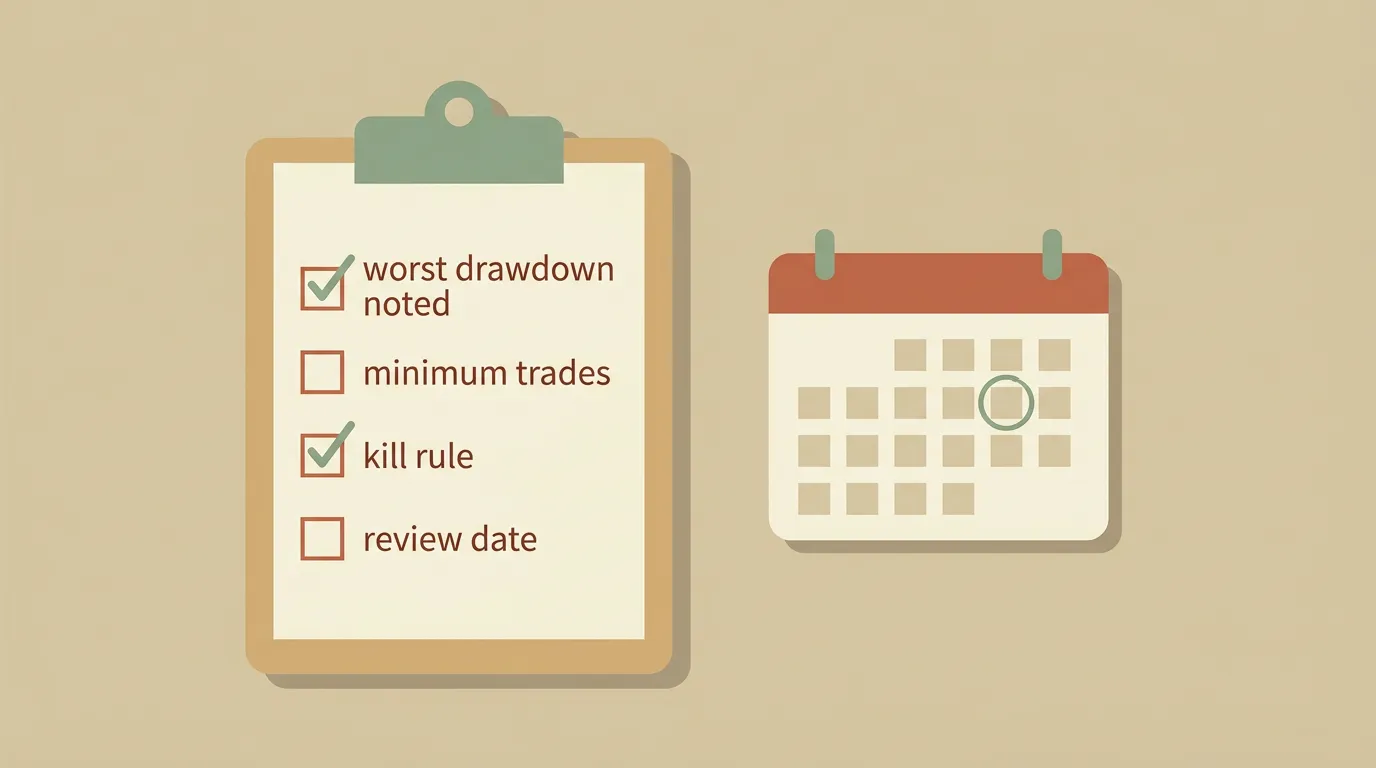
The fix is to decide in advance what would justify switching. Do it before the first live trade, while you're calm.
- Write down the backtest's worst drawdown and longest losing streak. Live results can be worse than the backtest, so leave some margin, but know where you're starting from. If you haven't run a proper test yet, start with .
- Set a minimum sample. Pick the number of trades or weeks a bot gets before you judge it.
- Define a kill criterion. For example: the drawdown goes well past the backtest's worst, or the bot starts behaving differently, like trading far more often than it should. are one way to turn this into a rule.
- Review on a schedule, not after every red day.
- Separate "the strategy is losing" from "the bot is broken." Rejected orders, connection errors or odd fills are technical problems. They're not a reason to change strategies.
On algomax you describe your strategy to the AI in plain language. Add your risk limits in the same conversation, and keep your review rules in a note alongside it. Telegram or Discord notifications keep you informed without staring at your P&L all day.
Want variety? Run in parallel, not in sequence
Sometimes a new idea really is worth trying. That doesn't mean your current bot has to go. Backtest the new idea, check it on data it wasn't built on with , and then run it next to your existing bot at small size.
Running bots side by side lets you compare them on the same market conditions. Watch how much they overlap, though: two bots that react to the same moves don't add much variety. explains how to check.
Patience doesn't guarantee results. Every strategy carries risk, and some deserve to be retired. The point is to retire them because a rule you set in advance says so, not because last week felt bad.
Key takeaways
- Strategy hopping tends to make you quit near the low and buy in near the high.
- A drawdown inside the backtest's range is normal behavior for the strategy.
- Write your minimum sample, kill criterion and review dates before going live.
- Try new ideas in parallel at small size instead of replacing a bot in the middle of a drawdown.
Frequently asked questions
What is strategy hopping in automated trading?
It's the habit of abandoning a trading bot during a losing stretch and switching to whichever strategy has performed best recently. It usually happens on emotion, not because a predefined rule was broken.
How long should I run a bot before deciding it does not work?
There's no universal number. Decide on a minimum number of trades or weeks before going live, based on how often the strategy trades in its backtest. A bot that trades rarely needs a longer window than one that trades many times a day.
When is it actually right to stop a trading bot?
Stop it when a rule you set in advance is broken, such as a drawdown well beyond the backtest's worst, or behavior that no longer matches the strategy's design. Technical problems like rejected orders should be fixed separately rather than treated as a reason to change strategies.
Can I try a new strategy without abandoning my current bot?
Yes. Backtest the new idea, check it on out-of-sample data, then run it alongside your existing bot at small size. Keep an eye on whether the two bots end up taking the same trades, because that adds risk without adding variety.