Scaling Out: Partial Profit-Taking for Trading Bots
Scaling out means closing a position in pieces instead of all at once. Learn when partial profit-taking helps, when it hurts, and how to automate it.
What scaling out actually means
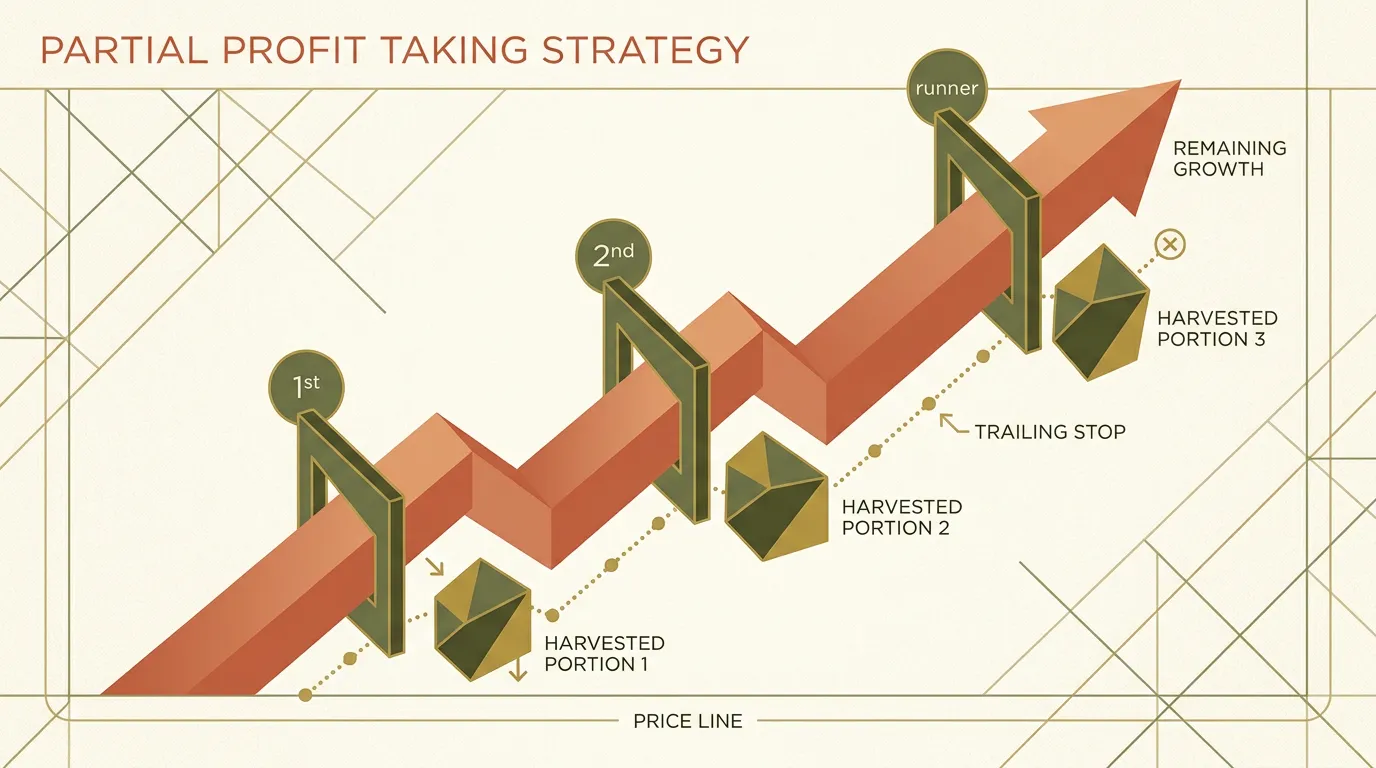
Scaling out is closing a position in pieces as price moves in your favor, rather than exiting the whole thing at one target. A common pattern: sell a third at the first target, another third at a higher target, and let the rest ride behind a trailing stop.
The appeal is emotional and practical. You lock in some profit early, reduce risk on the remaining shares, and stay exposed if the move keeps running. The cost is subtle: you cap your best outcomes, because your biggest position size is on the table for the smallest part of the move.
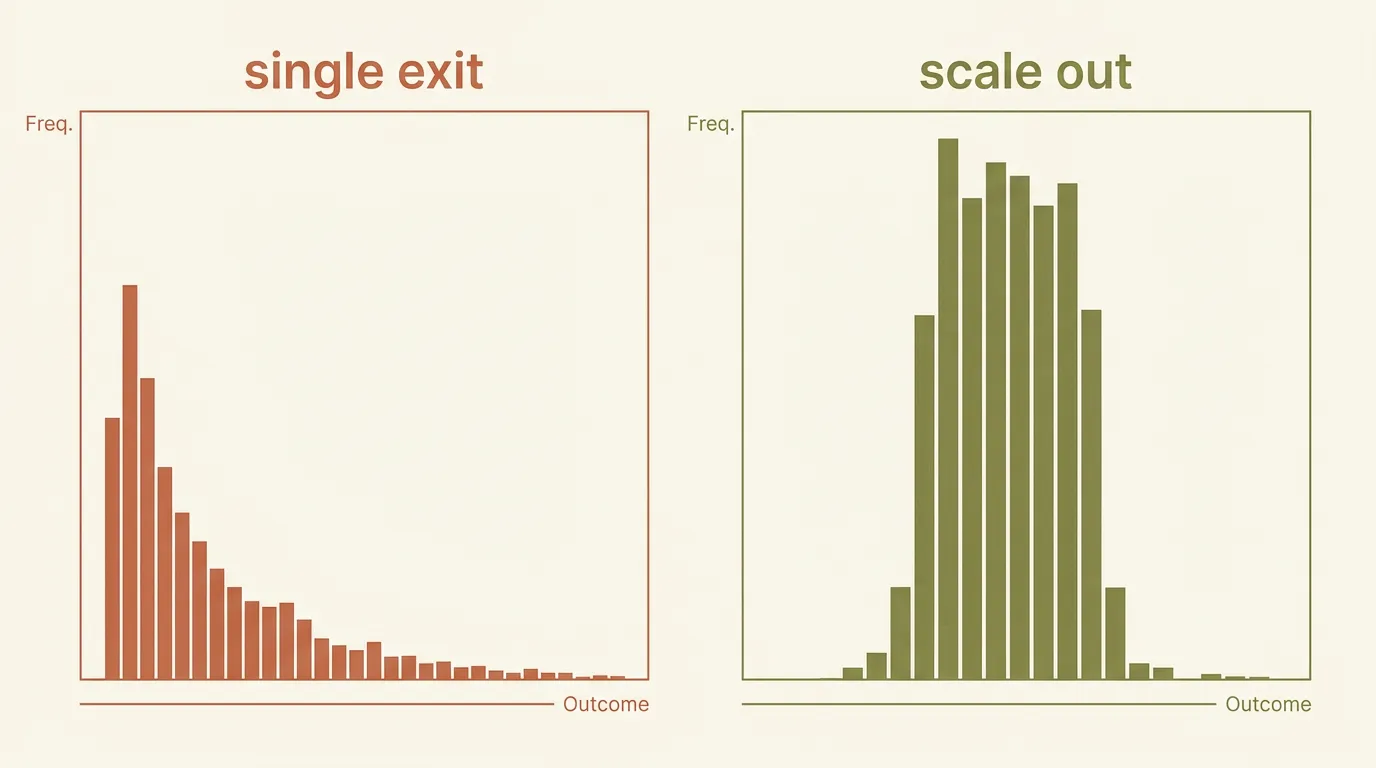
Scaling out doesn't improve your average edge — it reshapes the distribution of outcomes, trading a smoother equity curve for lower peak wins.
The trade-off, plainly
Whether scaling out helps depends on how your strategy makes money.
The core tension: a few large winners often carry a whole strategy. If you routinely shave those down, you can quietly erode your expectancy while feeling more disciplined. Mean-reversion is the opposite — targets are modest and price rarely runs far, so banking profit in stages captures value that would otherwise evaporate.
Before adding scale-outs, backtest the same strategy with a single full exit. If the all-at-once version earns more, your scaling plan is comfort, not edge.
Three ways to structure exits
There's no single correct scheme. Pick one that matches your strategy's rhythm:
- Fixed R multiples — take partials at 1R, 2R, 3R (where 1R is your initial risk). Clean and easy to reason about.
- Volatility-based targets — set partial exits using multiples so targets adapt to how much the market is moving.
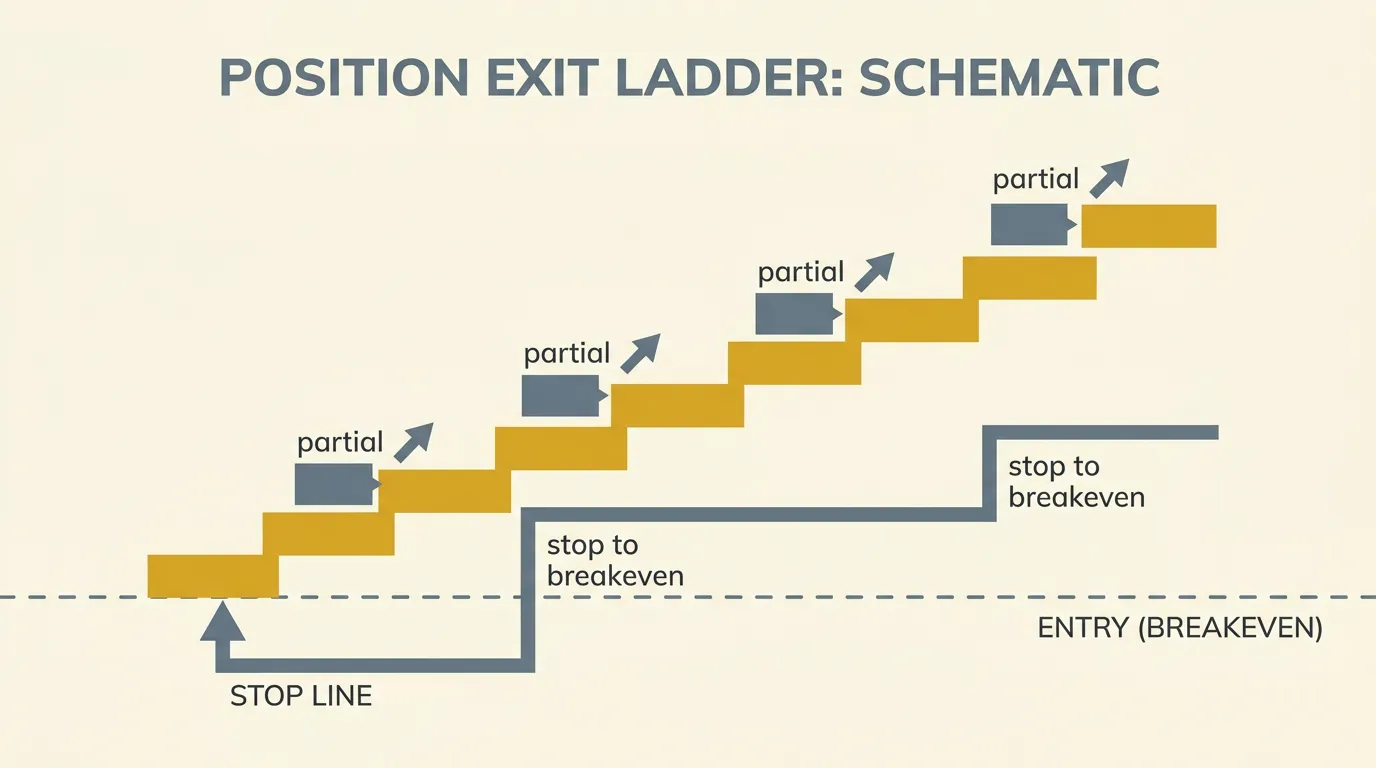
- Move the stop as you scale — after the first partial, pull the stop to breakeven so the remaining position can't turn into a loss.
That last point matters most. Scaling out without tightening the stop just delays exits without protecting the trade. Combine partials with a moving stop and you convert an open winner into a low-risk, free-running position.
Also mind the mechanics: partial fills, minimum order sizes, and fees. Three small exits cost more in fees than one, and on some venues tiny remainders can be hard to close cleanly.
On crypto and forex, rounding and minimum trade sizes can leave an un-closable "dust" remainder. Size your slices so each partial clears the venue's minimum.
Automating it without code
The point of a bot is that your exit plan runs the same way every time — no hesitating, no "just this once" holds. On algomax you — entry, the partial targets, and how the stop moves after each fill — and the assistant turns it into a ready-to-run bot. No formulas, no code.
Then prove it before risking money. and compare it head-to-head against a single-exit version of the same rules. Watch not just total return but drawdown, win rate, and average win size — scaling out should visibly change those, and you want to see the trade-off with your own eyes rather than assume it helps.
Key takeaways
- Scaling out trades peak profit for a smoother equity curve — it doesn't add edge on its own.
- It tends to help mean-reversion strategies and hurt trend-following, which relies on rare big winners.
- Always pair partials with a stop moved to breakeven — otherwise you're just exiting slower.
- Backtest scaled vs. single exits on the same rules before going live, and mind fees and minimum order sizes.
Frequently asked questions
Does scaling out increase my profits?
Not by itself. Scaling out reshapes your outcomes — smoother returns and smaller drawdowns — but it usually lowers your biggest wins, so total profit can go up or down depending on the strategy. The only way to know is to backtest scaled versus single exits on your own rules.
When should I avoid scaling out?
Avoid it for trend-following strategies that depend on a few large winners to carry overall performance. Trimming those winners early can quietly erode your expectancy even though it feels disciplined.
Should I move my stop when I take a partial profit?
Yes, almost always. Moving the stop to breakeven after the first partial converts an open winner into a low-risk, free-running position. Scaling out without adjusting the stop just delays your exit without protecting the trade.
How many partials should I take?
Usually two or three is plenty. More slices means more fees and a higher chance of leaving an un-closable remainder below a venue's minimum order size, so size each slice to clear that minimum.
Can I automate scaling out without writing code?
Yes. On algomax you describe the entry, partial targets, and how the stop moves in plain language, and the assistant builds a ready-to-run bot. You never write code or formulas.