Paper Trading Explained: Test Bots Before Real Money
Paper trading lets beginners run a strategy on live prices with fake money. Learn what it reveals, what it can't, and how to use it before going live.
What "paper trading" actually means
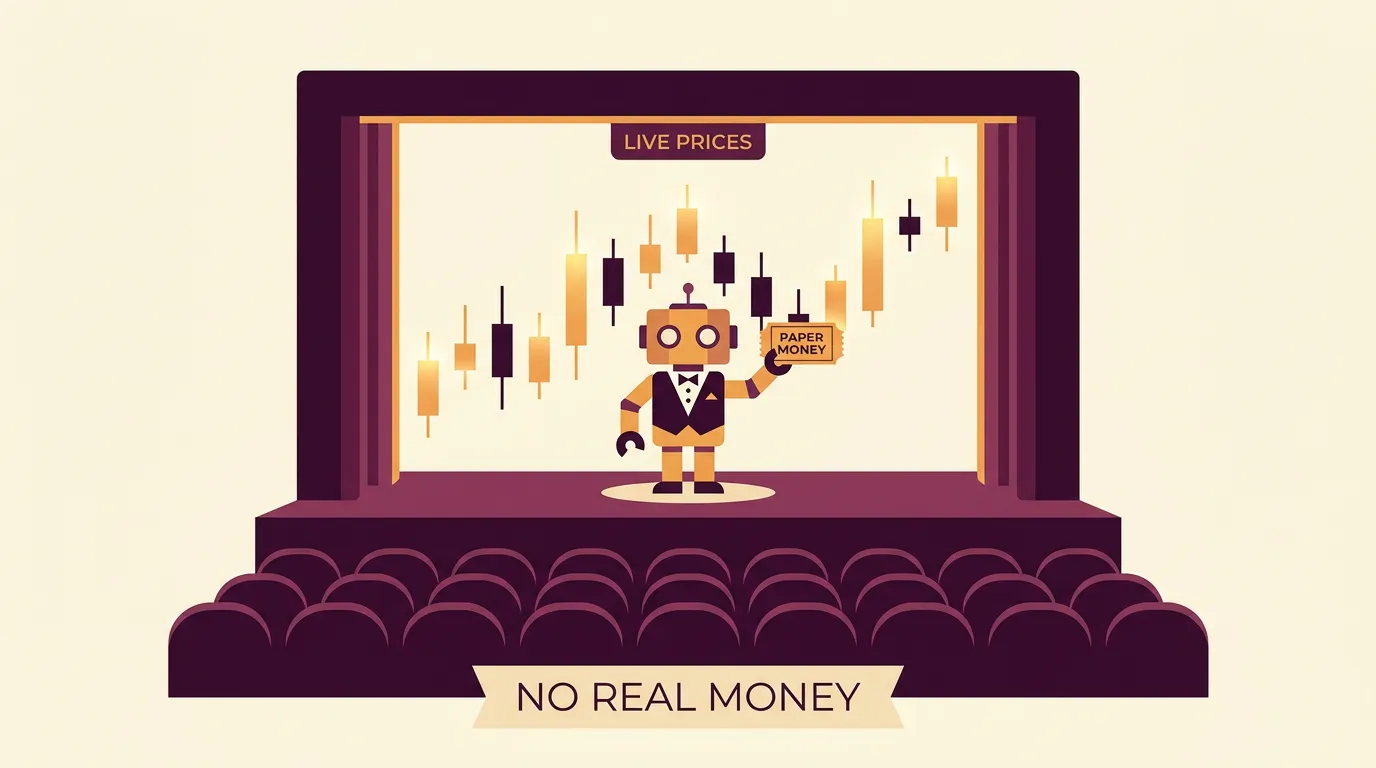
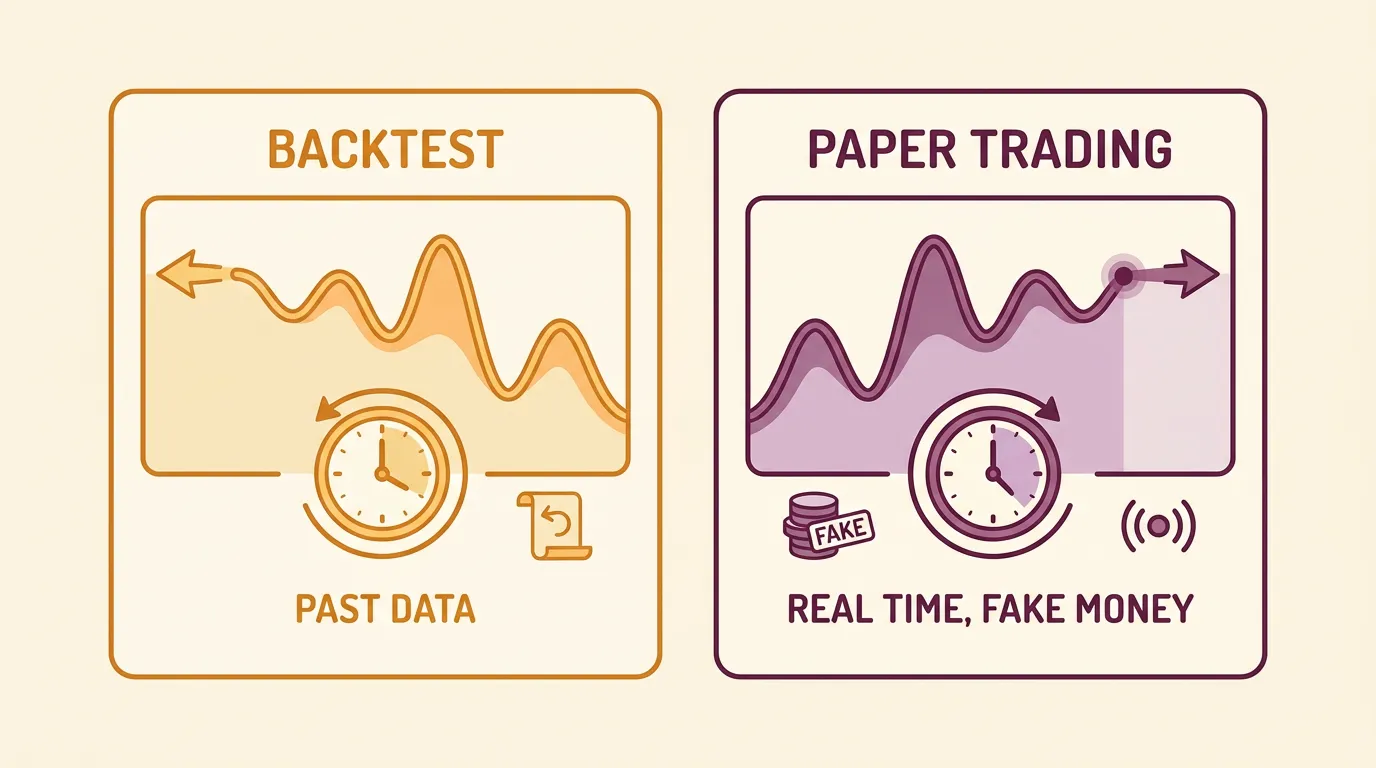
Paper trading is running your strategy with fake money in real, live market conditions. The bot watches current prices, generates signals, and "places" orders — but nothing hits your real balance. It's the bridge between a backtest (which uses past data) and live trading (which uses your real capital).
Think of it as a dress rehearsal: same stage, same script, real-time pacing — just no money on the line. For a beginner, it's the single safest way to find out whether a strategy behaves the way you imagined before any cash is at risk.
Paper trading answers a question a backtest can't: does my bot behave sensibly right now, in this market, in real time?
Why it's different from a backtest
A backtest replays history fast. Paper trading runs forward, live, at the market's actual speed — and that difference exposes problems a backtest quietly hides.
Backtesting is still essential — it's how you check the core idea over many market conditions. The two work together: , then paper trade to watch it operate in the present. Paper trading is where you notice things like "this fires 20 times a day, that's way more than I expected" or "the signal comes late on fast moves."
What paper trading can and can't tell you
It's a powerful gut-check, but it has real blind spots — know them before you trust the results.
What it shows you well:
- Whether your entry and exit rules trigger when you expect
- How often the bot trades (and whether you can stomach that)
- Whether your risk controls and notifications fire correctly
- Your own reaction to watching a bot work without intervening
What it can't fully replicate:
- Slippage and fills — paper orders often fill at ideal prices; live markets don't always cooperate
- Liquidity — a fake order never moves the market or sits unfilled in a thin book
- Emotion with real money — watching fake P&L is calmer than watching your own capital
Great paper results don't guarantee live results. Treat paper trading as a way to rule out broken strategies, not to prove a profitable one. Real fills, fees, and spreads only show up with real money.
How to run a useful paper-trading phase
You don't need to write anything technical. On algomax you and the AI turns it into a ready-to-run bot — you can run that bot in observation mode before committing real funds.
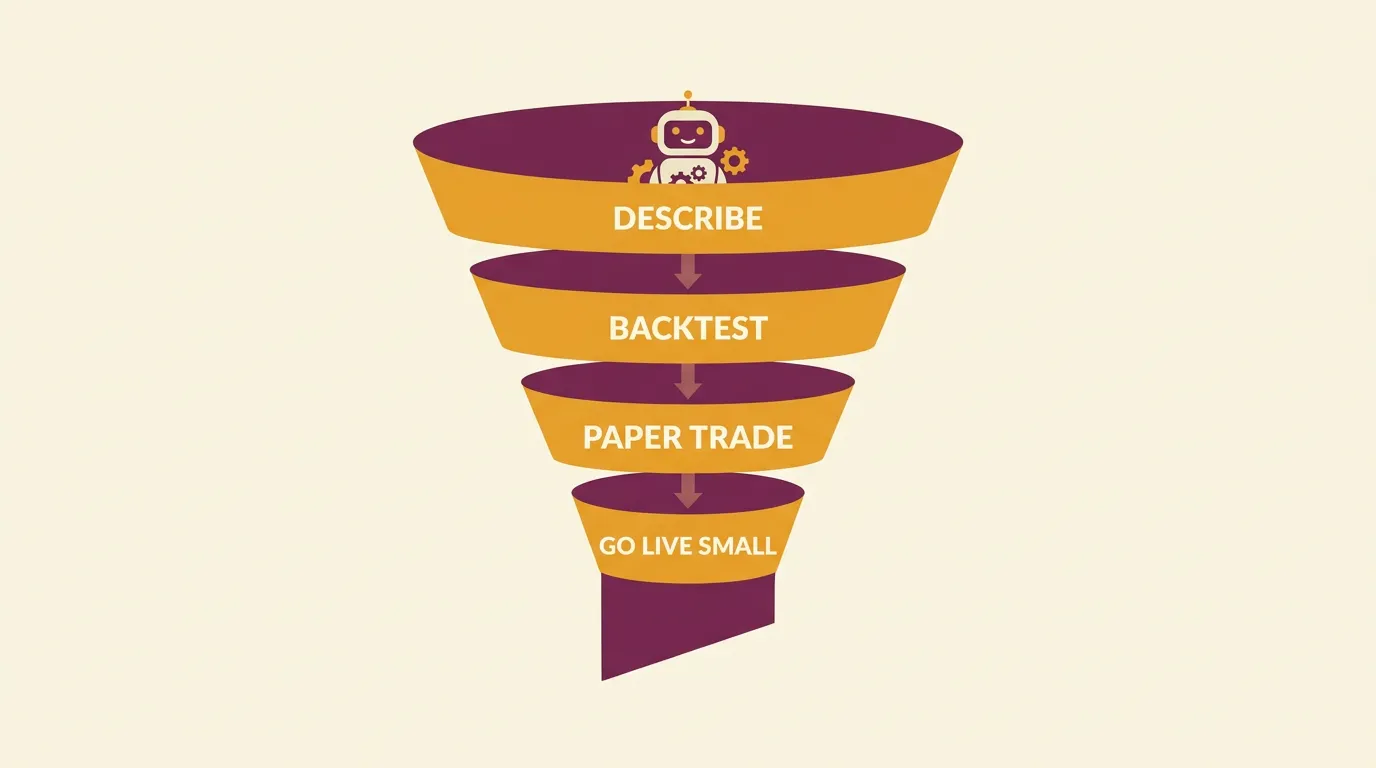
A sensible sequence for a beginner:
- Define the strategy clearly in your own words — entries, exits, and a stop.
- Backtest it across different market conditions to confirm the logic isn't obviously broken.
- Paper trade for a meaningful window — long enough to capture quiet and volatile days, not just a calm afternoon.
- Compare the live behavior to your backtest. Big gaps mean something's worth investigating.
- Go live small once it behaves as expected — paper trading is a filter, not a finish line.
Paper trade across a full range of conditions, including a volatile session. A strategy that looks perfect in a sleepy market can fall apart the first time prices move fast.
Key takeaways
- Paper trading = your strategy on live prices with fake money — zero risk, real-time conditions.
- It reveals timing, trade frequency, and your own discipline in ways a backtest can't.
- It can't replicate slippage, real fills, or the emotion of risking actual capital.
- Use it as a filter between backtest and live: rule out broken strategies, then go live small.