Hybrid Trading: Blending Manual and Automated Systems
Hybrid trading blends manual judgment with automated execution. Learn how to split roles, avoid common pitfalls, and decide what to automate first.
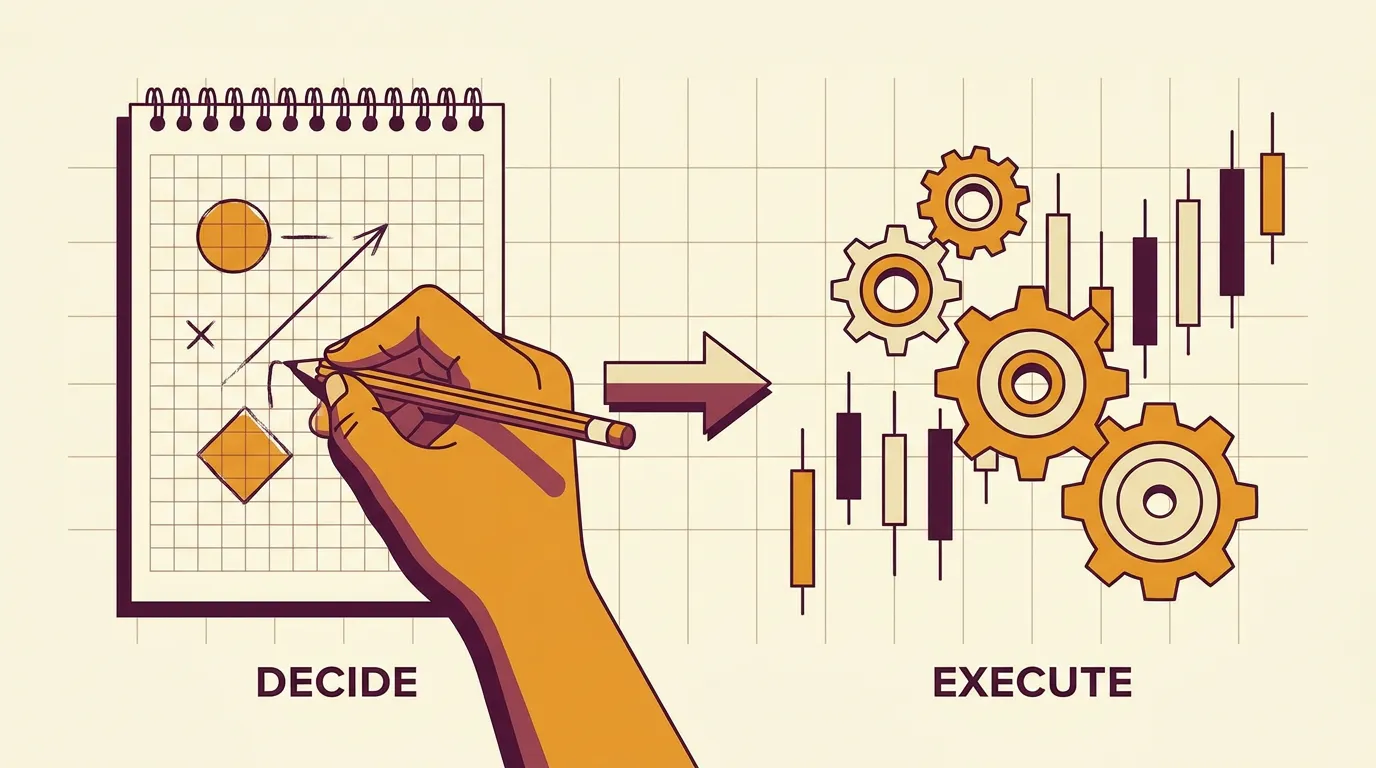
You don't have to pick a side
Most "manual vs automated" debates present a false choice. In practice, many traders run a hybrid setup: they keep human judgment where it adds value and delegate the repetitive, emotional, or time-sensitive parts to a bot. The question isn't which is better — it's which tasks belong to which.
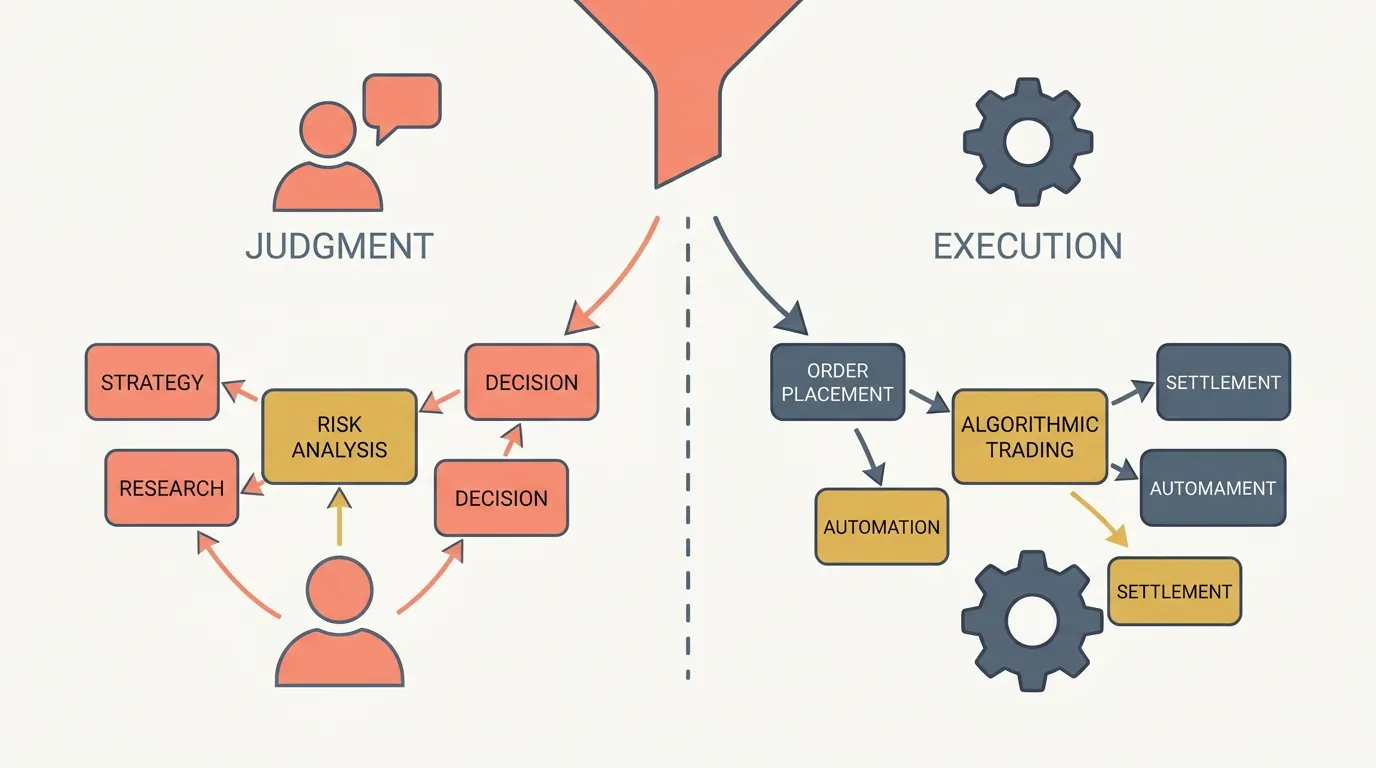
What each side is actually good at
Humans and machines fail in different places. A hybrid approach plays to each one's strengths.
The pattern is clear: discretion at the edges, automation in the middle. You decide the plan and the context; the bot enforces the rules.
The most expensive trading mistakes are rarely bad ideas — they're good rules abandoned under stress. Automation's real edge is discipline, not genius.
Common ways to split the work
There's no single "correct" hybrid. A few practical patterns:
- Automated entries, manual exits. Let a bot scan and trigger entries by your rules, then manage the exit yourself when you want more nuance. (Be honest about whether you'll actually watch it.)
- Manual entries, automated management. You pick the trade; the bot handles the stop-loss, take-profit, and position sizing so your worst instincts never touch an open position.
- Core-and-satellite. A bot runs your bread-and-butter strategy continuously while you trade a small discretionary book on the side.
- Automated overnight, manual by day. Hand off the hours you can't watch — a bot doesn't sleep through an Asian-session move.
Automate the decision you're most likely to fumble under pressure first. For most people that's the exit — cutting losers and letting winners run.
With algomax, you describe any of these in plain language and the AI turns it into a ready-to-run bot connected to your own broker. You never write code, so moving a rule from "in my head" to "enforced automatically" is a conversation, not a project. See for how that translation works.
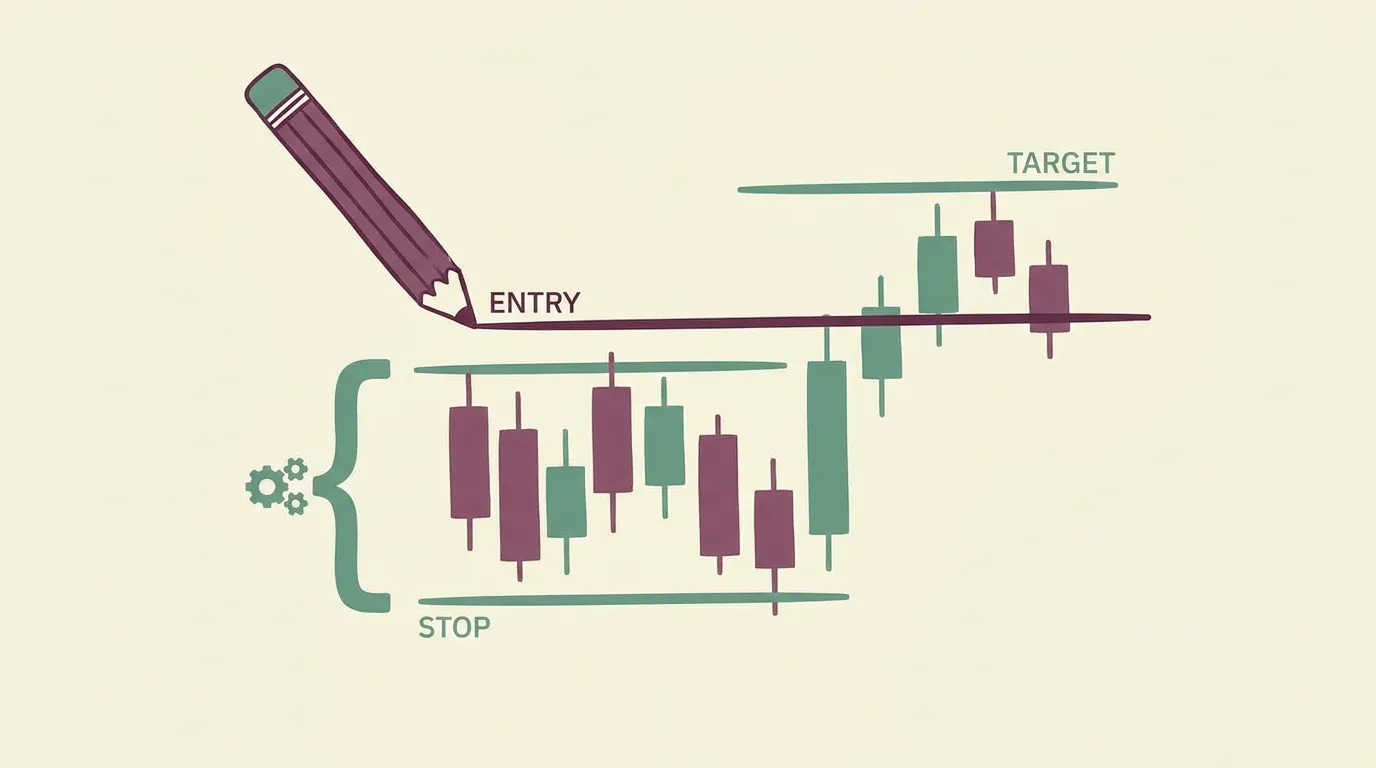
Making a hybrid setup actually work
The risk of hybrid trading is overlap and interference — you and the bot fighting over the same position, or you overriding rules so often that the automation is theater.
Guardrails that help:
- Draw clean boundaries. Write down exactly which decisions are yours and which are the bot's. No ambiguity mid-trade.
- Test the automated half before it touches real money. Backtest the logic on historical candles and then so you trust it when live.
- Track overrides. Every time you manually override the bot, log why. If your overrides consistently beat the rules, refine the rules. If they don't, stop overriding.
- Keep sizing on the bot. Consistent position sizing is where discipline pays off most — let the machine handle it.
A bot placing orders through your broker keys will do exactly what you described — including your mistakes. Start small, and treat early live runs as observation, not conviction.
Hybrid trading isn't a compromise for the indecisive. It's a deliberate division of labor that lets you stay involved where judgment matters while removing yourself from the moments where emotion costs the most.
Key takeaways
- Hybrid trading assigns discretion to humans, enforcement to bots — not one or the other.
- Automate the decision you fumble most under pressure; for many traders that's the exit.
- Draw clean boundaries so you and the bot don't interfere with the same position.
- Test the automated half with backtesting and paper trading, and log every manual override.
Frequently asked questions
Is hybrid trading better than fully automated trading?
Neither is universally better. Hybrid trading suits people who value human context but want discipline enforced automatically, while full automation suits well-defined, rule-based strategies you'd rather not touch. Choose based on how much your discretion genuinely improves outcomes.
What part of my trading should I automate first?
Start with the decision you handle worst under pressure, which for most traders is the exit — cutting losers and holding winners. Automating stops, targets, and position sizing removes the moments where emotion costs the most.
Can I override a bot's decisions?
Yes, but do it deliberately and log why each time. If your overrides consistently beat the rules, improve the rules; if they don't, the override habit is likely hurting your results.
Do I need to code to run a hybrid setup?
No. With algomax you describe the automated portion of your strategy in plain language and the AI turns it into a ready-to-run bot that trades through your own broker keys, so you never write or see code.
How do I test the automated half before risking money?
Backtest the logic on historical candles to see how it would have behaved, then paper trade it live to confirm it works as expected before committing real funds. Start small even after that.